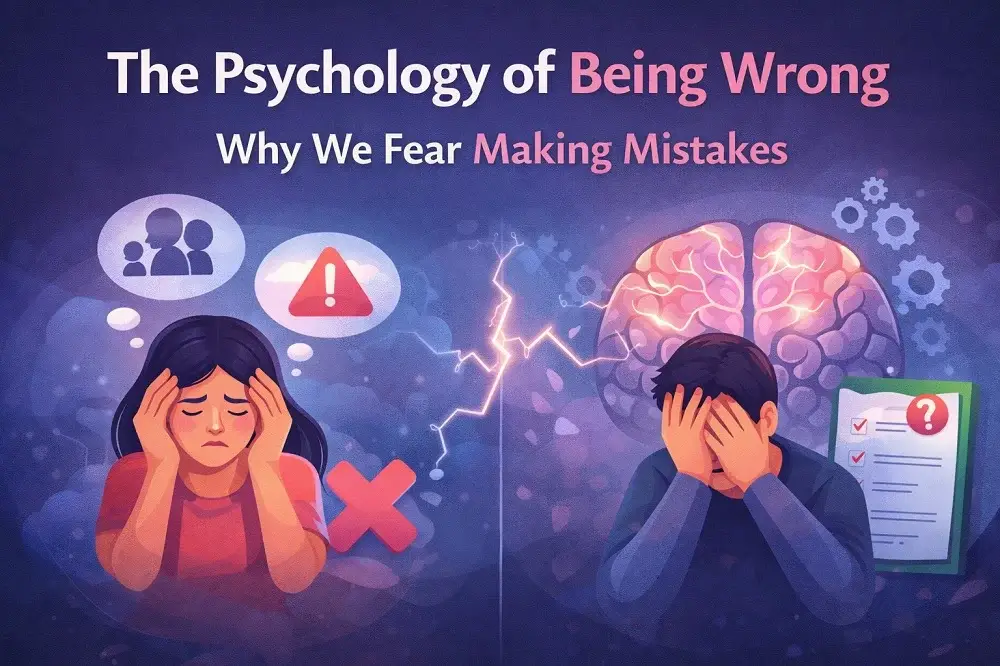
In a world that constantly celebrates success, achievement, and perfection, many people develop a deep fear of making mistakes. Being wrong can feel embarrassing, threatening, or even damaging to our identity. Yet mistakes are an unavoidable part of life and learning. Understanding why we fear being wrong can help us build a healthier relationship with failure and turn errors into opportunities for growth.
Understanding the Fear of Being Wrong
The fear of making mistakes is not simply a modern problem—it has deep psychological and evolutionary roots. In early human history, making the wrong decision could have serious consequences, such as losing food, safety, or even life itself. Because of this, the human brain evolved to treat mistakes as potential threats.
Even though modern life rarely involves life-or-death decisions, our brains still respond to mistakes with stress and anxiety. When we realize we might be wrong, the brain activates emotional responses similar to danger signals. This reaction explains why people often feel defensive, embarrassed, or uncomfortable when confronted with their errors.
Why Mistakes Are Essential for Growth
Ironically, the same thing we fear the most—making mistakes—is one of the most powerful tools for learning.

From a neurological perspective, when we make an error, the brain becomes highly active in analyzing what went wrong. This process helps the brain adapt, adjust behavior, and improve future decisions. In other words, mistakes trigger a powerful learning mechanism.
However, because mistakes are often followed by negative emotions or criticism, many people avoid situations where they might fail. This avoidance can limit creativity, exploration, and personal development.
Common Reasons People Fear Making Mistakes
Several psychological and social factors explain why being wrong feels so uncomfortable.
Fear of Social Judgment
Humans are naturally social beings, and acceptance from others is extremely important. When we make mistakes, we often worry that others will judge us, reject us, or view us as incompetent.
This fear can make people reluctant to speak up, try new ideas, or challenge opinions.
Self-Esteem and Identity
Many people link their self-worth to their performance. When something goes wrong, they interpret it as a personal failure rather than a normal learning experience.
Instead of thinking “I made a mistake,” they think “I am a failure.”
This shift from behavior to identity makes mistakes feel far more threatening than they actually are.
Perfectionism
Perfectionism is another major contributor to the fear of being wrong. Individuals raised in environments where success was heavily emphasized and mistakes were criticized may grow up believing that errors are unacceptable.
This mindset creates constant pressure to perform flawlessly, which can lead to stress, anxiety, and avoidance of challenges.
Fear of Consequences
Sometimes the fear of mistakes is practical. Certain decisions—especially in professional or financial settings—can carry real consequences.
However, the brain often exaggerates these risks, making even small errors feel catastrophic.
Cognitive Biases That Intensify Our Fear
Our thinking patterns also play a role in amplifying the fear of mistakes.
One important bias is confirmation bias, where people prefer information that supports their existing beliefs and ignore evidence that contradicts them. This bias helps protect our ego by preventing us from realizing we might be wrong.
Another is negativity bias, where negative experiences are remembered more strongly than positive ones. Because of this, a single mistake can stay in our memory longer than many successes, reinforcing our fear of failure.
Cultural Influences on the Fear of Mistakes
The way society views mistakes strongly influences how individuals respond to them. In many cultures, mistakes are seen as signs of weakness or incompetence rather than as natural parts of learning.
Schools, workplaces, and social environments sometimes reward perfection while punishing errors. This approach creates a culture where people feel pressure to avoid mistakes at all costs, even if it means avoiding innovation or experimentation.
By contrast, environments that encourage curiosity, experimentation, and open discussion of mistakes tend to produce more creative and resilient individuals.

How Mistakes Shape Our Self-Perception
Our response to mistakes plays a major role in shaping self-identity and confidence.
When mistakes are interpreted as proof of personal failure, they can damage self-esteem and lead to self-doubt. However, when mistakes are seen as learning experiences, they strengthen resilience and confidence.
Adopting a growth mindset—where challenges are viewed as opportunities rather than threats—can transform how we see ourselves and our abilities.
The Impact of Mistake Anxiety on Decision-Making
Fear of being wrong can have a significant effect on the way we make decisions.
Some people experience decision paralysis, where they avoid making choices because they fear choosing incorrectly. Others become overly cautious, selecting only safe options to reduce the risk of failure.
While caution can sometimes be beneficial, excessive fear can limit innovation, creativity, and personal progress.
Creating a Culture That Accepts Mistakes
Leaders, educators, and communities play a crucial role in shaping attitudes toward mistakes.
Encouraging Open Communication
When people feel safe discussing mistakes without fear of punishment, they are more likely to learn from them and improve. Open communication helps create an environment where problems are solved rather than hidden.
Focusing on Learning Instead of Blame
Constructive feedback is far more effective than criticism. When mistakes are analyzed with the goal of learning and improvement, individuals become more willing to take thoughtful risks.
Leading by Example
Leaders who openly acknowledge their own mistakes demonstrate humility and authenticity. This behavior encourages others to do the same and reduces the stigma surrounding failure.
Overcoming the Fear of Being Wrong
Reducing the fear of mistakes requires changing how we think about them.
Some helpful strategies include:
- Accepting mistakes as part of learning
- Separating self-worth from performance
- Viewing challenges as opportunities
- Practicing self-compassion
By shifting our mindset, we can transform mistakes from sources of shame into valuable tools for growth and discovery.
Final Thoughts
The fear of being wrong is deeply embedded in human psychology, shaped by evolution, social expectations, and personal experiences. Yet mistakes are not the enemy—they are essential stepping stones toward improvement.
When individuals and communities begin to embrace mistakes as learning opportunities, creativity, innovation, and personal growth flourish.
Instead of fearing failure, we can learn to see it for what it truly is: a necessary part of progress and self-development.
Frequently Asked Questions
Why do people fear being wrong?
Many people fear being wrong because mistakes can trigger feelings of embarrassment, social judgment, or damage to self-esteem. Our brains are naturally wired to avoid errors since historically mistakes could have serious consequences for survival.
Is fearing mistakes normal?
Yes, the fear of making mistakes is a normal psychological response. However, when this fear becomes too strong, it can prevent people from taking risks, learning new skills, or making important decisions.
How do mistakes help us learn?
Mistakes activate parts of the brain responsible for learning, problem-solving, and adaptation. When we make an error, our brain analyzes what went wrong and helps us adjust our behavior to avoid repeating the same mistake.
What is the connection between perfectionism and fear of being wrong?
Perfectionism often creates unrealistic expectations of always being correct or successful. This mindset can lead to an intense fear of mistakes, because any error may feel like a personal failure rather than a normal part of growth.
How can someone overcome the fear of making mistakes?
Overcoming this fear involves changing your mindset about failure. Accepting that mistakes are part of learning, practicing self-compassion, and focusing on improvement rather than perfection can help reduce anxiety about being wrong.