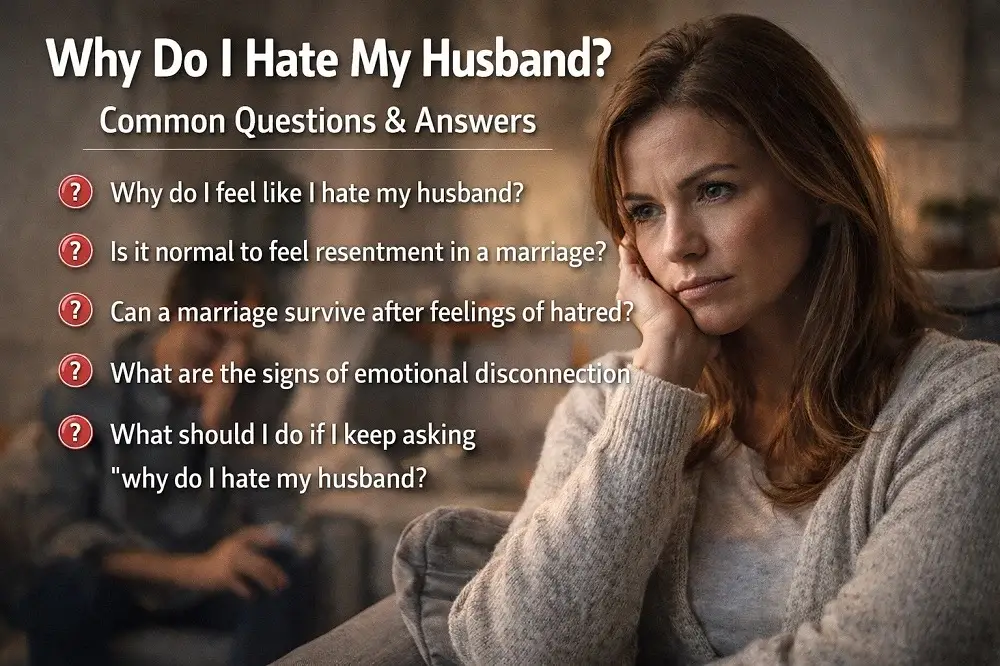
Why do I hate my husband? This is a question many women silently ask themselves, often with guilt, confusion, and emotional exhaustion.
Marriage is meant to be built on love, trust, and companionship. Yet over time, even the strongest relationships can face challenges that lead to resentment, frustration, and emotional disconnection.
These feelings don’t appear suddenly. Instead, they grow slowly — shaped by unmet expectations, repeated disappointments, and unresolved emotional needs.
Understanding where these emotions come from is the first step toward healing, clarity, and making the right decisions for your future.
How Love Gradually Turns Into Resentment
Contrary to popular belief, love doesn’t suddenly disappear. It fades over time when small issues are ignored and left unresolved.
In many cases, women don’t wake up one day hating their husbands. Instead, they experience:
- Repeated emotional neglect
- Lack of appreciation
- Ongoing communication problems
What once felt minor starts to feel overwhelming.
👉 Resentment is often the result of accumulated emotional wounds, not a single mistake.
Why Do I Hate My Husband? 7 Common Reasons Explained
1. Constant Criticism
When your partner constantly focuses on what you’re doing wrong instead of what you’re doing right, it creates emotional exhaustion.
Over time, this leads to:
- Loss of self-confidence
- Feeling unappreciated
- Emotional burnout
👉 No one thrives in a relationship where they feel constantly judged.
2. Feeling Belittled or Disrespected
Being put down by your partner is deeply damaging. Whether it’s sarcasm, criticism, or dismissive behavior, it can make you feel small and insignificant.
In more serious situations, this behavior may cross into emotional abuse, which should never be ignored.
3. Emotional Neglect
Feeling ignored in your own marriage is one of the most painful experiences.
When your partner:
- Doesn’t listen
- Avoids meaningful conversations
- Shows no interest in your feelings
You may begin to feel invisible.
👉 Emotional neglect creates distance even when two people are physically close.
4. Infidelity and Broken Trust
Few things damage a relationship as deeply as betrayal.
Infidelity doesn’t just break trust — it creates:
- Emotional trauma
- Feelings of rejection
- Long-lasting insecurity
👉 Trust, once broken, takes significant effort to rebuild.
5. Guilt and Emotional Projection
Sometimes, resentment isn’t only about your partner’s actions.
If you’ve developed feelings for someone else or crossed emotional boundaries, guilt can transform into anger toward your spouse.
This is often a psychological defense mechanism — but recognizing it is essential.
6. Seeking Attention Outside the Relationship
When a partner flirts with others or seeks external validation, it can feel deeply disrespectful.

Even if nothing physical happens, it can still cause:
- Loss of trust
- Emotional insecurity
- Feelings of being undervalued
7. Lack of Intimacy
Physical and emotional intimacy are key pillars of a healthy relationship.
When intimacy fades and communication is absent, it often signals deeper underlying issues.
👉 A lack of intimacy is often a symptom, not the root problem.
The Hidden Reality: Small Problems Become Big Ones
In many marriages, there isn’t one major issue. Instead, it’s the accumulation of small, everyday frustrations.
Things like:
- Not saying “thank you”
- Forgetting small gestures
- Ignoring responsibilities
- Lack of appreciation
On their own, these may seem insignificant. But over time, they create emotional distance and growing resentment.
Why Ignoring These Feelings Makes Things Worse
Suppressing your emotions doesn’t make them disappear — it makes them stronger.
When feelings are ignored:
- Resentment builds
- Communication breaks down
- Emotional connection weakens
👉 Acknowledging your emotions is not weakness — it’s the first step toward healing.
What Should You Do If You Feel This Way?
If you keep asking yourself, “why do I hate my husband?”, it’s important to pause and reflect before making any decisions.
Ask yourself:
- Is this caused by one major issue or many small ones?
- Have I clearly communicated my feelings?
- Is there effort from both sides to improve the relationship?
Possible next steps:
- Open and honest communication
- Setting clear emotional boundaries
- Seeking professional support (therapy or counseling)
- Taking time for self-reflection
👉 Clarity comes from understanding, not avoiding your emotions.
Final Thoughts
Your feelings are valid, even if they feel overwhelming or confusing.
Resentment doesn’t appear without reason — it’s often a signal that something in the relationship needs attention, change, or resolution.
Whether you choose to rebuild your relationship or move on, the most important thing is this:
👉 You deserve to feel valued, respected, and emotionally fulfilled.
Because in the end, love should never feel like a burden — it should feel like a safe place.
Frequently Asked Questions
Why do I feel like I hate my husband?
Feeling like you hate your husband is often the result of accumulated resentment, unmet emotional needs, and ongoing relationship issues. These feelings usually build over time rather than appearing suddenly.
Is it normal to feel resentment in a marriage?
Yes, it is normal to feel resentment at times. However, when it becomes constant, it may indicate deeper problems such as lack of communication, emotional neglect, or unresolved conflicts.
Can a marriage survive after feelings of hatred?
Yes, a marriage can survive if both partners are willing to communicate openly, take responsibility, and work toward change. In many cases, counseling or therapy can help rebuild trust and connection.
What are the signs of emotional disconnection in a relationship?
Common signs include lack of communication, reduced intimacy, feeling ignored, and loss of interest in each other’s lives. These signs often lead to emotional distance over time.
What should I do if I keep asking “why do I hate my husband”?
Start by identifying the root causes of your feelings. Communicate honestly, set boundaries, and consider professional help if needed. Understanding your emotions is the first step toward making the right decision.