Why do I hate my husband? This is a question many women ask themselves at some point in their marriage…
Sometimes a friend breaks down in tears and says, “I hate my husband,” and you don’t know what to say — because deep down, you understand exactly how she feels.
Marriage isn’t always the fairytale we imagine. Over time, love can slowly turn into frustration, disappointment, and even resentment. These feelings don’t appear overnight. Instead, they build quietly through repeated experiences, unmet expectations, and unresolved emotions.
If you’ve ever caught yourself thinking, “Why do I feel this way?” — you’re not alone. Understanding where these emotions come from is the first step toward healing, clarity, and making the right decisions for your future.
Why Do I Hate My Husband? How Resentment Develops in Marriage
Strong negative emotions like resentment or hatred rarely come from a single event. More often, they grow from a series of small moments that slowly chip away at the relationship.
Many women silently wonder, why do I hate my husband, even when there is no single major problem.
In the beginning, you may overlook certain behaviors. You might excuse them, minimize them, or hope they’ll change over time. But as those behaviors continue, they become harder to ignore.
Eventually, what once seemed minor can feel overwhelming.
For example:
- Feeling unappreciated
- Being ignored during conversations
- Repeatedly dealing with the same unresolved issues
Individually, these may seem insignificant. But together, they create emotional distance and growing frustration.
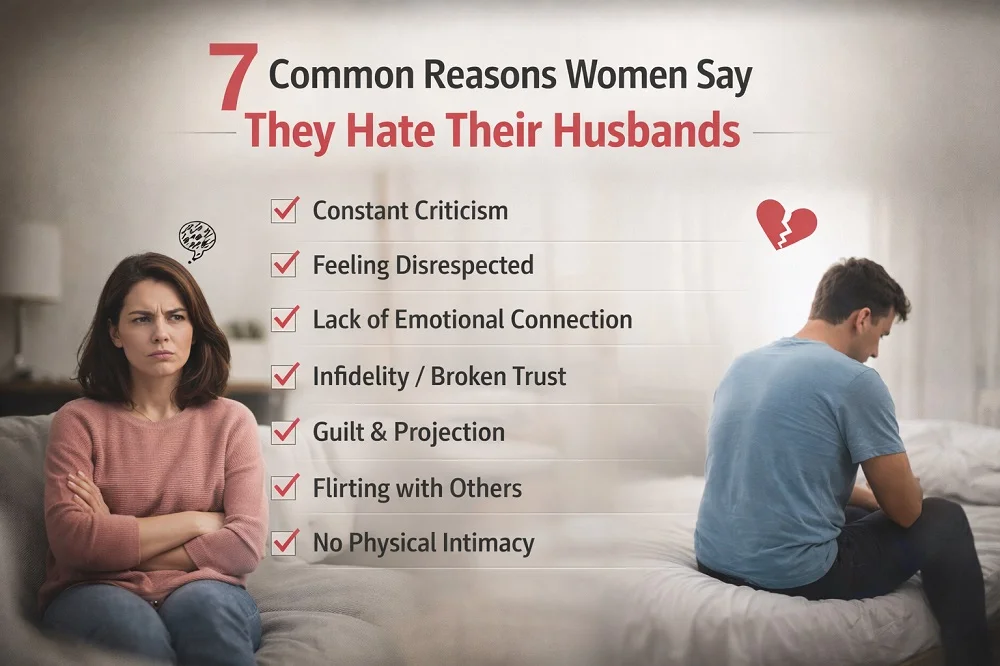
7 Common Reasons Women Say They Hate Their Husbands
If you keep asking yourself, why do I hate my husband, it may be time to look deeper into your relationship patterns.
1. Constant Criticism and Nagging
When your partner constantly points out what you haven’t done — instead of appreciating what you have done — it can feel exhausting. Over time, this creates a sense of inadequacy and emotional fatigue.
2. Feeling Belittled or Disrespected
There is nothing more damaging than feeling small in your own relationship. If your partner regularly criticizes, mocks, or dismisses you, it can deeply affect your self-worth.
In more serious cases, this may cross into emotional or physical abuse — and that should never be ignored.
3. Lack of Emotional Connection
When your husband seems uninterested in your thoughts, feelings, or daily life, it can make you feel invisible. Conversations become shallow, and emotional intimacy begins to fade.
You may start to question the foundation of your relationship.
4. Infidelity and Broken Trust
Discovering that your partner has been unfaithful can be devastating. It’s not just about betrayal — it’s about broken trust, emotional pain, and feeling replaced.
Rebuilding after this requires time, effort, and genuine accountability.
5. Guilt and Emotional Projection
Sometimes, resentment isn’t only about your partner’s actions. If you’ve developed feelings for someone else or crossed boundaries, guilt can turn into misplaced anger.
This is often a defense mechanism — but recognizing it is key.
6. Inappropriate Behavior with Others
Flirting, even if it seems harmless, can feel deeply disrespectful. It can damage trust and lower your sense of value in the relationship.

7. Lack of Physical Intimacy
Physical closeness is an important part of most relationships. When intimacy disappears — and there’s no communication about why — it often signals deeper emotional or personal issues.
Ignoring this can widen the emotional gap between partners.
The Hidden Truth: It’s Often the Small Things
In many cases, there isn’t one major event that causes these feelings. Instead, it’s the accumulation of small disappointments over time.
Things like:
- Not saying “thank you”
- Forgetting small gestures
- Not showing appreciation
- Ignoring daily responsibilities
On their own, these might seem trivial. But when they happen repeatedly without resolution, they can become overwhelming.
Over time, these small cracks can turn into deep emotional distance.
Why Ignoring Your Feelings Makes It Worse
Suppressing your emotions doesn’t make them disappear — it actually intensifies them.
When feelings go unspoken:
- Resentment grows
- Communication breaks down
- Emotional distance increases
Acknowledging your emotions is not weakness — it’s the beginning of healing.
What Should You Do Next?
If you feel like you hate your husband, pause and reflect before making any decisions.
Ask yourself:
- Is this about one major issue or many small ones?
- Have I clearly communicated how I feel?
- Is there willingness on both sides to improve the relationship?
Depending on your answers, your next steps may include:
- Honest communication
- Setting boundaries
- Seeking couples therapy
- Or, in some cases, choosing to move on
Final Thoughts
Your feelings are valid — no matter how complicated they may seem.
Resentment doesn’t appear without reason. It’s often a signal that something in the relationship needs attention, change, or closure.
Whether you decide to rebuild your connection or find peace on your own, the most important step is understanding your emotions and honoring your needs.
Because in the end, you deserve a relationship where you feel valued, respected, and truly seen.
Frequently Asked Questions
Is it normal to feel like I hate my husband sometimes?
Yes, it can be normal to experience strong negative emotions in a marriage, especially during stressful or difficult periods. However, if these feelings are persistent and intense, it may indicate deeper issues that need to be addressed.
What causes resentment in a marriage?
Resentment often builds over time due to unmet expectations, poor communication, lack of appreciation, emotional neglect, or repeated unresolved conflicts. Even small issues can grow into major problems if they are ignored.
Can a marriage recover after feelings of hate?
Yes, many marriages can recover if both partners are willing to communicate openly, take responsibility, and work toward change. Counseling or therapy can also help rebuild trust and emotional connection.
When should I consider leaving my marriage?
If your relationship involves ongoing emotional or physical abuse, constant unhappiness, or a complete lack of respect and effort from your partner, it may be time to consider separation. Your well-being should always come first.
How can I stop feeling resentment toward my husband?
Start by identifying the root cause of your feelings, then communicate openly and honestly. Setting boundaries, practicing self-care, and seeking professional help can also make a significant difference.