In astrology, the planets describe , the zodiac signs describe , and the houses show in your life. Together, these three layers create a more complete picture of your birth chart.
The 12 astrology houses represent different areas of human experience. Some relate to your identity and possessions, while others reveal patterns in communication, family, relationships, work, purpose, and inner transformation. Understanding them can help you read a birth chart with more clarity and context.
What Are the Astrology Houses?
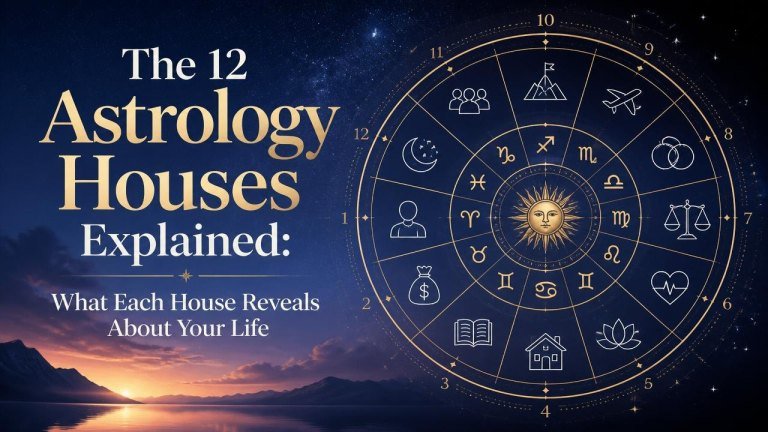
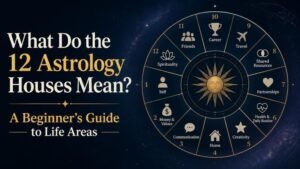
The houses are twelve sections of a birth chart, beginning with the , or rising sign. Each house governs a particular , from your appearance and personal goals to your friendships and spiritual beliefs.
A house may contain one or more planets, or it may be empty. An empty house is not unimportant; its sign, ruling planet, and connections to other parts of the chart still provide useful information. The exact house positions depend on your and birthplace, so it helps to read it in a birth chart.
The 12 Astrology Houses Explained
1st House: Identity and First Impressions
The First House is associated with your , appearance, mannerisms, and approach to life. It describes how you present yourself and how others may experience you at first meeting.
This house also reflects your personal initiative and instinctive reactions. Planets here can strongly influence your , physical presence, and willingness to begin new experiences.
2nd House: Money, Possessions, and Values
The Second House governs , possessions, income, and material security. It can show how you handle resources and what helps you feel stable.
Beyond money, this house reveals your and deeply held values. It may describe the talents you can develop into practical resources and the things you consider genuinely valuable.
3rd House: Communication and Learning
The Third House is linked with , writing, short journeys, and everyday exchanges. It describes how you gather information and share ideas with people around you.
This house also relates to , siblings, neighbors, and your immediate environment. Its influence can reveal your learning style and your approach to curiosity and conversation.
4th House: Home, Family, and Roots
The Fourth House represents , family, ancestry, and your private emotional foundation. It often points to the atmosphere in which you were raised and the kind of security you seek.
Because it sits at the base of the chart, this house is connected with your and personal roots. It may also describe property, domestic routines, and your need for a place where you can fully relax.
5th House: Creativity, Romance, and Pleasure
The Fifth House is the house of , self-expression, romance, hobbies, and play. It shows how you enjoy life and how freely you share your unique gifts.
It is also associated with , performance, dating, and activities that make you feel inspired. This house encourages creative risk, joy, and authentic expression rather than constant practicality.
6th House: Work, Health, and Daily Routines
The Sixth House governs , work routines, service, and practical responsibilities. It can reveal how you organize your time and contribute to the needs of others.
Health and wellness are also important themes, especially your relationship with , consistency, and body awareness. This house favors sustainable routines over unrealistic perfection.
7th House: Partnerships and Marriage
The Seventh House describes , including marriage, committed partnerships, and professional alliances. It reflects the qualities you seek in others and the patterns you bring into close relationships.
This house can also reveal your approach to , negotiation, and commitment. Its opposite position to the First House highlights the balance between independence and partnership.
8th House: Intimacy, Transformation, and Shared Resources
The Eighth House is associated with , emotional vulnerability, shared finances, inheritance, and profound change. It explores what happens when you merge resources, trust, or emotional energy with another person.
This is also a house of and psychological depth. It can point to experiences that require you to release old patterns and develop greater resilience.
9th House: Travel, Beliefs, and Higher Learning
The Ninth House governs , philosophy, religion, long-distance travel, and the search for meaning. It describes how you expand your worldview through study and experience.
This house is connected with , publishing, teaching, and encounters with unfamiliar cultures. It encourages you to question assumptions and pursue a broader understanding of life.
10th House: Career, Reputation, and Ambition
The Tenth House is one of the most visible areas of the chart. It relates to , public reputation, achievement, authority, and long-term goals.
It can show how you want to be recognized and what kind of you hope to make. The house also reflects your relationship with responsibility, leadership, and public expectations.
11th House: Friendships, Groups, and Future Goals
The Eleventh House represents , communities, networks, social causes, and long-term aspirations. It shows how you participate in groups and the kind of collective vision that inspires you.
This house also relates to and support received through wider connections. It can reveal where collaboration helps you move beyond purely personal ambitions.
12th House: Spirituality, Solitude, and the Unconscious
The Twelfth House is connected with , dreams, spirituality, retreat, and the unconscious mind. It describes experiences that may be private, hidden, or difficult to express directly.
It can also point to , compassion, and the need to release what no longer serves you. Time alone may be especially valuable when it helps you process emotions and reconnect with your inner world.
How to Read the Houses in Your Birth Chart
Start by identifying the sign on each house cusp, then note any planets located inside the house. A planet in a house brings to that life area, while the sign shows its .
Next, find the planet that rules the sign on the house cusp. Its position elsewhere in the chart can show where the house’s themes are expressed. For a fuller interpretation, consider aspects between planets, the chart ruler, and the condition of the Ascendant.
Angular, Succedent, and Cadent Houses
The houses are also grouped by their position in the chart. —the First, Fourth, Seventh, and Tenth—are associated with action, visibility, and major life directions.
—the Second, Fifth, Eighth, and Eleventh—relate to development, resources, and maintaining what has begun. —the Third, Sixth, Ninth, and Twelfth—emphasize learning, adaptation, reflection, and preparation for change.
Final Thoughts
The 12 astrology houses provide a practical framework for understanding the different parts of your life. They can illuminate your , relationship patterns, ambitions, emotional foundations, and spiritual development.
Rather than treating one house as a complete prediction, read it as part of the whole chart. The most meaningful interpretation comes from combining the , , planets, and aspects into one connected story.