Medellín is a rewarding city for travelers who plan their days around food. Traditional Paisa cooking, tropical fruit, neighborhood bakeries, specialty coffee, international restaurants, and ambitious Colombian cuisine all share the same valley. The best way to eat here is not to choose between old and new, but to experience both.
What Medellín Food Is Known For
Medellín’s food culture is rooted in Antioquia, the mountainous region whose people are known as Paisas. Meals are often generous, comforting, and built around ingredients such as beans, corn, rice, pork, plantain, avocado, potatoes, and fresh cheese.
At the same time, the city has become increasingly cosmopolitan. In neighborhoods such as El Poblado, Laureles, Manila, and Provenza, you can find Colombian ingredients presented through contemporary techniques alongside Peruvian, Mexican, Italian, Japanese, Argentine, and other international cuisines.
Local Dishes to Try in Medellín
Bandeja paisa
The city’s most famous regional dish is bandeja paisa, a substantial platter traditionally served with beans, rice, ground beef, chicharrón, chorizo, fried egg, ripe plantain, avocado, and arepa. Portions and ingredients vary from one restaurant to another, so do not expect every plate to look identical.
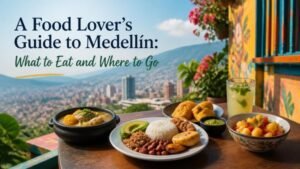
Because it is so filling, bandeja paisa is best treated as a leisurely lunch rather than a quick meal. If you want a lighter introduction, look for a smaller “típico antioqueño” serving or share one between two people.
Arepas and arepa de choclo
Arepas are part of everyday life in Medellín. The local style is often relatively simple: a round corn cake served with butter, cheese, eggs, meat, or another topping. You may also encounter arepa de choclo, a sweeter corn-based version commonly paired with fresh cheese.
Try arepas at breakfast, as a snack, or alongside a traditional meal. Small neighborhood eateries and bakeries are often better places to observe how locals actually eat them than formal restaurants.
Mondongo
Mondongo is a hearty soup made with tripe, vegetables, and often pork or other substantial ingredients. It is a classic comfort food and can be particularly satisfying after a busy day exploring the city. Ask about the ingredients if you are unfamiliar with tripe or prefer a lighter soup.
Calentao
Calentao is a practical and flavorful breakfast made from reheated rice and beans, usually served with egg, meat, arepa, or other accompaniments. The dish reflects the resourceful, home-style character of Paisa cooking and is a good choice when you want something filling without ordering a large platter.
Buñuelos, pandebono, and bakery snacks
For a quick bite, explore Medellín’s bakeries. Buñuelos are warm, round cheese breads with a lightly crisp exterior, while pandebono is another popular cheese-and-corn bread. These snacks pair well with coffee and are easy to fit between museum visits, neighborhood walks, and sightseeing.
Fruit, juices, and mazamorra
Colombia’s tropical fruit selection is one of Medellín’s pleasures. Look for lulo, guanábana, granadilla, tomate de árbol, mora, and other fruits in markets, juice bars, and restaurants. Fresh juices are often prepared to order and may be served with water or milk.
You may also see mazamorra paisa, a traditional corn-based preparation often served with milk and panela. It is a simple dish, but an interesting way to taste a food connected to Antioquia’s rural traditions.

The Best Food Neighborhoods in Medellín
El Poblado and Provenza: international dining and lively evenings
El Poblado is Medellín’s most internationally oriented dining area. Around Provenza and the streets near Parque Lleras, you will find restaurants, cocktail bars, cafés, rooftop venues, and menus influenced by cuisines from across Latin America and beyond, much like the mix described in this guide to food, culture, and neighborhoods.
This is a convenient area for visitors who want variety in one evening. It is also one of the city’s busiest nightlife zones, so the atmosphere can be energetic and crowded. For a more relaxed meal, explore nearby Manila, where independent cafés and restaurants offer a more neighborhood-like setting.
Do not assume that every restaurant in El Poblado represents local cuisine. Use the area for variety, then balance your itinerary with a traditional lunch, a market visit, or a meal in a less visitor-focused neighborhood.
Laureles: relaxed restaurants, cafés, and local rhythm
Laureles is known for a calmer, more residential atmosphere and a broad mix of restaurants. It is a strong choice for travelers who want to eat well without spending every evening in a nightlife district.
The neighborhood works particularly well for food walks. You can combine a casual Colombian lunch with coffee, bakery stops, international food, and an evening meal without traveling across the city. Nearby La 70 is livelier, while the surrounding streets offer a wider range of everyday dining.

Manila: independent cafés and creative cooking
Manila, in El Poblado, has developed a reputation for small restaurants, cafés, bars, and creative menus. It is a good place to look for Colombian ingredients used in modern ways, as well as international dishes in a less formal environment.
Choose Manila when you want to spend an entire afternoon moving between coffee, a light meal, dessert, and drinks. The compact neighborhood layout makes it easy to explore on foot, although individual businesses and opening times can change.
Medellín’s markets: the most direct taste of everyday food
For a more grounded culinary experience, visit one of the city’s traditional market areas, such as Plaza Minorista or Placita de Flórez. These markets are places to see the variety of Colombian produce, including fruits, herbs, vegetables, grains, and ingredients used in home cooking.
Market food is often simple and practical: breakfast plates, soups, rice dishes, meat, arepas, juices, and regional snacks. Go during the daytime, follow normal food-safety judgment, and choose busy stalls with a steady flow of customers.
Mercado del Río and gastronomic markets
Medellín’s gastronomic markets bring several restaurants and food counters together under one roof. Mercado del Río is a prominent example, with shared seating and a broad range of Colombian and international options, offering the same kind of practical stop travelers look for among the things to do in Mexico City.
These venues are useful for groups with different tastes. One person can order regional food while another chooses seafood, pizza, Asian dishes, or drinks. They are more polished than traditional markets, but they still offer a social, informal way to sample several styles in one visit.
Centro and Perpetuo Socorro: culture, tradition, and new ideas
Central Medellín offers traditional eateries, bakeries, cafés, and long-established food businesses alongside cultural attractions. It is a good area for travelers who want to connect a meal with museums, public squares, and the city’s historic urban fabric.
Perpetuo Socorro, a creative district, represents a newer side of Medellín. Food, design, art, and entrepreneurship overlap here, and the dining scene can feel more experimental. Check current venue information before making a special trip, since the neighborhood’s offerings continue to evolve.

How to Plan a Medellín Food Day
Breakfast: start with a bakery or local café
Begin with an arepa, eggs, buñuelos, fresh fruit, or a simple breakfast plate. Colombian coffee is widely available, but remember that “tinto” usually means a small black coffee rather than red wine.
Lunch: make room for a traditional dish
Lunch is the best time to try bandeja paisa, mondongo, or another substantial regional meal. Many local restaurants offer a set lunch with soup, a main course, a drink, and sometimes a small dessert. The exact menu changes daily, so ask what is being served.
Afternoon: coffee, fruit, and something sweet
Use the afternoon for a specialty coffee stop or a fruit-based drink. Medellín’s mild climate makes it easy to pause outdoors, especially in neighborhoods with leafy streets and café terraces.
Dinner: choose between modern Colombian and global flavors
For dinner, decide whether you want a contemporary interpretation of Colombian ingredients or an international meal. Provenza, Manila, Laureles, and creative districts such as Perpetuo Socorro offer the widest range, but reservations may be useful for popular restaurants.
Tips for Eating Well in Medellín
- Do not judge Colombian food by one dish. A market breakfast, a traditional lunch, specialty coffee, and a contemporary dinner can feel like four different culinary experiences.
- Ask how large a portion is. Regional dishes are often generous, and sharing can help you try more than one specialty.
- Try local ingredients beyond bandeja paisa. Tropical fruit, fresh cheese, corn preparations, soups, and bakery snacks reveal more of Antioquia’s food culture.
- Keep an open mind about seasoning. Many local dishes emphasize the natural flavor of ingredients, slow cooking, salt, herbs, and sauces rather than intense heat.
- Check current details before visiting. Restaurant hours, menus, reservations, and market conditions can change, especially around holidays and public events.
- Use normal food and drink precautions. Choose busy establishments, be cautious with untreated water if you are unsure, and take care with raw produce or street food according to your own tolerance.
A Simple Medellín Food Itinerary
Day one: Have breakfast at a neighborhood bakery, explore central Medellín, eat a traditional lunch, and finish with coffee and dessert in Manila or Laureles.
Day two: Visit a market in the morning, try fruit and a local snack, then enjoy a modern Colombian dinner in El Poblado or a creative district.
Day three: Spend a relaxed morning in Laureles, choose a lighter lunch, and visit a gastronomic market in the evening so everyone in your group can try something different.

Final Thoughts
The best places to eat in Medellín are not limited to one restaurant list or one neighborhood. The city’s food story is found in the contrast between a busy market and a polished dining room, a warm buñuelo and an inventive tasting menu, a traditional Paisa platter and a carefully prepared cup of Colombian coffee.
Plan for variety, leave space between meals, and explore beyond the most famous tourist streets. That is how Medellín becomes more than a place to eat: it becomes a city you can understand through its kitchens, markets, cafés, and shared tables, much as travelers experience a route through Peru through its food and landscapes.