
Paris is easiest to explore when you combine walking with the city’s extensive public transport network. The historic centre is compact enough for scenic strolls, while the Metro, buses and RER trains make longer journeys straightforward once you understand the basics of getting around by train.
This first-time guide explains how to choose the right transport, buy tickets, travel from the airports and move around Paris confidently without wasting time or money.
Start with the Paris Metro
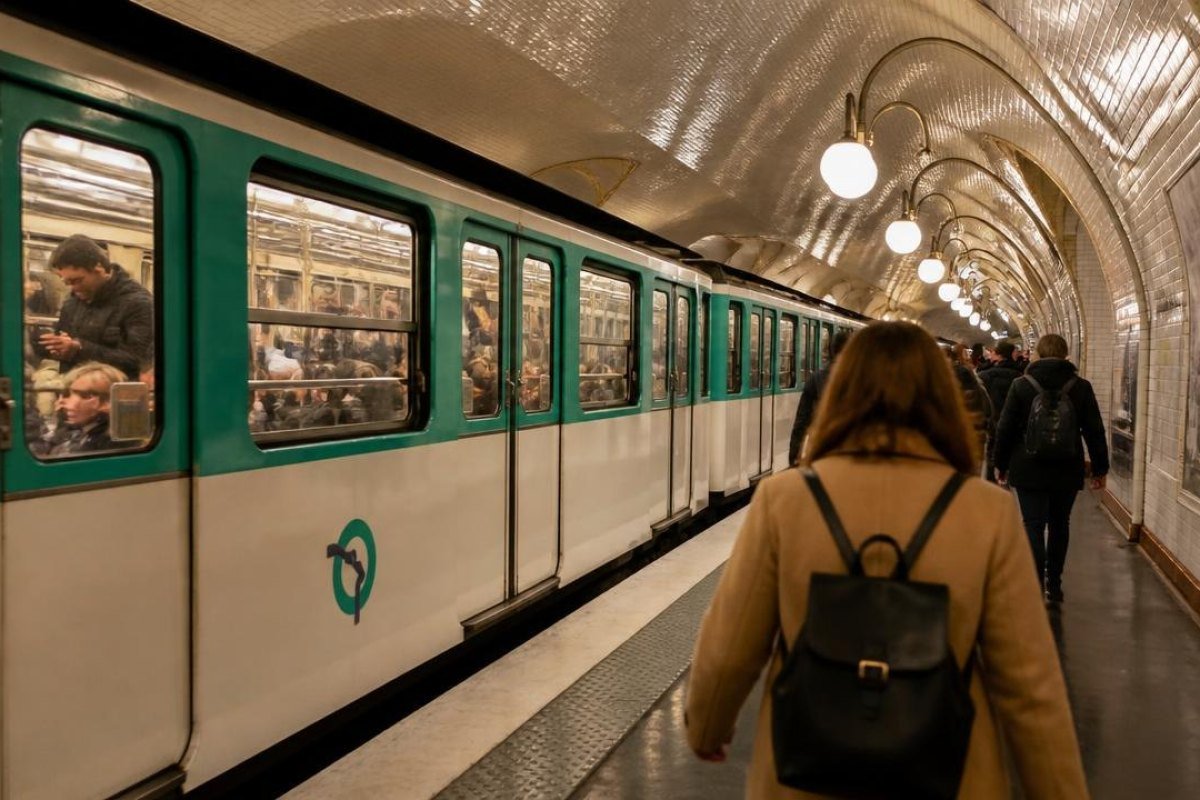
The Metro is usually the fastest way to cross the city. Its network reaches most major attractions, including the Louvre, the Eiffel Tower area, Montmartre, the Latin Quarter and the Marais. Stations are identified by a blue-and-white M sign, and line numbers and colours make the system easier to follow.
Before entering a station, check the direction shown at the platform entrance. Metro lines are labelled by their terminus station, so knowing the final stop in the direction you need is often more useful than memorising every station on the route.
Paris Metro stations can involve stairs, long corridors and busy platforms. Allow extra time if you are carrying luggage, travelling with children or changing between lines. Keep your ticket or phone accessible until you have completed the journey and exited the station.
Understand the wider public transport network
Paris transport is made up of several connected systems. The Metro is best for central Paris, while the RER is useful for longer journeys to destinations such as Versailles, Disneyland Paris and the airports. Buses are particularly helpful when you want to see the streets while travelling.
Metro, RER, buses and trams
The Metro generally operates within the city and stops frequently. RER trains travel faster over longer distances but may use different ticket rules depending on your route. Buses are a good choice for short cross-town trips, and trams are most useful around the outer parts of the city. For broader rail connections, see getting around Europe by train.
Do not assume that one ticket covers every possible journey. Metro and train travel, bus and tram travel, and airport connections can be subject to different fares or ticket products. Check the official Île-de-France transport system before travelling, especially if your route crosses the city boundary.
Planning routes and checking disruptions
Use an official journey-planning app such as Bonjour RATP or Île-de-France Mobilités to compare routes and check live service information. Planned engineering works, station closures and temporary disruptions can affect individual lines.
For simple journeys, a route with one extra stop but no transfer may be easier than the theoretically fastest option. During busy periods, follow station signs carefully and avoid stopping in the middle of corridors or at the top of escalators.
Choose the right tickets and travel passes
Ticket options change over time, so check the current fares and conditions before your trip. Depending on your itinerary, you may use a contactless travel card, a mobile ticket, single-journey tickets or a multi-day visitor pass.
A pass can be useful if you expect several journeys each day, particularly when travelling between central Paris and the suburbs. However, it is not automatically the cheapest choice for every visitor. Compare your planned trips with the current Paris Visite and other official fare options.
Keep transport products separate when necessary. A ticket valid for a Metro journey may not cover an airport transfer or a longer RER trip. Always validate or activate your ticket according to the instructions, and avoid buying from unofficial sellers around busy tourist sites.
Walk between nearby attractions
Walking is one of the best ways to experience Paris. Areas such as the Marais, Saint-Germain-des-Prés, the Latin Quarter and the central riverbanks are rewarding to explore on foot, with cafés, courtyards, bookshops and architecture appearing between major sights.
Paris landmarks can look close together on a map but still involve a substantial walk. Wear comfortable shoes, allow time for crossings and remember that cobbled streets can be tiring with wheeled luggage.
A good strategy is to group attractions by neighbourhood. Spend part of a day exploring one district on foot, then use the Metro or a bus to reach the next area rather than crossing the city repeatedly. This neighbourhood-based approach is also useful when comparing neighbourhoods in Barcelona.

Try cycling in Paris
Cycling can be a practical option for medium-length journeys, especially along major cycle routes and the Seine. The city has an expanding network of cycle lanes, and Vélib’ Métropole provides conventional and electric bikes through self-service stations.
Before renting a bike, check the current availability, pricing, deposit requirements and return rules in the official service. Electric bikes can be helpful on longer routes, but busy intersections and mixed traffic require confidence and attention.
Use designated cycle infrastructure where available, follow traffic signals and watch for pedestrians, parked vehicles and opening car doors. Cycling is usually most enjoyable when you plan a route away from the busiest tourist corridors.
Use buses for sightseeing and easier access
Paris buses are slower than the Metro in heavy traffic, but they offer a more scenic journey and can reduce the number of stairs. They are useful for visitors who prefer to stay above ground or need a route between areas that are not directly connected by Metro.
Check the route direction and stop name before boarding. Bus stops can serve multiple routes, and the same street may have stops on opposite sides for different directions. Keep your ticket ready and allow additional time during rush hour.
Some buses and routes provide better step-free access than older Metro stations, but accessibility varies. If you need a fully accessible journey, confirm the route and current station conditions before leaving.
Getting from the airports into Paris
Paris is served mainly by Charles de Gaulle Airport and Orly Airport. Both have public transport connections into the city, while official taxis provide a convenient door-to-door alternative when you have heavy luggage or arrive late.
From Charles de Gaulle Airport
The RER B connects Charles de Gaulle with central Paris and major interchange stations. The journey can be convenient, but airport stations may involve walking, stairs and crowded trains, particularly with large bags.
Official taxis use a fixed airport fare to central Paris, with the amount depending on whether your destination is on the north or south side of the Seine. Use the official taxi rank rather than accepting unsolicited offers inside or outside the terminal.
From Orly Airport
Metro Line 14 provides a direct public transport connection between Orly and central Paris. It is often attractive for travellers staying near a Line 14 station or an easy interchange.
Official taxis also operate from Orly with fixed fares to central Paris. The exact fare depends on the side of the Seine where your accommodation is located, so confirm the current official information before travelling.
Airport transport rules and fares can change. Check the official airport and Île-de-France transport information shortly before departure, particularly if your flight arrives during a strike, major event or period of planned works.

Know when a taxi or ride-hailing service makes sense
Taxis are useful for airport transfers, late-night arrivals, mobility needs and journeys with several pieces of luggage. Paris taxis have a roof sign and a meter, while official taxi ranks are located at airports, railway stations and many central locations.
You can also book a licensed taxi through an established app or company. Check the vehicle details before entering, and be cautious about drivers who approach you inside transport hubs or near famous landmarks.
Ride-hailing services may be convenient, but pickup points can be difficult in pedestrianised or congested areas. A nearby hotel entrance or clearly marked street can be easier than trying to meet a driver directly outside a busy attraction.
Consider river transport for the views
Boats on the Seine are primarily a sightseeing option rather than the quickest way to commute, but they can be enjoyable between central landmarks. A river journey offers views of Notre-Dame, the Louvre and the Eiffel Tower from a different perspective.
Services, stops, operating periods and ticket conditions vary by operator. Check the current timetable and route before relying on a boat for a time-sensitive appointment.
Practical tips for first-time visitors
- Keep your phone charged and save your accommodation address offline.
- Carry a small bag that can be kept closed in crowded stations and vehicles.
- Use official transport apps for live disruptions and route changes.
- Allow extra time for Metro transfers, security checks and station navigation.
- Do not block doors or stand directly beside train entrances when platforms are crowded.
- Check the transport rules for children, bicycles, luggage and accessibility before travelling.
- For major attractions, combine a short public transport ride with a walk through the surrounding neighbourhood.
The easiest Paris transport strategy
For most first-time visitors, the simplest approach is to use walking for nearby sights, the Metro for central cross-city journeys and the RER or Line 14 for airport and suburban connections. Add buses when you want a more scenic route, and choose a taxi when luggage, timing or mobility makes public transport inconvenient.
Paris becomes much easier once you stop trying to see everything from one transport mode. Plan by neighbourhood, check live travel information and leave room for spontaneous walks. That combination will help you move efficiently while still experiencing the streets, riverbanks and local atmosphere that make the city memorable.