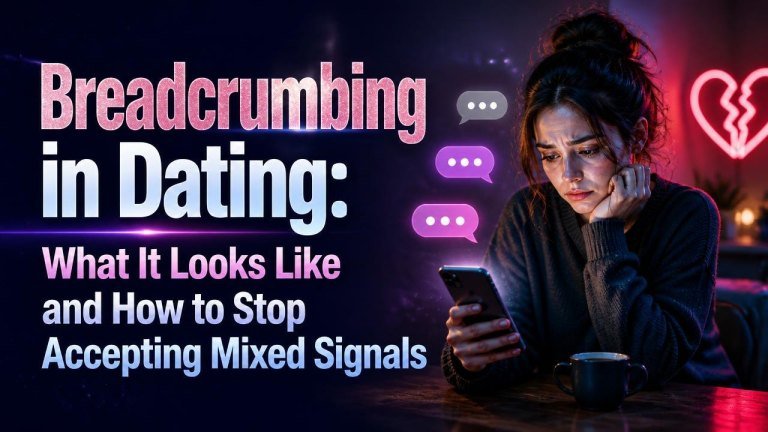
Breadcrumbing in dating happens when someone gives you just enough attention to keep you interested, but not enough consistency to build a real relationship. They may send occasional messages, react to your stories, or suggest meeting without ever following through. The result is often confusion, emotional uncertainty, and the feeling that a meaningful connection is always just out of reach.
Recognizing breadcrumbing is not about demanding constant communication or labeling every imperfect dating experience as toxic. It is about noticing the difference between genuine interest and intermittent attention, then choosing relationships that offer clarity, reciprocity, and respect. Once you understand the pattern, you can stop interpreting mixed signals and start responding to what someone consistently does.
What Is Breadcrumbing in Dating?
Breadcrumbing is a pattern of low-effort communication that maintains someone’s interest without a clear intention to pursue a relationship. The person may appear warm and engaged one day, then disappear for days or weeks. When they return, they often offer a casual excuse, a flirtatious message, or a vague suggestion that renews your hope.
The defining feature is not simply delayed replies or a busy schedule. It is the ongoing gap between promises and actions, between occasional contact and consistent effort. A person who genuinely wants to date you may be busy, but they usually communicate honestly, make realistic plans, and show some interest in moving the connection forward.

What Breadcrumbing Looks Like
Breadcrumbing can be subtle, especially at the beginning of dating. Each individual interaction may seem harmless, but the larger pattern reveals that you are receiving attention without dependable emotional or practical investment.
- Vague invitations: They say, “We should meet sometime,” but never suggest a specific day or make a concrete plan.
- Inconsistent contact: They disappear and then return with a friendly message as if no time has passed.
- Late-night attention: Most conversations happen when they are bored, lonely, or looking for validation.
- Digital engagement without progress: They like your posts, watch your stories, or send emojis while avoiding meaningful conversation.
- Repeated cancellations: Plans are postponed frequently, with little effort to reschedule or repair the disappointment.
- Flirtation without direction: They create chemistry but avoid discussing what they want from the connection.
Breadcrumbing Versus Normal Dating Uncertainty
Early dating naturally includes some uncertainty. People may be cautious, nervous, or unsure whether compatibility will develop. The difference is that healthy uncertainty still allows for honest communication, gradual consistency, and a willingness to make reasonable effort.
Breadcrumbing becomes more likely when the same cycle repeats: attention, hope, withdrawal, and renewed attention. Pay attention to how you feel over time. If you are constantly analyzing messages, waiting for contact, or trying to earn someone’s interest, the connection may be sustained more by anxiety than by mutual care.
Why Breadcrumbing Is So Difficult to Leave
Intermittent attention can be unusually powerful because it keeps hope alive. When affection appears unpredictably, every message can feel especially meaningful. You may focus on the best moments and assume that the next conversation will finally lead to the relationship you want, making it harder to stop seeking constant reassurance.
This pattern can also affect your self-esteem. Instead of asking whether the other person meets your needs, you may start asking what you need to do differently to become worthy of consistent attention. The emotional cost includes overthinking, self-doubt, and the gradual lowering of your expectations.
Breadcrumbing is not proof that you are naive or overly demanding. It is a confusing dynamic by design, whether the other person is acting deliberately or simply behaving selfishly and inconsistently. Your responsibility is not to decode their hidden feelings; it is to evaluate whether their behavior works for you.
How to Stop Accepting Mixed Signals
Define What Consistency Means to You
Before confronting anyone else’s behavior, clarify your own standards. Consistency does not mean constant texting or immediate availability. It may mean reliable plans, respectful communication, and a reasonable effort to maintain contact.
Write down the behaviors you need in order to feel secure while dating. These might include seeing each other regularly, receiving direct answers, or knowing whether both people are open to a committed relationship. Clear standards make it easier to recognize when a connection is falling short and understand emotional safety in a relationship.
Judge Patterns, Not Isolated Moments
A charming message does not erase weeks of silence, and one enjoyable date does not prove long-term interest. Look at the complete pattern of follow-through, availability, and emotional investment.

Ask yourself a few direct questions: Do they initiate as often as you do? Do they keep plans? Do their actions match what they say? If the answers are consistently negative, treat those signs you need clarity as meaningful rather than waiting for a dramatic explanation.
Communicate Directly Once
You do not need to make a speech or argue your way into receiving better treatment. A calm, direct message is enough: “I enjoy talking with you, but I am looking for consistent dating and clear plans. Is that something you want too?” This gives the other person an opportunity to respond with clarity and demonstrates that you respect your own time.
Focus on the response and what follows it. A sincere answer should be supported by changed behavior, not only reassurance. If they become defensive, evade the question, or briefly improve before returning to the same pattern, you have received useful information.
Set a Boundary and Follow Through
A boundary describes what you will do, not how you will control another person. You might decide that you will stop responding to vague invitations, decline last-minute plans, or end contact when inconsistency continues after you have addressed it.
Following through can feel difficult because you may still like the person. However, a boundary protects your time, emotional energy, and sense of self-respect. You do not need to wait until the behavior becomes cruel before deciding that it is not acceptable for you.
Common Mistakes to Avoid
One common mistake is treating potential as evidence. You may imagine how caring or committed someone could become if they resolved their fears, became less busy, or recognized your value. Dating decisions should be based on present behavior, not an imagined future version of the person.
Another mistake is overexplaining your needs in the hope that the perfect message will create motivation. Communication matters, but it cannot manufacture interest. If someone understands what you need and still offers only occasional attention, the issue is probably not a lack of explanation.
It is also unhelpful to retaliate with your own mixed signals. Delaying replies, creating jealousy, or pretending not to care may keep the game going, but it rarely creates a healthy relationship. Choose directness over strategy and distance yourself when the pattern is clear.
Practical Ways to Protect Yourself While Dating
- Keep your life balanced: Continue investing in friends, work, interests, and rest rather than organizing your emotional world around one inconsistent person.
- Match effort thoughtfully: Do not repeatedly initiate, plan, and repair a connection that the other person barely maintains.
- Move from texting to real life: Meaningful interest becomes easier to assess when someone is willing to make and keep plans.
- Ask about intentions early: You do not need a serious commitment immediately, but you can ask whether someone is dating casually or looking for a relationship.
- Notice your emotional state: Frequent anxiety, preoccupation, or disappointment is important data, not something to dismiss.
- Leave without seeking permission: You are allowed to end a connection that repeatedly leaves you confused, even if the other person has not done something dramatic.
When It Is Time to Walk Away
It may be time to leave when you have communicated your needs and the pattern remains unchanged. Repeated disappearing, vague promises, canceled plans, and contact that appears only when convenient are signs that the connection is not offering enough mutuality or security.
Walking away does not require anger or a final argument. You can say, “This dynamic is not working for me, so I am going to step back,” and then protect that decision. If contact continues to pull you back into uncertainty, muting, unfollowing, or blocking may help you create the distance needed to move on.
Final Perspective
Breadcrumbing in dating keeps you focused on occasional signs of interest instead of the full reality of someone’s behavior. The most reliable measure of interest is not chemistry, flattering messages, or digital attention; it is consistent action over time.
You do not have to prove that someone is intentionally manipulating you before choosing a healthier situation. If mixed signals leave you anxious and repeatedly disappointed, that experience is enough to reconsider the connection. Look for people who communicate clearly, make room for you, and show through their actions that they want to be present.