This question may sound simple, but the answer is more complex than many people think. Over the years, experts have offered different recommendations about daily water intake. In reality, the amount of water you need depends on several personal factors, including your age, activity level, overall health, and the climate you live in. There is no single rule that fits everyone, but understanding how hydration works can help you make better choices for your body each day.
Why Water Is So Important for Your Health
Water is one of the most essential elements in the human body. In fact, it makes up roughly 50% to 70% of total body weight. Every cell, tissue, and organ relies on water to function properly. Without enough fluids, the body cannot maintain normal processes that are necessary for survival.
Water plays many important roles in the body. For example, it helps:
- Remove waste through urine, sweat, and bowel movements
- Maintain a normal and healthy body temperature
- Lubricate and protect the joints
- Support and cushion sensitive tissues
When your body does not get enough water, dehydration can occur. Even mild dehydration may leave you feeling tired, weak, dizzy, or unable to focus well.
How Much Water Do You Really Need?
Your body loses water every day through breathing, sweating, urination, and digestion. To stay healthy, you need to replace these fluids by drinking beverages and eating water-rich foods.
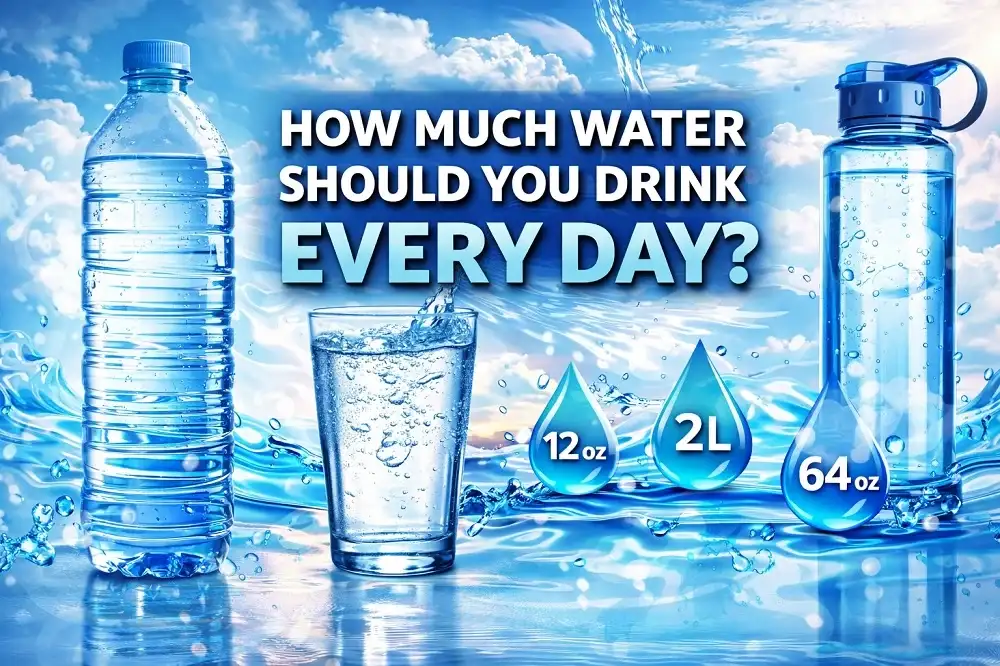
For a generally healthy adult, average daily fluid intake is often estimated at:
- About 3.7 liters (15.5 cups) per day for men
- About 2.7 liters (11.5 cups) per day for women
These amounts include fluids from both drinks and foods. On average, about 20% of daily fluid intake may come from food, while the rest usually comes from beverages.
Is the “8 Glasses a Day” Rule Correct?
Most people have heard the advice to drink eight glasses of water a day. This guideline is easy to remember and can be a helpful goal for many people. However, it is not a universal rule.
Some healthy adults may need less than eight glasses a day, while others may need more. In many cases, simply paying attention to your body and drinking when you are thirsty is a good starting point. Still, thirst alone may not always be the best guide, especially for older adults, athletes, or people who are sick.
Factors That Affect Your Daily Water Needs
The amount of water your body needs can change from day to day. Several factors influence how much fluid you should drink.
1. Physical Activity
If you exercise or do any activity that makes you sweat, your body loses more fluids than usual. This means you need to drink more water to replace what is lost. It is a good habit to drink water before, during, and after exercise.
2. Weather and Environment
Hot or humid weather can increase sweating and raise your fluid needs. People who live in warm climates often need more water. High altitudes can also increase the risk of dehydration, especially if you are not used to those conditions.
3. Overall Health
Your body may lose more fluid when you have a fever, vomiting, or diarrhea. In these situations, drinking extra water is important. In some cases, a doctor may recommend oral rehydration solutions to restore lost fluids and electrolytes. Certain health problems, such as bladder infections or kidney stones, may also require increased fluid intake.
4. Pregnancy and Breastfeeding
Women who are pregnant or breastfeeding usually need more fluids to stay properly hydrated. This is because the body is working harder and requires additional water to support both mother and baby.
Does Only Plain Water Count?
No, water is not the only way to stay hydrated. While plain water is often the best choice, your body also gets fluids from many other drinks and foods.
For example, fruits and vegetables such as watermelon, cucumber, oranges, lettuce, and spinach contain large amounts of water. Beverages like milk, herbal tea, and natural fruit juice also contribute to your daily fluid intake.
Even drinks that contain caffeine, such as coffee and tea, can still help with hydration when consumed in moderate amounts. However, it is wise to be careful with sugary drinks, since they may add excess calories and are not the healthiest option for regular hydration.
How Can You Tell If You Are Drinking Enough Water?
Your body often gives simple signs that you are getting enough fluids. You are likely well hydrated if:

- You rarely feel very thirsty
- Your urine is usually clear or pale yellow
- You generally feel physically well and energized
If you are unsure how much water you personally need, a doctor or registered dietitian can help you decide based on your lifestyle and health condition.
Simple Ways to Stay Hydrated Every Day
One of the easiest ways to support hydration is to make water your main daily drink. You do not need to wait until you feel extremely thirsty. Small, consistent habits can help you drink enough throughout the day.
It can be helpful to drink a glass of water:
- With each meal
- Between meals
- Before, during, and after exercise
- Whenever you start to feel thirsty
Carrying a reusable water bottle, keeping water near your desk, or adding slices of lemon or cucumber can also make drinking water easier and more enjoyable.
Can Drinking Too Much Water Be Harmful?
For most healthy adults, drinking too much water is uncommon. However, it is possible. If a person drinks excessive amounts of water in a short period of time, the kidneys may not be able to remove the extra fluid efficiently. This can lower the sodium level in the blood, a condition called hyponatremia.
Hyponatremia can be dangerous and, in severe cases, life-threatening. It is more likely to happen in endurance athletes or people who force themselves to drink large amounts of water without replacing electrolytes during long periods of physical activity.
This is why balance is so important. Drinking enough water is healthy, but drinking far beyond your body’s needs can also be risky.
The Best Approach to Daily Water Intake
There is no perfect number that works for every person. The best daily water intake depends on your individual body and lifestyle. A healthy approach is to drink regularly, choose water often, eat water-rich foods, and pay attention to your body’s signals.
If you are very active, live in a hot climate, are pregnant, breastfeeding, or dealing with illness, your hydration needs may be higher than average. In these situations, personalized medical advice can be especially useful.
Conclusion
Water is essential for nearly every function in the body, from temperature control to joint support and waste removal. Although the common “8 glasses a day” rule may be helpful for some people, it is not a one-size-fits-all answer. Your ideal fluid intake depends on your health, daily routine, and environment.
Choosing water as your primary drink, staying aware of thirst, and watching for signs of dehydration can help you maintain a healthy fluid balance every day. When in doubt, speaking with a healthcare professional is the best way to understand your personal hydration needs.
Disclaimer: This article is for informational purposes only and does not replace professional medical advice, diagnosis, or treatment. If you have any health concerns or questions about how much water you should drink, consult your doctor or a qualified healthcare provider. This content is intended to provide general information and is not personalized medical guidance.
Frequently Asked Questions
How much water should I drink every day?
Daily water needs vary by age, activity level, climate, and health. On average, men may need about 3.7 liters (15.5 cups) and women about 2.7 liters (11.5 cups) of total fluids per day.
Does coffee or tea count toward water intake?
Yes, beverages such as coffee, tea, milk, and juice can contribute to your daily fluid intake. Water is still the healthiest main choice.
How do I know if I am drinking enough water?
Common signs of good hydration include rare thirst, pale yellow urine, normal energy levels, and feeling well overall.
Can drinking too much water be dangerous?
Yes, excessive water intake in a short time may cause hyponatremia, a condition where sodium levels in the blood become too low. This can be serious.
Should I drink more water when exercising?
Yes, physical activity increases fluid loss through sweat. It is recommended to drink water before, during, and after exercise to stay properly hydrated.