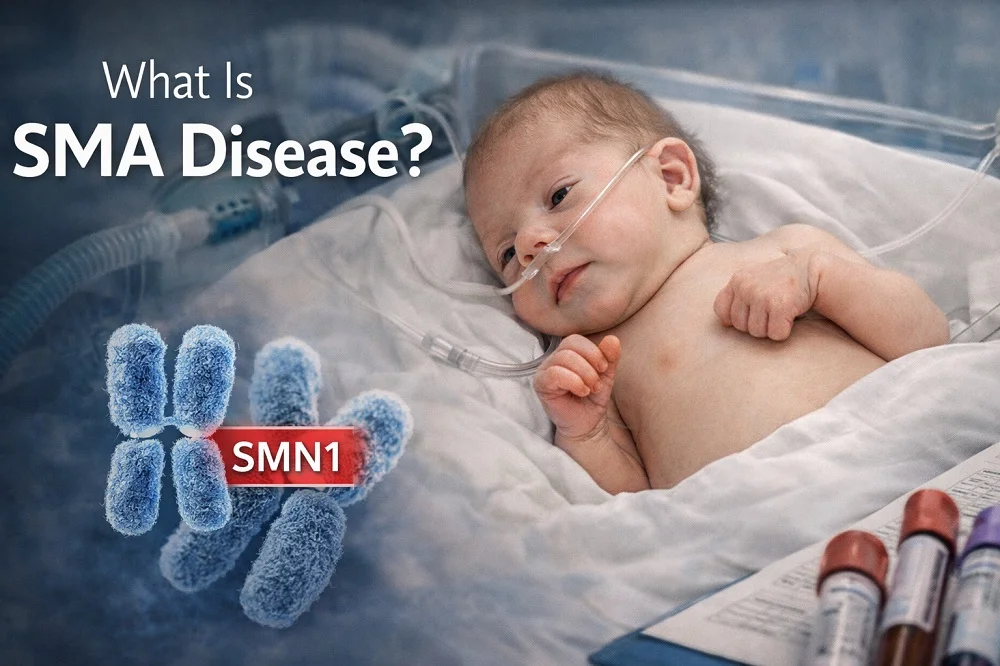
Spinal Muscular Atrophy (SMA) is a rare genetic disorder that affects the nerves responsible for controlling voluntary muscles. It primarily causes progressive muscle weakness, reduced movement, and difficulty with everyday physical activities such as sitting, standing, walking, swallowing, and breathing. SMA can appear in infancy, childhood, adolescence, or adulthood depending on the type and severity of the condition.
Over the last decade, awareness of SMA has grown significantly due to advances in medical research, newborn screening programs, and life-changing treatment options. Although SMA was once considered a condition with very limited options, modern therapies have dramatically improved outcomes for many patients. Early diagnosis remains one of the most important factors in successful treatment and long-term care.
What Is SMA?
SMA stands for Spinal Muscular Atrophy. It is an inherited neuromuscular disorder caused by problems in the genes that produce survival motor neuron (SMN) protein. This protein is essential for the health and function of motor neurons, which are nerve cells located in the spinal cord and brainstem.
When these motor neurons begin to deteriorate, the brain cannot effectively send signals to muscles. As a result, muscles gradually weaken and shrink over time. The muscles most commonly affected include those used for movement, posture, swallowing, and breathing.

SMA does not usually affect intelligence. Many individuals with SMA have normal cognitive development and can lead active, productive lives with proper support and treatment.
What Causes SMA?
SMA is usually caused by mutations or deletions in the SMN1 gene. This gene is responsible for producing the SMN protein that keeps motor neurons alive and functioning properly. Without enough SMN protein, motor neurons degenerate, leading to progressive muscle weakness.
SMA is inherited in an autosomal recessive pattern. This means a child must inherit one altered gene from each parent to develop the disease. Parents who carry one altered gene are known as carriers and often have no symptoms.
If both parents are carriers:
- There is a 25% chance the child will have SMA.
- There is a 50% chance the child will be a carrier.
- There is a 25% chance the child will inherit no altered genes.
Carrier screening and genetic counseling can help families understand their risks before pregnancy.
Types of SMA
SMA is divided into several types based on age of onset and motor function achieved. In general, earlier onset often means more severe symptoms.
Type 0 SMA
This is the rarest and most severe form. Symptoms begin before birth, often with reduced fetal movement. Babies usually have profound weakness at birth and require intensive medical care.
Type 1 SMA
Also known as infantile-onset SMA, this form begins within the first six months of life. Babies may have poor muscle tone, weak crying, feeding difficulties, and breathing problems. Without treatment, it was historically the most severe common type.
Type 2 SMA
Symptoms usually appear between 6 and 18 months. Children can often sit independently but may not stand or walk without assistance. Many individuals with Type 2 live into adulthood with supportive care.
Type 3 SMA
This type appears in childhood, adolescence, or teenage years. Individuals can usually walk at some point but may lose mobility over time. Severity can vary widely.
Type 4 SMA
This adult-onset form usually develops after age 18. Symptoms tend to be milder and progress slowly. Many people remain independently mobile for years.
Symptoms of SMA
The symptoms of SMA depend on the type, age of onset, and how much SMN protein the body produces. Common signs include:
- Muscle weakness in arms, legs, neck, or trunk
- Low muscle tone (floppiness)
- Delayed motor milestones
- Difficulty sitting, standing, or walking
- Tremors in fingers or hands
- Swallowing or feeding problems
- Weak cough
- Breathing difficulties
- Fatigue after activity
- Spinal curvature (scoliosis)
Symptoms may progress gradually or rapidly depending on the type. Any persistent weakness in a child or adult should be medically evaluated.
When Does SMA Appear?
SMA can appear at different life stages:
- Before birth: Type 0
- 0–6 months: Type 1
- 6–18 months: Type 2
- Childhood to teens: Type 3
- Adulthood: Type 4
This wide range is why some people are diagnosed very early, while others may not receive a diagnosis until adulthood.
How Is SMA Diagnosed?
Modern diagnosis of SMA often begins with physical signs or family history, followed by laboratory testing. Common diagnostic methods include:
Genetic Testing
This is the most accurate and common way to diagnose SMA. It checks for missing or altered copies of the SMN1 gene.
Newborn Screening
Some countries and regions now include SMA in newborn screening programs. Early detection can allow treatment before symptoms begin.
Electromyography (EMG)
EMG evaluates how nerves communicate with muscles and may help in unclear cases.
Muscle and Neurological Examination
Doctors assess strength, reflexes, tone, movement, and developmental milestones.
Additional Testing
Respiratory studies, swallowing assessments, imaging, and orthopedic evaluations may be needed after diagnosis.
Can SMA Be Detected During Pregnancy?
Yes, SMA may be identified before birth if there is a known family risk or carrier status. Prenatal testing options may include:
- Carrier screening for parents before or during pregnancy
- Chorionic villus sampling (CVS)
- Amniocentesis
- Preimplantation genetic testing during IVF
Families considering these options should consult a qualified genetic counselor or specialist.
Treatment for SMA
Although SMA was once managed only with supportive care, treatment has changed dramatically in recent years. Several therapies now target the underlying genetic cause of the disease.
1. Gene Therapy
Some therapies deliver a functional copy of the SMN1 gene to help the body produce SMN protein. These treatments are often most effective when given early.
2. SMN Protein-Boosting Medicines
Other therapies help the related SMN2 gene produce more useful SMN protein, improving motor neuron survival.
3. Physical Therapy
Stretching, mobility exercises, posture training, and strengthening programs help preserve movement and reduce complications.
4. Respiratory Care
Breathing support, cough assistance devices, and monitoring are especially important in more severe types.
5. Nutrition and Swallowing Support
Dietitians and speech/swallow specialists can help maintain safe feeding and healthy growth.
6. Orthopedic Care
Braces, seating systems, scoliosis management, and adaptive equipment can improve comfort and independence.
Life Expectancy With SMA
Life expectancy depends greatly on the type of SMA, the age symptoms begin, access to treatment, and respiratory care. Historically, severe infantile SMA had limited survival, but modern therapies have changed outcomes significantly.
Many individuals with Type 2, Type 3, and Type 4 can live into adulthood or have near-normal life expectancy with proper care. Because treatments continue to improve, predictions today are more optimistic than in the past.
Living With SMA
Many people with SMA attend school, work, build careers, maintain relationships, and live fulfilling lives. Assistive technology, wheelchairs, communication devices, home adaptations, and community support can make a major difference.
Mental health support is also important. Both patients and families may benefit from counseling, peer groups, and emotional support services.
Can SMA Be Prevented?
SMA cannot always be prevented, but risk can be better understood through:
- Carrier screening before pregnancy
- Genetic counseling
- Family history review
- Prenatal testing when indicated
- Early newborn screening
These tools help families make informed healthcare decisions.
Latest Hope for SMA Patients
Research into SMA continues rapidly. Scientists are exploring combination therapies, earlier treatment strategies, better rehabilitation methods, and long-term monitoring tools. As medical science progresses, quality of life and survival continue to improve for many patients worldwide.
Important Medical Disclaimer
This article is for informational purposes only and does not replace professional medical advice, diagnosis, or treatment. If you suspect SMA symptoms or have questions about genetic risk, consult a neurologist, pediatric specialist, or qualified healthcare provider.
Frequently Asked Questions
What is SMA disease?
SMA (Spinal Muscular Atrophy) is a rare genetic disorder that affects motor neurons, causing progressive muscle weakness and movement difficulties.
What causes SMA disease?
SMA is usually caused by mutations in the SMN1 gene, which leads to a lack of survival motor neuron protein needed for healthy nerve cells.
Is SMA disease inherited?
Yes, SMA is an inherited genetic condition passed down when both parents carry a faulty copy of the SMN1 gene.
Can SMA disease be treated?
While there is no complete cure, modern treatments such as gene therapy, medications, physical therapy, and supportive care can improve quality of life and outcomes.
What are the first signs of SMA disease?
Early signs may include muscle weakness, poor head control, delayed movement milestones, trouble swallowing, and breathing difficulties, depending on the type of SMA.