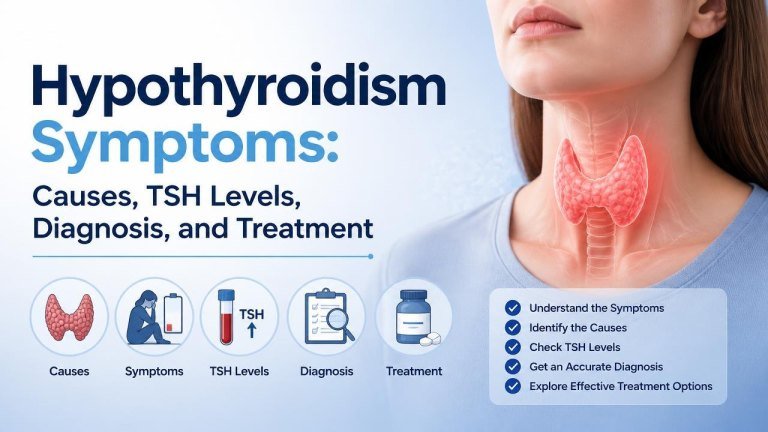
Hypothyroidism occurs when the thyroid gland does not produce enough thyroid hormones for the body’s needs. Because thyroid hormones influence energy production, temperature regulation, digestion, heart rate, and many other processes, an underactive thyroid can affect several parts of daily life.
Symptoms may develop gradually and can resemble stress, aging, sleep problems, or other health conditions. Understanding the common signs, causes, TSH testing, diagnosis, and treatment options can help you discuss concerns with a healthcare professional.
What Is Hypothyroidism?
Hypothyroidism is a condition in which the thyroid produces too little thyroxine and other thyroid hormones. The thyroid is a small, butterfly-shaped gland at the front of the neck, but its hormones help regulate metabolism, body temperature, and the function of multiple organs.
When thyroid hormone levels fall, the pituitary gland usually releases more thyroid-stimulating hormone, or TSH, to encourage the thyroid to work harder. This relationship is why TSH is commonly used as an important part of thyroid evaluation.

Common Hypothyroidism Symptoms
Symptoms vary from person to person and may appear slowly. Common signs include persistent fatigue, feeling unusually cold, and unexplained weight gain. Some people notice only a few symptoms, while others experience a broader pattern.
- Dry skin, brittle nails, or thinning hair
- Constipation
- Muscle aches, cramps, or weakness
- Joint discomfort
- Difficulty concentrating or feeling mentally slowed
- Low mood or depression
- A slower heart rate
- Heavier or irregular menstrual periods
- Reduced fertility or changes in sexual function
- Facial puffiness or swelling around the eyes
These symptoms are not specific to hypothyroidism. Fatigue, weight changes, and mood symptoms can have many causes, including sleep-related breathing disorders, so testing is important rather than relying on symptoms alone.
Symptoms in Older Adults and Children
Older adults may have subtle symptoms, such as confusion, reduced mobility, or a decline in usual activity. Children and teenagers may experience tiredness, constipation, dry skin, or slower growth. In adolescents, delayed puberty or changes in school performance may also require evaluation.
New or worsening symptoms should be discussed with a healthcare professional, particularly when several signs occur together or interfere with daily activities.
What Causes Hypothyroidism?
The most common cause in many regions is Hashimoto’s thyroiditis, an autoimmune condition in which the immune system gradually damages thyroid tissue. Other possible causes include thyroid surgery, radioactive iodine treatment, certain medications, and inflammation of the thyroid.
Hypothyroidism can also result from a problem involving the pituitary gland or hypothalamus, although these causes are less common. Severe or prolonged iodine deficiency can affect thyroid function, while excessive iodine may also create problems in some people.
Risk Factors
The likelihood of hypothyroidism may be higher with a family history of thyroid disease, another autoimmune condition, or previous thyroid treatment. Risk also varies with age, sex, pregnancy, and certain medications.
Tell your clinician about supplements and medicines, including products containing iodine or thyroid hormones. These details can affect both thyroid function and the interpretation of test results.
Understanding TSH Levels
TSH is often the first blood test used to assess possible hypothyroidism. A high TSH level commonly suggests that the thyroid is not producing enough hormone. The pituitary gland is responding by sending stronger signals to the thyroid.
Doctors usually interpret TSH alongside free T4, the unbound form of thyroxine available to tissues. A high TSH with a low free T4 generally supports overt primary hypothyroidism. A high TSH with a normal free T4 may be described as subclinical hypothyroidism.

Reference ranges can differ between laboratories and may be influenced by pregnancy, age, illness, medication, and the timing of testing. A single result should therefore be interpreted in context rather than treated as a diagnosis by itself.
How Hypothyroidism Is Diagnosed
Diagnosis begins with a review of symptoms, medical history, family history, medicines, and physical findings. A clinician may check for a slowed heart rate, dry skin, reflex changes, swelling, or an enlarged thyroid.
Blood tests commonly include TSH and free T4. When Hashimoto’s thyroiditis is suspected, thyroid antibody tests—especially thyroid peroxidase antibodies—may provide additional information. An ultrasound is not always necessary, but it may be recommended for a thyroid nodule, enlargement, or another structural concern.
Testing is particularly important because symptoms alone cannot reliably distinguish hypothyroidism from symptoms of anemia, sleep disorders, depression, nutritional problems, or other medical conditions.
Hypothyroidism Treatment
The standard treatment for primary hypothyroidism is daily levothyroxine, a medication that replaces the hormone the thyroid is unable to produce. The dose is individualized according to factors such as body size, age, pregnancy, heart health, other medicines, and laboratory results.
Levothyroxine is often taken consistently on an empty stomach, according to the prescribing clinician’s instructions. Calcium, iron, some antacids, and other products can interfere with absorption, so ask a pharmacist or clinician how to separate them from thyroid medication.
Monitoring and Dose Adjustments
After starting treatment or changing the dose, clinicians usually repeat TSH testing after an appropriate interval to assess the response. Follow-up testing is also important when symptoms change, pregnancy occurs, or medicines affecting absorption are introduced.
Do not change or stop thyroid medication without medical advice. Too little replacement can leave symptoms untreated, while too much may cause palpitations, anxiety, tremor, sweating, or other signs of excessive thyroid hormone.
When to Seek Medical Advice
Make an appointment if you have several persistent symptoms, a family history of thyroid disease, or a condition associated with autoimmune illness. Seek prompt medical guidance for severe weakness, marked swelling, confusion, breathing difficulty, or significant changes in alertness.
People who are pregnant, trying to conceive, or recently gave birth should discuss thyroid concerns with a clinician because thyroid hormone needs can change during and after pregnancy. Early evaluation supports appropriate care for both the patient and, when applicable, the developing baby.
Living Well With Hypothyroidism
Most people can manage hypothyroidism effectively with the right dose of medication and regular follow-up. Take treatment consistently, attend recommended blood tests, and report ongoing symptoms rather than assuming they are unrelated.
A balanced diet, regular movement, adequate sleep, and management of irritable bowel syndrome and other health conditions can support overall well-being. Avoid high-dose supplements marketed as thyroid cures; unregulated products may contain thyroid hormones or iodine and can interfere with safe treatment.
Key Takeaway
Hypothyroidism may cause fatigue, cold intolerance, constipation, dry skin, weight changes, and concentration problems, but these symptoms have many possible causes. TSH and free T4 testing help clarify thyroid function, while levothyroxine is the usual treatment when hormone replacement is needed.
If you suspect an underactive thyroid, speak with a qualified healthcare professional for personalized testing and advice.