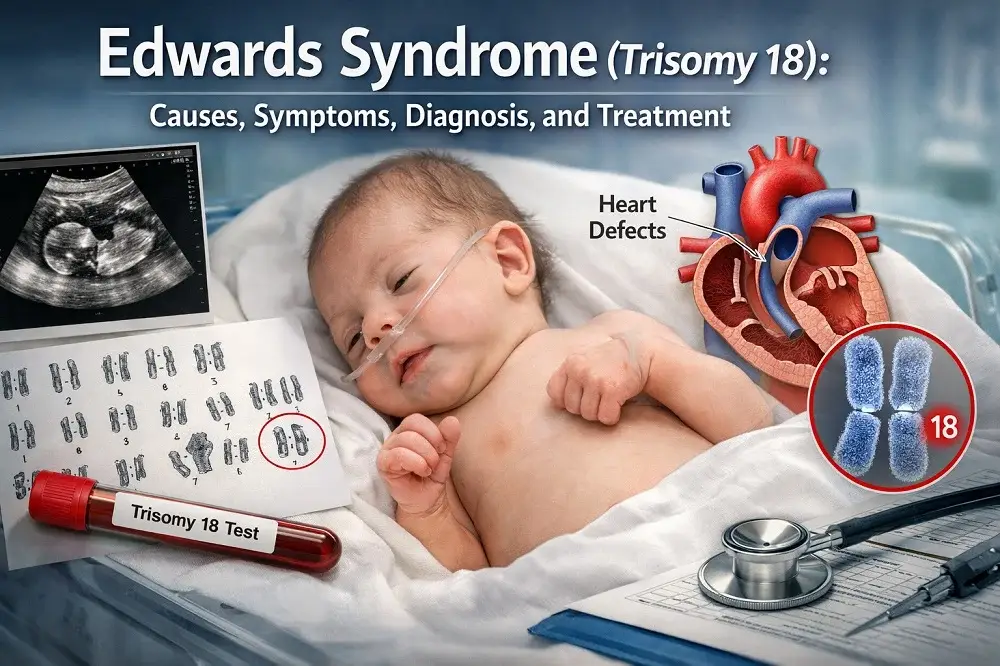
Edwards syndrome, also known as Trisomy 18, is a rare genetic disorder caused by the presence of an extra copy of chromosome 18. This condition affects a baby’s growth and development before and after birth and is often associated with serious physical abnormalities and life-threatening health complications. Because it can impact multiple organs and body systems, Edwards syndrome is considered one of the most severe chromosomal conditions seen in newborns.
The syndrome was first described in the 1960s by Dr. John Hilton Edwards, whose work helped identify the pattern of abnormalities linked to this condition. Since then, medical understanding of the disorder has improved, allowing doctors to detect it during pregnancy through screening tests and diagnostic evaluations.
What Is Edwards Syndrome?
Edwards syndrome is a congenital genetic condition that develops when a baby has three copies of chromosome 18 instead of the usual two. For this reason, it is commonly called Trisomy 18. Chromosomes carry genetic information that guides the growth and function of the body, so an extra chromosome can disrupt normal development in significant ways.
This condition may cause low birth weight, delayed growth, heart defects, feeding difficulties, weakness, and distinct facial or body differences. In many cases, the complications are severe, and the disorder can lead to miscarriage, stillbirth, or a shortened lifespan after birth.
What Causes Edwards Syndrome?
Edwards syndrome occurs because of an error in cell division that results in an extra chromosome 18. Normally, a baby inherits 46 chromosomes, arranged in 23 pairs. In babies with Trisomy 18, there is an additional copy of chromosome 18, which changes the body’s genetic balance and affects normal development.
Most cases happen sporadically, meaning they occur by chance and are not directly inherited from the parents. However, in rare situations, chromosomal rearrangements may increase the risk within a family. Maternal age is also considered an important factor, as the chance of having a baby with Trisomy 18 tends to rise with increasing age of the mother, especially after age 35. Still, the condition can occur in pregnancies at any age.
Symptoms of Edwards Syndrome
The signs of Edwards syndrome can vary from one baby to another, and not every child will show the same features. Some cases can be suspected during pregnancy through ultrasound, especially between 11 and 13 weeks, while others may be confirmed with blood tests and genetic testing.
Common symptoms and features may include:
- Restricted growth: Babies are often smaller than expected and may gain weight slowly after birth.
- Muscle weakness: Many infants appear weak and move less than usual.
- Abnormal skin color or texture: The skin may appear pale, bluish, or unusually delicate.
- Distinct facial appearance: Some babies may have a smaller head, jaw, or unusual facial features.
- Severe developmental challenges: Both physical and cognitive development may be significantly affected.
- High risk of stillbirth or early infant loss: Unfortunately, many affected babies do not survive pregnancy or the first months of life.
It is important to remember that no single symptom alone confirms Edwards syndrome. Doctors usually make the diagnosis by combining physical findings with chromosome analysis and prenatal or postnatal testing.
How Is Edwards Syndrome Diagnosed?
Edwards syndrome may be detected during pregnancy through screening tests, including the triple screening test, blood tests, and detailed ultrasound examinations. If screening results suggest a higher risk, doctors may recommend diagnostic tests such as chorionic villus sampling (CVS) or amniocentesis to confirm the condition by examining the baby’s chromosomes.
After birth, the diagnosis can also be confirmed through a genetic karyotype test, which shows whether there is an extra chromosome 18.

Can Edwards Syndrome Be Treated?
There is currently no complete cure for Edwards syndrome because it is a chromosomal condition present from birth. Treatment focuses on supportive care and improving the baby’s comfort and quality of life. The medical plan depends on the severity of symptoms and the baby’s overall health.
Supportive treatment may include:
- Nutritional support: High-calorie and high-protein feeding plans may help babies who struggle with growth and feeding.
- Physical therapy: This can support movement, muscle strength, and physical development.
- Developmental therapy: Cognitive and sensory support may help children who survive longer.
- Medication and specialist care: Doctors may use medications or medical interventions to manage breathing problems, heart issues, or other complications.
Because every child is different, treatment is individualized. Pediatricians, genetic specialists, cardiologists, and therapists may all be involved in the care plan.
Life Expectancy in Edwards Syndrome
Life expectancy in babies with Edwards syndrome is often limited due to the seriousness of the condition. Many pregnancies affected by Trisomy 18 end in miscarriage or stillbirth. Among babies born alive, survival rates are low, and only a small percentage live beyond the first year. However, some children do survive longer, especially with ongoing supportive medical care.
Even in longer-surviving cases, most children experience significant physical and intellectual disabilities, and they often require continuous medical attention and family support.
Important Medical Note
This article is for informational purposes only and should not be considered medical advice, diagnosis, or treatment. If you have questions or concerns about Edwards syndrome, pregnancy screening, or your baby’s health, you should consult a qualified doctor or healthcare provider. Every pregnancy and every child is different, so professional medical evaluation is essential.
Frequently Asked Questions
What is Edwards Syndrome (Trisomy 18)?
Edwards Syndrome, also called Trisomy 18, is a rare genetic condition caused by an extra copy of chromosome 18. It can affect a baby’s growth, organ development, and overall health.
What causes Edwards Syndrome?
The condition usually happens because of a random error during cell division, leading to an extra chromosome 18. It is not typically caused by anything the parents did.
Can Edwards Syndrome be detected during pregnancy?
Yes, Edwards Syndrome can often be detected during pregnancy through screening tests, detailed ultrasound scans, and diagnostic tests such as amniocentesis or chorionic villus sampling (CVS).
Is there a cure for Edwards Syndrome?
There is currently no cure for Trisomy 18, but supportive treatments may help manage symptoms, improve comfort, and address medical complications such as feeding or heart problems.
How long can babies with Edwards Syndrome live?
Life expectancy varies depending on the severity of the condition. Some babies survive only a short time, while others may live longer with specialized medical care and ongoing support.