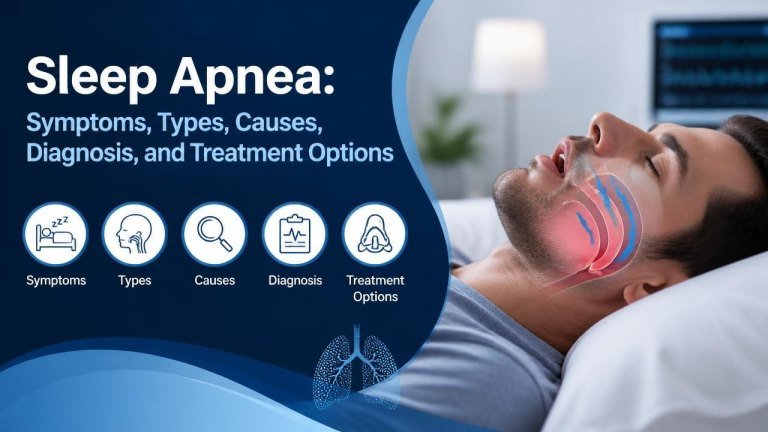
Sleep apnea is a common sleep-related breathing disorder in which breathing repeatedly stops or becomes restricted during sleep. These interruptions can reduce oxygen levels, fragment sleep, and affect daytime health and alertness. Understanding the sleep apnea symptoms and treatment options can help you seek appropriate medical care.
What Is Sleep Apnea?
Sleep apnea occurs when normal breathing is interrupted during sleep. Each pause may last long enough to disturb the body’s oxygen supply and trigger a brief waking response, often without the person realizing it. Over time, repeated breathing pauses, disrupted sleep, and reduced oxygen levels may contribute to significant health problems.
Snoring is common, but it does not always mean someone has sleep apnea. Conversely, a person can have sleep apnea without loud snoring. A healthcare professional can help determine whether symptoms require further evaluation.
Common Symptoms of Sleep Apnea
Symptoms may occur at night, during the day, or both. Some people notice their own symptoms, while others learn about them from a bed partner or family member.

- Loud or frequent snoring, especially when it is interrupted by pauses
- Gasping, choking, or snorting during sleep
- Waking with a dry mouth or sore throat
- Morning headaches
- Difficulty staying asleep or frequent nighttime awakenings
- Excessive daytime sleepiness or unrefreshing sleep
- Difficulty concentrating, memory problems, or irritability
- Reduced energy and changes in mood
In children, possible signs include restless sleep, mouth breathing, bed-wetting, behavioral changes, difficulty concentrating, or problems with school performance. Symptoms can vary, so persistent concerns should be discussed with a healthcare professional.
Types of Sleep Apnea
The main types of sleep apnea differ according to why breathing is interrupted. Identifying the type is important because the underlying mechanism, medical history, and treatment approach may differ.
Obstructive Sleep Apnea
Obstructive sleep apnea is the most common type. It happens when the muscles in the throat relax during sleep and narrow or block the upper airway. The brain continues trying to initiate breathing, but airflow is limited or temporarily stopped.
Factors such as excess tissue around the neck, enlarged tonsils, nasal obstruction, or the structure of the jaw and airway can increase the likelihood of obstruction.
Central Sleep Apnea
Central sleep apnea occurs when the brain temporarily fails to send the signals needed to control breathing. Unlike obstructive sleep apnea, the airway may not be blocked. It can be associated with certain medical conditions, medications, or other sleep-related breathing disorders.
Because central sleep apnea can have different causes, evaluation should consider neurological signals, heart and lung health, and medication use.
Complex or Treatment-Emergent Sleep Apnea
Some people show central breathing pauses after treatment for obstructive sleep apnea begins. This pattern is sometimes called treatment-emergent central sleep apnea. A sleep specialist may adjust the treatment plan and monitor symptoms over time.
Causes and Risk Factors
Sleep apnea can result from airway anatomy, changes in muscle control, or underlying health conditions. Risk is influenced by several factors, and having one does not guarantee that a person will develop the disorder.
- Airway anatomy, including a narrow throat or enlarged tonsils
- Excess body weight or fatty tissue around the neck
- Age-related changes in muscle tone
- Family history and inherited physical features
- Alcohol use or sedating medicines, particularly near bedtime
- Nasal congestion or chronic nasal obstruction
- Smoking and certain hormonal changes
- Heart, neurological, or other medical conditions
Sleep apnea may affect people of any body type, age, or sex. It is also possible for symptoms to be overlooked when snoring or tiredness is attributed to stress, lifestyle, or normal aging.
How Sleep Apnea Is Diagnosed
Diagnosis begins with a medical and sleep history. A clinician may ask about snoring patterns, daytime sleepiness, nighttime breathing changes, medication use, and related health conditions. Information from a bed partner can be especially helpful.
A physical examination may assess the nose, mouth, throat, neck, and jaw. Your clinician may also review blood pressure, weight, and other factors that can affect breathing during sleep.

Sleep Studies
A sleep study measures breathing and body functions while you sleep. A home sleep apnea test may be suitable for some adults with a high likelihood of uncomplicated obstructive sleep apnea. It commonly records airflow, breathing effort, oxygen levels, and heart rate.
An overnight study in a sleep center can collect more detailed information, including brain activity, muscle activity, and sleep stages. The appropriate test depends on symptoms, medical history, and the clinician’s assessment.
Treatment Options for Sleep Apnea
Treatment depends on the type and severity of sleep apnea, its cause, other health conditions, and personal preferences. A clinician or sleep specialist can help create an individualized plan focused on improving airflow, reducing breathing interruptions, and restoring healthy sleep.
Positive Airway Pressure Therapy
Positive airway pressure therapy uses a device and mask to deliver air that helps keep the airway open during sleep. Continuous positive airway pressure, or CPAP, is widely used for obstructive sleep apnea. Other pressure modes may be considered when breathing patterns or medical needs differ.
Comfort and consistency are important. Mask fit, air pressure, humidification, and regular equipment care can affect how easily someone adapts to therapy.
Oral Appliances
A custom oral appliance can reposition the jaw or tongue to help keep the airway open. These devices may be considered for some people with mild to moderate obstructive sleep apnea or for those who cannot tolerate positive airway pressure.
They should be fitted and monitored by qualified dental and medical professionals because jaw discomfort, bite changes, or other side effects can occur.
Lifestyle and Positional Measures
Lifestyle changes may support treatment, although they do not replace medical therapy when sleep apnea is significant. Helpful measures can include weight management when appropriate, limiting alcohol near bedtime, avoiding sedating medicines unless prescribed, and maintaining a regular sleep schedule.
Some people have more breathing interruptions when sleeping on their back. Positional strategies may help selected patients, particularly when testing shows that sleep apnea is strongly position-related.
Surgery and Other Treatments
Surgery may be considered when anatomical problems contribute to airway obstruction or when other treatments are not effective or tolerated. Options vary according to the structure of the nose, throat, jaw, and surrounding tissues.
Other approaches may include treatment for nasal obstruction, nerve stimulation, or therapies for an underlying medical condition. These options require careful assessment of airway structure, treatment response, and overall health.
When to Seek Medical Advice
Talk with a healthcare professional if you regularly snore loudly, wake gasping or choking, experience unexplained daytime sleepiness, or are told that your breathing stops during sleep. Prompt evaluation is particularly important when tiredness affects driving, work, school, or daily safety.
Seek urgent help for severe breathing difficulty, chest pain, fainting, sudden confusion, or other emergency symptoms. Untreated sleep apnea can affect alertness, blood pressure, and cardiovascular health, so persistent symptoms should not be ignored.
Living Well With Sleep Apnea
Sleep apnea is manageable, but treatment works best when it is used consistently and reviewed when symptoms change. Keep follow-up appointments, report discomfort or persistent sleepiness, and use prescribed equipment as directed.
With the right diagnosis and care plan, many people experience better sleep quality, improved daytime energy, and reduced health risks. The most effective approach is one that addresses your type of apnea, your individual needs and treatment, and long-term treatment adherence.