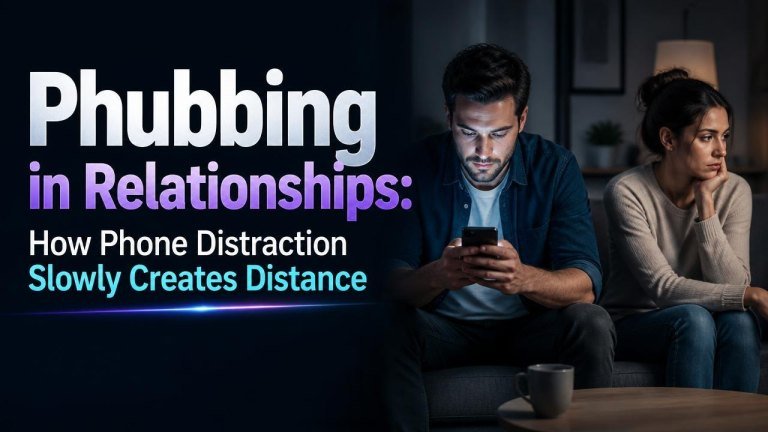
Phones are designed to keep us connected, yet they can quietly interrupt the relationships that matter most. When one partner repeatedly checks messages, scrolls through social media, or answers notifications during shared time, the other may feel pushed aside. This behavior is known as phubbing, a blend of “phone” and “snubbing,” and it can create emotional distance long before either person recognizes the pattern.
Occasional distraction is normal, but frequent phone use during conversations and everyday moments can weaken intimacy. The solution is not necessarily to ban phones or demand constant attention. Instead, couples can build clear boundaries, practice intentional listening, and protect regular moments of undivided connection.
What Is Phubbing in a Relationship?
Phubbing occurs when someone gives more attention to a phone than to the person in front of them. It may involve checking notifications during dinner, looking at a screen while a partner is speaking, or interrupting a meaningful conversation to browse unrelated content. The action can seem small, but its emotional effect may be significant.
The central issue is not the device itself. It is the message the behavior can communicate: the conversation can wait, the phone comes first, or your presence is not receiving full attention. Even when that message is unintended, repeated experiences of being ignored can affect how safe and valued a partner feels.

Why Phone Distraction Creates Emotional Distance
Healthy relationships depend on repeated moments of responsiveness. Eye contact, attentive listening, and small signs of interest help partners feel understood. When a phone regularly interrupts those moments, the relationship loses opportunities for emotional reassurance, mutual understanding, and everyday closeness.
The Hidden Cost of Feeling Ignored
A partner who is frequently phubbed may stop sharing thoughts, concerns, or personal stories. Over time, they may assume that speaking up will not receive a meaningful response. This can lead to withdrawal, resentment, and a gradual reduction in open communication.
Phubbing can also trigger conflict because the behavior is often interpreted as a sign of low interest or poor respect. The person using the phone may believe they are only taking a quick break, while the other person experiences a repeated pattern of rejection. This difference between intention and impact is one reason these arguments can become so frustrating.
How Attention Shapes Intimacy
Intimacy is built through attention, not only through major romantic gestures. A few minutes of genuine presence can communicate care more effectively than a grand promise. When partners protect shared attention, responsive conversation, and small daily rituals, they create a stronger sense of partnership.
Constant phone interruptions can also reduce the quality of time spent together. Even when both people are physically present, divided attention may make the relationship feel like emotional distance in marriage. This is especially damaging during vulnerable conversations, celebrations, or moments when one partner needs comfort.
Signs That Phubbing Has Become a Pattern
Most people occasionally glance at a phone without intending to be dismissive. The concern is whether the behavior is frequent, automatic, and difficult to change. Several signs may indicate that phone distraction is affecting the relationship:
- One partner regularly checks a screen during conversations.
- Phones are used during meals, dates, or time set aside for connection.
- Important discussions are interrupted by nonurgent notifications.
- A partner feels they must compete with the phone for attention.
- Attempts to discuss the issue lead to defensiveness or dismissal.
- Both people spend time together but remain absorbed in separate screens.
A single incident does not define a relationship. However, a persistent pattern of automatic checking, divided presence, and unresolved frustration deserves attention before it becomes a source of lasting resentment.
Common Mistakes Couples Make
One common mistake is raising the issue through accusation. Statements such as “You never care about me” can make a partner defend their character instead of considering their behavior. A more productive approach focuses on specific examples, personal feelings, and shared solutions.

Another mistake is creating unrealistic rules. A demand that phones never be used may be impractical, particularly for work, family responsibilities, or emergencies. Effective boundaries should distinguish between urgent communication, routine checking, and mindless scrolling.
It is also unhelpful to monitor or punish a partner. Taking their phone, secretly checking it, or withholding affection may increase mistrust rather than solve the problem. The goal is not control; it is to restore respectful attention and make shared time feel meaningful again.
Practical Ways to Reduce Phubbing
Start With a Calm Conversation
Choose a neutral moment rather than bringing up the problem in the middle of an argument. Explain what you notice and how it affects you without assuming your partner’s motives. For example, you might say, “When my thoughts are interrupted by phone checking, I feel less connected and hesitate to continue talking.”
This type of conversation creates space for honest feedback and emotional clarity, and cooperative problem-solving. Ask your partner how they experience phone use as well; the issue may affect both of you in different ways.
Create Phone-Free Moments
Begin with a few realistic situations rather than trying to change every habit at once. Couples might place phones away during meals, keep them out of the bedroom, or agree to avoid screens during the first and last part of the day. These small routines provide protected time, consistent attention, and predictable connection.
Use practical tools to support the agreement. Silent modes, notification settings, charging stations, and scheduled do-not-disturb periods can reduce temptation without requiring constant willpower. If someone needs to remain reachable, decide in advance which calls or messages require immediate attention.
Replace the Habit With Connection
Removing a phone leaves an empty space that should be filled with something positive. Try taking a short walk, preparing a meal together, asking open-ended questions, or sharing one highlight and one challenge from the day. These activities encourage conversation, curiosity, and shared experience.
When a phone interruption happens, acknowledge it and return your attention rather than pretending it did not occur. A simple apology and renewed eye contact can help repair a small moment of disconnection. Consistent repair is often more valuable than expecting perfect behavior.
When Professional Support May Help
If conversations about phubbing repeatedly become hostile, the phone may be a symptom of deeper relationship difficulties. Unresolved resentment, avoidance, loneliness, or a lack of emotional safety may all contribute to excessive screen use. In these situations, couples counseling can provide structured communication, neutral guidance, and practical accountability.
Professional support is especially worth considering when one partner feels chronically dismissed or when attempts to establish boundaries are ignored. Counseling is not a sign that the relationship has failed. It can help both people understand the pattern and decide how they experience phone use and what meaningful change should look like.
General Evaluation: Rebuilding Presence Takes Practice
Phubbing rarely damages a relationship through one dramatic event. More often, distance develops through many small moments in which a partner feels overlooked. The most effective response is to recognize the pattern early and treat attention as a shared relationship responsibility.
Healthy phone habits do not require perfection. They require awareness, mutual respect, and a willingness to repair disconnection. By setting realistic boundaries and giving each other genuine presence, couples can make their phones tools for connection rather than barriers to it.