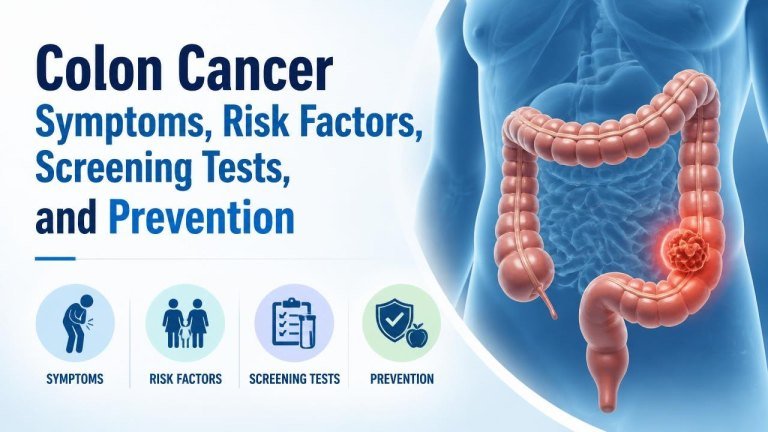
Colon cancer can develop gradually, and early disease may cause few or no noticeable symptoms. Understanding warning signs, risk factors, screening options, and everyday prevention steps can help you make informed decisions about your health.
What Is Colon Cancer?
Colon cancer begins in the inner lining of the colon, often as a growth called a polyp. Some polyps can slowly become cancerous, while others never do. Finding and removing certain polyps during screening may help prevent cancer from developing.
The colon is part of the large intestine and plays an important role in absorbing water and forming stool. Cancer in the colon and rectum is often discussed together as colorectal cancer because the diseases share many features, symptoms, and screening methods.
Common Colon Cancer Symptoms
Symptoms can vary depending on the tumor’s location and size. Possible colorectal cancer warning signs include blood in the stool, persistent changes in bowel habits, and unexplained weight loss.
- A change in bowel habits, such as ongoing diarrhea, constipation, or stools that become narrower than usual
- Rectal bleeding or stool that appears bloody or unusually dark
- Recurring abdominal discomfort, cramps, bloating, or pain
- A feeling that the bowel does not empty completely
- Unusual tiredness or weakness, which may be related to anemia from slow blood loss
- Unintentional weight loss or reduced appetite
These symptoms can have causes other than cancer, including hemorrhoids, infections, inflammatory bowel disease, or dietary changes. However, symptoms that are persistent, worsening, or accompanied by bleeding should be evaluated by a healthcare professional.
When to Seek Medical Care
Contact a healthcare professional if you notice rectal bleeding, a lasting bowel change, or unexplained anemia. Seek urgent medical attention for severe abdominal pain, repeated vomiting, marked swelling, or an inability to pass stool or gas, as these may indicate when bowel symptoms need care for a serious bowel problem.
Colon Cancer Risk Factors
Some risk factors cannot be changed, while others are connected to lifestyle or medical history. Important factors include older age, family history, and inflammatory bowel disease.
- A personal or family history of colorectal cancer or certain types of polyps
- Inherited conditions that increase the likelihood of colorectal cancer
- Long-standing ulcerative colitis or Crohn’s disease affecting the colon
- Smoking or regular alcohol use
- Low physical activity and excess body weight
- A diet low in fiber and high in processed or red meat
- Type 2 diabetes or other health conditions associated with increased risk
Having a risk factor does not mean you will develop colon cancer, and people without known risk factors can still be diagnosed. Your screening plan may need to begin earlier or use different intervals if you have a higher-risk medical or family history.
Colon Cancer Screening Tests
Screening is intended for people who do not have symptoms. The best test depends on your age and overall risk, personal preferences, and whether you can complete recommended follow-up.
Stool-Based Tests
Stool tests look for hidden blood or changes associated with colorectal cancer. They are completed at home and require samples to be sent to a laboratory or processed according to the test instructions. An abnormal result generally requires a follow-up colonoscopy.

Colonoscopy
A colonoscopy allows a clinician to examine the entire colon using a flexible camera. It can identify polyps, detect suspicious areas, and often remove polyps during the same procedure. Preparation is required, and sedation may be offered.
Other Screening Options
Depending on local guidance and individual circumstances, screening may also include imaging-based examinations such as CT colonography or a flexible sigmoidoscopy. These tests may have different preparation, frequency, and follow-up requirements. Discuss the available options with a qualified healthcare professional rather than choosing based only on convenience.
How to Prepare for a Screening Discussion
Before an appointment, gather information about family cancer history, previous polyps, inflammatory bowel disease, and any recent symptoms. Ask when screening should begin, which test is appropriate, how often it should be repeated, and what happens after an abnormal result.
If you have symptoms, tell the clinician clearly. A diagnostic evaluation may be needed even if you recently completed a screening test.
Ways to Help Prevent Colon Cancer
No prevention method eliminates risk, but several habits may help lower it. Focus on regular physical activity, fiber-rich foods, and avoiding tobacco.
- Eat a varied diet that includes vegetables, fruits, beans, whole grains, and other fiber-rich foods.
- Limit processed meat and moderate your intake of red meat.
- Be physically active according to your abilities and healthcare needs.
- Work toward a healthy weight without using extreme or unsafe diets.
- Avoid smoking and ask for support if you want to quit.
- Limit alcohol or avoid it, particularly if you have other risk factors.
- Follow recommended screening and complete any advised follow-up testing.
Frequently Asked Questions
Can colon cancer occur without symptoms?
Yes. Early colon cancer and precancerous polyps may cause no noticeable symptoms. This is why recommended screening matters, even when you feel well.
Does blood in the stool always mean colon cancer?
No. Bleeding can result from hemorrhoids, anal fissures, inflammation, or other conditions. Still, unexplained bleeding should not be ignored and needs appropriate medical evaluation.
Can lifestyle changes replace screening?
No. Healthy habits may reduce risk, but they do not replace recommended screening. Screening can find changes before symptoms develop and may identify polyps that can be removed.
When to Talk With a Healthcare Professional
Make an appointment if you have ongoing bowel changes, bleeding, abdominal symptoms, unexplained fatigue, or weight loss. Also discuss screening if you have a family history, a previous polyp, or a condition that increases risk. Personalized medical advice is especially important because screening recommendations can differ according to age, health history, and local guidelines.
This article is for general education and does not replace advice, diagnosis, or treatment from a qualified healthcare professional.