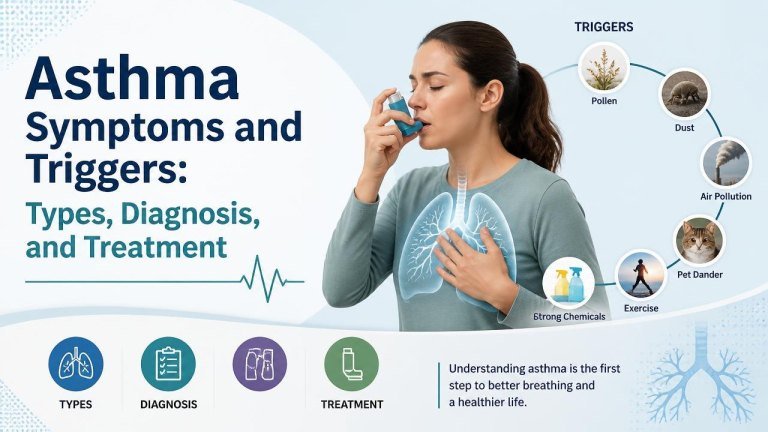
Asthma is a chronic condition that causes the airways to become inflamed and narrow, making it harder to breathe. Symptoms can come and go, vary in intensity, and differ from one person to another. Understanding the warning signs and common triggers can help you manage asthma and know when to seek medical care.
What Is Asthma?
Asthma affects the airways, which carry air into and out of the lungs. In people with asthma, these airways may become inflamed, tighten around the surrounding muscles, and produce extra mucus. This combination can lead to breathing difficulties and recurring symptoms.
Asthma is often manageable with a personalized treatment plan. However, symptoms may worsen suddenly during an asthma attack, so it is important to follow your clinician’s advice and keep prescribed medicines available.
Common Asthma Symptoms
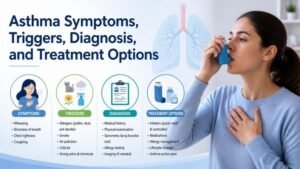
Asthma symptoms may be mild, occasional, or severe. Common signs include wheezing, shortness of breath, and chest tightness. Some people also develop a persistent cough, particularly at night, early in the morning, or after exercise.
- A whistling or squeaky sound when breathing
- Difficulty breathing or feeling unable to get enough air
- A tight, heavy, or uncomfortable feeling in the chest
- A cough that worsens at night, during exercise, or with a respiratory infection
- Fatigue caused by disturbed sleep or increased effort when breathing
Symptoms can change over time. A person may feel well between episodes, while another may have ongoing symptoms. Seek urgent medical help if breathing becomes severely difficult, speaking is hard, lips or fingertips appear blue or gray, or prescribed quick-relief medicine is not helping.
Common Asthma Triggers
Triggers are substances, conditions, or activities that cause asthma symptoms to begin or worsen. Common triggers include allergens, smoke, and respiratory infections, although each person’s pattern is different.
- Dust mites, mold, pollen, and animal dander
- Tobacco smoke, vaping aerosols, strong odors, and air pollution
- Colds, influenza, and other respiratory infections
- Exercise, especially in cold or dry air
- Cold weather or sudden changes in temperature
- Workplace dust, fumes, chemicals, or other irritants
- Stress, intense emotions, and poor sleep
- Some medicines or additives, in people who are sensitive to them
Keeping a symptom diary can help reveal patterns. Record symptoms, activities, environmental exposures, medicines, and possible food or workplace connections. Do not stop a prescribed medicine without speaking with a healthcare professional.
Types of Asthma
Asthma can be described in several ways, depending on its causes, timing, and severity. These categories may overlap, and a person’s asthma can change throughout life.
Allergic Asthma
Allergic asthma is linked to an immune response to substances such as pollen, dust mites, or pet dander. It may occur alongside allergic rhinitis, eczema, or other allergic conditions. Limiting exposure and treating related allergies may help reduce symptoms.
Nonallergic Asthma
Nonallergic asthma is not primarily caused by a specific allergy. Symptoms may be triggered by cold air, infections, pollution, stress, or strong smells. Testing can help distinguish this pattern from allergy-related asthma.
Exercise-Induced Bronchoconstriction
Some people develop airway narrowing during or shortly after physical activity. This is often called exercise-induced bronchoconstriction. Symptoms may include coughing, wheezing, or chest tightness. With proper medical guidance, most people can remain physically active.
Occupational Asthma
Occupational asthma is caused or aggravated by substances encountered at work, including chemical fumes, dust, and industrial materials. Symptoms may improve away from work and return after exposure. Tell a clinician if symptoms follow a work-related pattern.
Childhood and Adult-Onset Asthma
Asthma can begin during childhood or adulthood. Children may have symptoms that change as they grow, while adults may develop asthma after allergies, infections, occupational exposure, or other respiratory problems. A careful assessment is needed at any age.
How Asthma Is Diagnosed
Diagnosis begins with a medical history and physical examination. A clinician will ask about symptom patterns, possible triggers, family history, allergies, and response to medicines. Because wheezing and coughing can have several causes, testing helps confirm the diagnosis.

Lung Function Tests
Spirometry measures how much air you can breathe out and how quickly you can do so. A breathing test may be repeated after an inhaled medicine to assess whether airflow improves. Other tests, such as peak-flow monitoring or challenge testing, may be considered when the diagnosis is unclear.
Additional Evaluation
Depending on the situation, a clinician may recommend allergy testing, a chest imaging study, or tests for other conditions. No single test confirms every case of asthma, particularly when symptoms are intermittent. Children may require an age-appropriate approach.
Asthma Treatment and Management
Asthma treatment aims to control daily symptoms, prevent flare-ups, maintain normal activity, and reduce the risk of serious attacks. A treatment plan typically includes controller medicine, a reliever inhaler, and strategies to avoid or manage triggers.
Long-Term Control Medicines
Controller medicines are taken regularly to reduce airway inflammation and prevent symptoms. Inhaled corticosteroids are commonly used for long-term control. Depending on the individual, a clinician may prescribe other medicines or combination inhalers. Use them exactly as directed, even when you feel well.
Quick-Relief Medicines
Quick-relief inhalers can relax tightened airway muscles and provide rapid symptom relief. They should be used according to the written asthma action plan. Frequent reliance on a reliever may signal poor control and should prompt a medical review.
Biologic and Specialist Treatments
People with severe asthma that remains uncontrolled may be evaluated for specialist options, including biologic medicines. These treatments target specific immune pathways and are selected according to asthma type, test results, and previous treatment response.
Using an Inhaler Correctly
Incorrect inhaler technique can reduce the amount of medicine reaching the lungs. Ask a healthcare professional to check your technique, and use a spacer with a metered-dose inhaler when recommended. Keep track of doses and replace devices as instructed.
Creating an Asthma Action Plan
An asthma action plan explains what to do when symptoms are controlled, worsening, or severe. It should identify daily medicines, warning signs, and emergency steps. Share the plan with family members, caregivers, teachers, or workplace contacts when appropriate.
Monitoring symptoms or peak-flow readings may help identify deterioration early. Review the plan after significant flare-ups or whenever treatment changes.
When to Seek Medical Care
Contact a healthcare professional if symptoms are becoming more frequent, waking you at night, limiting activity, or requiring more quick-relief medicine. Prompt evaluation is especially important after a significant flare-up.
Call emergency services for severe breathlessness, inability to speak normally, confusion, blue or gray lips, exhaustion, or symptoms that continue to worsen despite following the asthma action plan. Do not drive yourself if breathing is dangerously difficult.
Living Well With Asthma
Many people with asthma lead active lives by combining medical care with practical prevention. Take prescribed medicines consistently, attend follow-up appointments, avoid known triggers, and ask about vaccinations or infection-prevention measures that may be appropriate for you.
Asthma control is personal and can change over time. Regular review helps ensure that treatment remains appropriate and that symptoms are not being attributed to asthma when another condition may be responsible.
This article is for general information and does not replace diagnosis or treatment from a qualified healthcare professional.