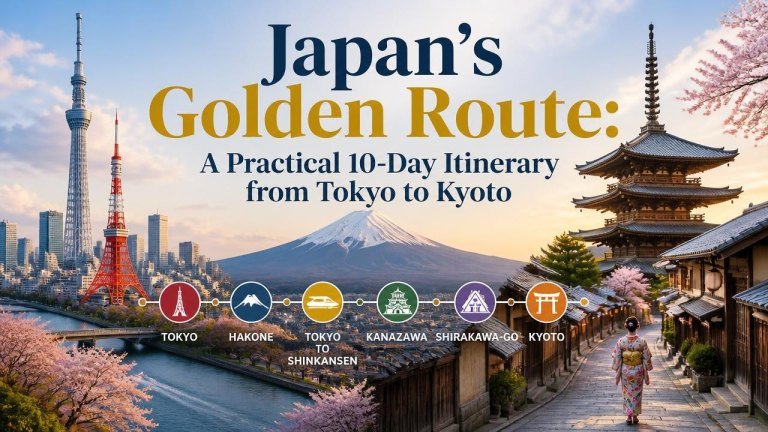
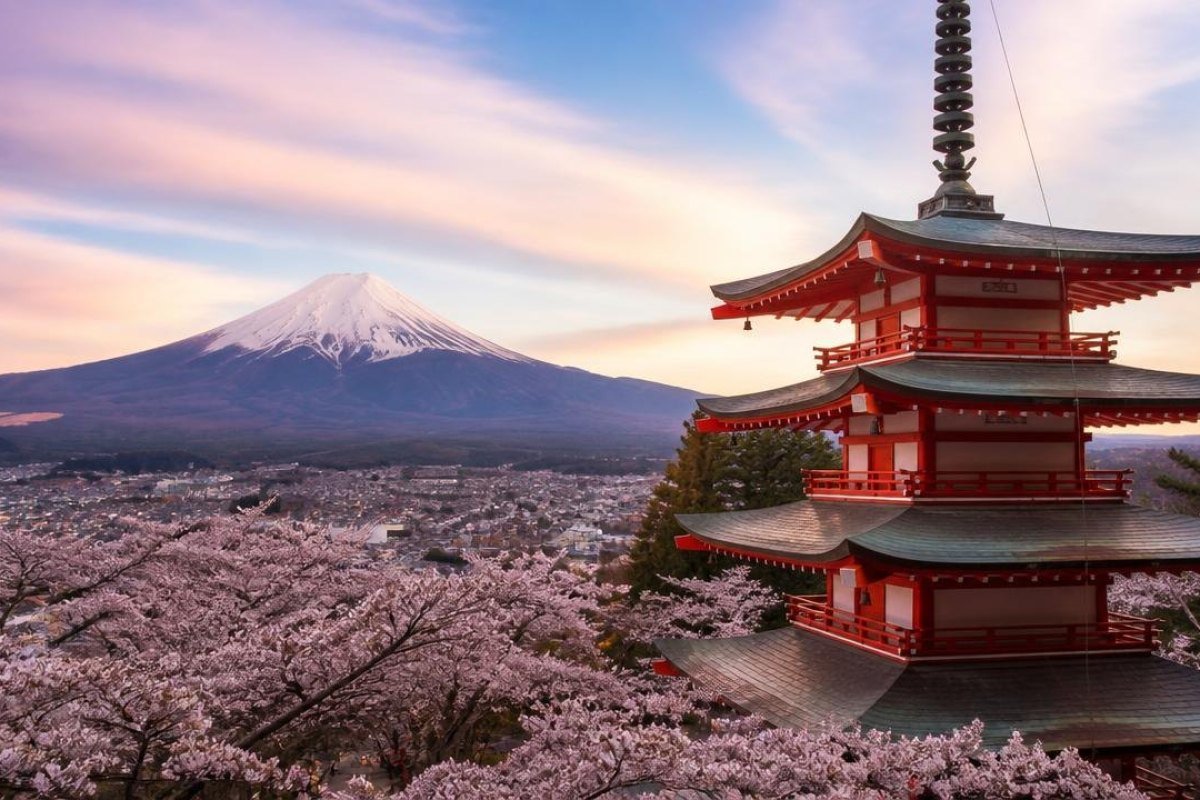
Japan’s Golden Route is an ideal first trip for travelers who want to combine futuristic city life, historic neighborhoods, mountain scenery, traditional food, and lively nightlife. This 10-day itinerary links Tokyo, Kyoto, and Osaka at a comfortable pace, while leaving enough flexibility for weather, crowds, and spontaneous discoveries. A first-time guide to Japan can also help put the route in context.
The route works best as an open-jaw journey: fly into Tokyo and depart from Osaka, if your flight options allow it. If you must return to Tokyo, the final section explains how to adapt the plan. Train times, attraction reservations, seasonal events, and transport fares can change, so check official websites shortly before each travel day.
At a glance: the 10-day route
This plan gives you four nights in Tokyo, four nights in Kyoto, and one night in Osaka, with Osaka also serving as the departure point. The itinerary prioritizes compact sightseeing areas, minimizes unnecessary hotel changes, and uses rail connections for the longer journeys.
- Days 1–4: Tokyo, including modern districts, historic Asakusa, and a flexible final city day.
- Days 5–8: Kyoto, including Fushimi Inari, Higashiyama, Arashiyama, and central Kyoto.
- Days 9–10: Osaka, with Osaka Castle, Dotonbori, and departure planning.
For a slower trip, remove one Tokyo day or one Kyoto day and add an overnight stay in Hakone, Nara, or Hiroshima. For a first visit, however, the core Tokyo–Kyoto–Osaka sequence offers the most balanced introduction to Japan.
Before you go: planning essentials
Good preparation makes the Golden Route significantly easier. Arrange your international flights, confirm where to stay in Tokyo near stations, and review reservation requirements for popular restaurants, observation decks, themed attractions, and special exhibitions.
Choosing where to stay
In Tokyo, stations around Shinjuku, Shibuya, Tokyo Station, or Ueno are convenient for first-time visitors. In Kyoto, choose accommodation near Kyoto Station, Shijo-Kawaramachi, or Gion if you want easy access to dining and sightseeing. In Osaka, Namba is particularly useful for food, nightlife, and airport connections.
Transport and luggage
Use an IC transit card or an accepted mobile equivalent for many local trains, subways, and buses. For the Tokyo–Kyoto journey, reserve a Shinkansen seat when your travel date is firm, especially during peak holiday periods. Consider forwarding large luggage between hotels and carrying only a small overnight bag for the transfer day.
A nationwide rail pass is not automatically the best-value option for this itinerary. Compare the cost of individual long-distance tickets with any regional or nationwide pass after confirming current prices and eligibility. For exact routes and live service information, use official railway apps or station signage.
Day 1: Arrive in Tokyo and ease into Japan
Keep your first day deliberately light. After reaching your hotel, take a short walk through the surrounding neighborhood and learn the basics of local navigation. Focus on checking in, recovering from the flight, and finding a relaxed first meal rather than trying to see major attractions.
If you arrive with energy, explore a nearby department-store food hall, convenience store, or casual noodle restaurant. Tokyo’s food halls are an easy introduction to seasonal snacks, prepared meals, and Japanese dining etiquette without requiring an elaborate reservation.
Keep your evening flexible because jet lag can be unpredictable. Confirm the next day’s route, charge your phone, and check whether any attractions require timed entry or advance booking.
Day 2: Meiji Jingu, Harajuku, Shibuya, and Shinjuku
Begin at Meiji Jingu, a forested Shinto shrine close to Harajuku. Arriving earlier generally provides a calmer experience. Walk respectfully through the shrine grounds, then continue toward Harajuku and Omotesando for contrasting views of youth culture, architecture, boutiques, and cafés.
Continue to Shibuya for the famous crossing and the surrounding shopping streets. Rather than spending the entire afternoon inside one complex, combine the crossing with a neighborhood walk, a department-store food floor, or a reserved observation experience if available.
Finish in Shinjuku, where you can choose between neon-lit streets, department stores, quiet side alleys, and a wide range of restaurants. Keep valuables secure in crowded areas and follow venue-specific rules regarding photography and queues.

Day 3: Asakusa, Ueno, and Akihabara
Start in Asakusa, Tokyo’s historic downtown district. Enter through Kaminarimon and walk along Nakamise before visiting Sensoji Temple. The area is especially rewarding in the morning, when the temple atmosphere is more peaceful and shops are beginning to open.
Allow time for side streets, traditional sweets, kitchenware, and views toward the Sumida River. Asakusa also works well for a leisurely lunch featuring tempura, unagi, or other classic Tokyo dishes.
In the afternoon, travel to Ueno for its park, museums, and market streets. Continue to Akihabara if you are interested in electronics, games, anime, or manga. Choose only a few shops or museums rather than attempting to cover the entire district.
Day 4: Choose a Tokyo theme
Use the fourth day to match your interests. A culture-focused option combines the Imperial Palace area, Ginza, and Tokyo Station. An entertainment-focused day could include Odaiba, a studio attraction, or a carefully booked immersive experience.
Travelers who prefer a slower pace can revisit a favorite district, browse independent cafés, explore a local market, or spend time in a garden. Tokyo rewards unplanned walking, particularly when you move away from the busiest station exits.
If you want a day trip, choose one destination rather than combining several. Kamakura, Yokohama, or Hakone can work depending on weather and interests, but check current transport conditions and attraction availability before committing.
Day 5: Travel from Tokyo to Kyoto
Take the Tōkaidō Shinkansen from Tokyo or Shinagawa to Kyoto. Keep your morning organized: check out, allow time to reach the station, and collect food or drinks before boarding. If you have large bags, confirm the current rules for oversized baggage and reserve the appropriate seat when required.
After arriving in Kyoto, check in or leave your luggage at the hotel. Spend the afternoon in a nearby area such as Kyoto Station, Higashi Honganji, or the central shopping streets. This gentle introduction helps you avoid overloading the first Kyoto day.
For dinner, try a small restaurant serving yudofu, obanzai, sushi, or seasonal vegetables. Kyoto dining ranges from informal counters to reservation-only establishments, so ask your hotel for current recommendations if you have not booked ahead.
Day 6: Fushimi Inari, Higashiyama, and Gion
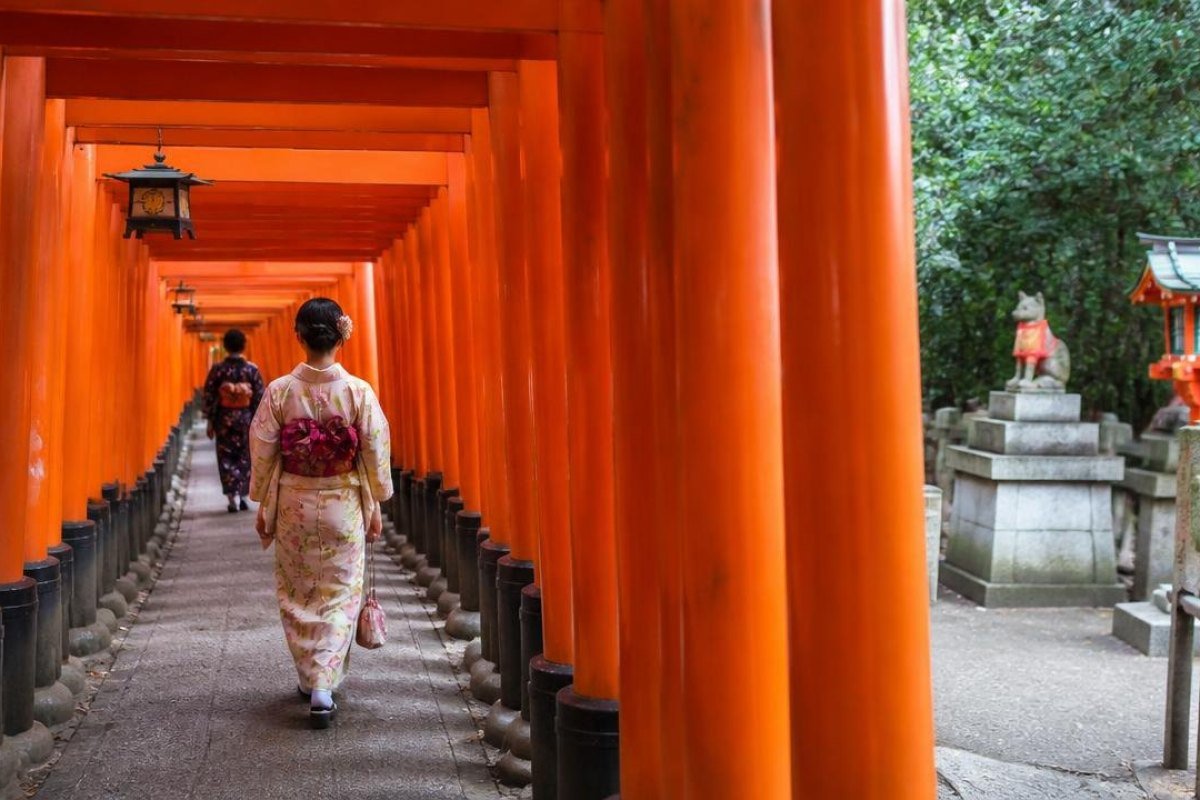
Start early at Fushimi Inari Taisha, famous for its long corridors of vermilion torii gates. The shrine grounds are extensive, and you do not need to complete the entire mountain route to enjoy the experience. Wear comfortable shoes and allow extra time if you plan to climb beyond the lower paths.
Continue toward Kiyomizu-dera and the historic Higashiyama streets. The temple’s wooden veranda, hillside setting, and city views make it one of Kyoto’s defining sights. Expect steep lanes, crowds, and limited space around popular viewpoints.
End the day around Gion and Yasaka Shrine. Treat private properties and working neighborhoods respectfully, avoid blocking narrow lanes, and never photograph people without permission. For a quieter evening, walk along the Kamo River or dine away from the busiest streets.
Day 7: Arashiyama and western Kyoto
Travel to Arashiyama early to walk through the bamboo grove before the busiest period. Combine it with Tenryu-ji, the riverfront, and the surrounding lanes rather than treating the bamboo grove as a standalone stop.
If you enjoy gardens and temples, allow time for a slower visit to the landscaped grounds around Tenryu-ji or another nearby temple. Arashiyama is a walking-heavy day, so plan a proper lunch and carry water during warmer months.
Return to central Kyoto by train when possible, as road traffic can be slow. If you still have energy, add a short evening walk near Nishiki Market or Shijo, while checking current market operating days and avoiding peak congestion.
Day 8: Central Kyoto, Nijo Castle, and a flexible afternoon
Spend the morning in Nijo Castle or around the Kyoto Imperial Palace area, depending on current access arrangements and your interests. These sites provide a different perspective on court culture, shogunal history, and Kyoto’s urban scale.
Explore Nishiki Market respectfully: it is a working food market, not simply a photo stop. Follow signs about eating, photography, and pedestrian flow, and consider purchasing small portions rather than expecting to eat every specialty in one visit.
Keep the afternoon open for a tea experience, craft workshop, museum, or neighborhood such as Demachiyanagi. This buffer is valuable because Kyoto’s attractions can be crowded and travel times are often longer than map distances suggest.
Day 9: Travel to Osaka and explore the city
Travel from Kyoto to Osaka by a suitable local or rapid train service. The journey is relatively straightforward, but the best station depends on your hotel and sightseeing plans. After checking in around Namba or another convenient district, begin at Osaka Castle Park.
Osaka Castle’s grounds are spacious, and the castle keep offers historical displays and city views. Check current opening information before visiting the interior, and allow time for the surrounding moat, gardens, and walking paths rather than rushing directly to the tower.
In the evening, head to Dotonbori and the nearby entertainment districts. Try Osaka specialties such as takoyaki, okonomiyaki, kushikatsu, or fresh seafood, while remembering that popular restaurants may require queues or reservations.
Day 10: Osaka morning and departure
Plan the final morning around your flight time. If departing later, explore Kuromon Market, Namba’s shopping streets, or a quiet café. If you prefer modern architecture and shopping, consider Umeda, but leave generous time for airport transfers, luggage collection, and station navigation.
Travelers flying from Kansai International Airport should confirm the correct train or airport-bus terminal and allow extra time during busy travel periods. If your return flight leaves Tokyo instead, take a reserved long-distance train with a substantial buffer or add one final Tokyo night to reduce transfer risk.
Food experiences to prioritize
Each city has a distinct food personality. In Tokyo, look for sushi, ramen, tempura, and refined department-store food halls. Kyoto is ideal for seasonal cuisine, tofu dishes, matcha sweets, and traditional set meals. Osaka is especially associated with takoyaki, okonomiyaki, kushikatsu, and lively casual dining.
Do not assume every small restaurant accepts foreign cards or reservations through the same platforms. Carry a backup payment method, arrive on time, and follow local rules about eating while walking, separating waste, and queueing.
How to make the itinerary smoother
Group attractions by neighborhood and avoid crossing the same city repeatedly. Wear comfortable shoes, use station lockers or luggage forwarding, and keep a small bag for temples, shrines, and restaurants where large luggage is inconvenient.
Start early for high-demand sites such as Fushimi Inari, Arashiyama, and Sensoji. Build in unplanned time because weather, crowds, delayed trains, and unexpected discoveries are all normal parts of traveling through Japan.
Respect signs at religious sites, remove shoes where requested, keep voices low, and avoid touching sacred objects. A considerate travel style will make the journey more enjoyable for both you and the communities you visit.
When to take this trip
Spring and autumn are popular for cherry blossoms and autumn foliage, but they also bring heavier demand and higher accommodation pressure. Summer can be hot and humid, while winter often offers clearer air and fewer visitors, although daylight is shorter and some seasonal facilities may operate differently. For more detail, see this seasonal guide to Japan.
Before booking, check the expected weather, national holidays, school-holiday periods, and major local events. Seasonal conditions can affect walking comfort, mountain routes, restaurant availability, and hotel prices.
Final checklist for the Golden Route
Reserve your first-night accommodation, confirm your long-distance train plan, and check attraction requirements before departure. Download offline maps, keep your hotel address in Japanese, and carry a small amount of cash even if you normally pay by card.
Most importantly, do not try to see everything. Tokyo, Kyoto, and Osaka are large, layered cities, and the best memories often come from a quiet shrine path, a neighborhood café, a riverside walk, or a meal discovered between major attractions.
With a balanced schedule, practical transport planning, and room for flexibility, this 10-day journey offers a rewarding introduction to Japan’s most iconic urban and cultural experiences.