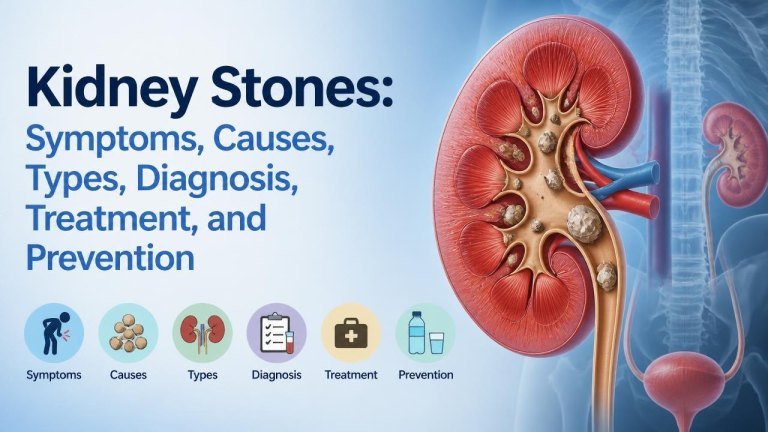
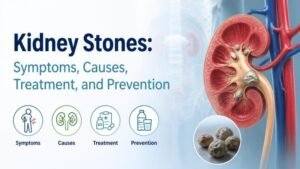
Kidney stones are hard, crystal-like deposits that form inside the kidneys when certain substances in urine become highly concentrated. They may remain small and pass unnoticed, or become lodged in the urinary tract and cause severe pain. Understanding their symptoms, causes, types, diagnosis, treatment, and prevention can help you seek timely care and reduce the chance of recurrence.
What Are Kidney Stones?
Kidney stones develop when minerals and salts in urine form crystals that gradually grow into a solid mass. A stone may stay in the kidney or travel through the ureter, the narrow tube connecting the kidney to the bladder. Even a small stone can cause intense symptoms if it blocks urine flow.
Some stones pass naturally with fluids and time, while larger or obstructive stones may need medical treatment. Recurrent stones can also signal an underlying metabolic condition, dietary pattern, medication effect, or family tendency.
Symptoms of Kidney Stones
Symptoms often begin when a stone moves or causes a blockage. Common warning signs include sharp pain, blood in the urine, and nausea or vomiting.
- Severe pain in the side or back, often spreading toward the lower abdomen or groin
- Pain that comes and goes in waves
- Pink, red, or brown urine
- Burning or discomfort when urinating
- A frequent or urgent need to urinate
- Cloudy or unusually strong-smelling urine
- Nausea and vomiting
Seek urgent medical attention for fever or chills, inability to urinate, persistent vomiting, worsening pain, or symptoms accompanied by weakness. A blocked urinary tract with infection can become a medical emergency.
Causes and Risk Factors
Kidney stones form when urine contains more stone-forming substances than it can keep dissolved. Not drinking enough fluid is a major contributor because dehydration makes urine more concentrated.
- Low fluid intake or heavy sweating
- A diet high in sodium, animal protein, or added sugars
- High levels of oxalate, calcium, uric acid, or cystine in the urine
- Obesity or certain metabolic conditions
- Digestive diseases or surgery that affect nutrient absorption
- Recurrent urinary tract infections in some cases
- Family history of kidney stones
- Some medicines and supplements
Risk factors vary by person. A clinician may recommend urine or blood testing when stones recur, occur at a young age, or have an unusual appearance.
Types of Kidney Stones
The type of stone matters because it can influence treatment and prevention. The main categories include calcium stones, uric acid stones, and infection-related stones.
Calcium Stones
Calcium oxalate stones are the most common type, while calcium phosphate stones are less frequent. They can be associated with urine chemistry, dietary factors, dehydration, or certain medical conditions. Dietary calcium should not usually be eliminated without medical advice, because an appropriate amount may help bind oxalate in the digestive tract.
Uric Acid Stones
Uric acid stones can form when urine is too acidic and contains excess uric acid. They may be associated with a diet high in purine-rich foods, obesity, gout, or some intestinal conditions. Treatment may focus on hydration and changing urine acidity under professional guidance.
Struvite Stones
Struvite stones may develop after certain urinary tract infections. They can grow quickly and sometimes become large. Treating the infection and removing the stone are important parts of care.
Cystine Stones
Cystine stones result from a rare inherited disorder that causes cystine to leak into urine. People with this condition may form stones repeatedly and often need long-term specialist care.
How Kidney Stones Are Diagnosed
Diagnosis begins with a medical history and physical examination. A healthcare professional may ask about the location and pattern of pain, urinary symptoms, previous stones, fluid intake, medications, and family history.

Tests may include urinalysis to detect blood, crystals, or infection; blood tests to assess kidney function and mineral levels; and imaging such as ultrasound or computed tomography. If a stone is passed or removed, stone analysis can identify its composition and guide prevention.
A 24-hour urine collection may be recommended for people with recurrent or high-risk stones. This test measures urine volume and the levels of substances that promote or prevent stone formation.
Kidney Stone Treatment
Treatment depends on the stone’s size, location, composition, symptoms, and effect on urine flow. A small stone may pass without a procedure, while a larger or obstructive stone may require intervention.
Passing a Small Stone
For a small stone without complications, clinicians may recommend fluids as tolerated, pain relief, and follow-up. Medicines may sometimes help relax the ureter and support passage. Do not force excessive water if you are vomiting or have been told to restrict fluids.
Medical Procedures
When a stone does not pass, causes significant blockage, or leads to complications, options may include shock wave lithotripsy, which breaks the stone into smaller pieces; ureteroscopy, which uses a small instrument to remove or fragment it; or percutaneous nephrolithotomy for selected large stones.
An infected, blocked kidney requires prompt treatment. Doctors may first drain the urinary system and treat the infection before addressing the stone itself.
How to Prevent Kidney Stones
Prevention should be tailored to the stone type and urine test results. For many people, the most useful first step is maintaining steady hydration throughout the day so urine remains relatively dilute.
- Drink enough fluid to produce plentiful, pale-colored urine, unless a clinician has advised fluid restriction.
- Reduce excess sodium, which can increase calcium in the urine.
- Eat an appropriate amount of dietary calcium rather than avoiding calcium automatically.
- Moderate large portions of animal protein when advised.
- Limit foods high in oxalate if testing shows calcium oxalate risk, ideally with dietary guidance.
- Maintain a healthy weight and manage conditions such as gout or high blood pressure.
- Take preventive medicines only as prescribed.
People who have had a stone should consider follow-up testing, especially if stones recur. Keeping a record of fluid intake, symptoms, and any recovered stone can help guide personalized care.
When to Contact a Healthcare Professional
Contact a clinician for suspected kidney stone symptoms, recurrent urinary pain, or blood in the urine. Get urgent help for fever**, severe unrelenting pain, repeated vomiting, faintness, or difficulty urinating. These signs may indicate infection, obstruction, dehydration, or another condition requiring immediate evaluation.
Kidney stone symptoms can resemble urinary infections, appendicitis, gallbladder disease, or other problems. Professional assessment is important rather than relying on symptoms alone.
Key Takeaways
Kidney stones are mineral deposits that can cause severe pain when they move through the urinary tract. Early evaluation, accurate identification of the stone type, and an individualized prevention plan can lower the risk of complications and recurrence. If symptoms are severe or include fever, vomiting, or an inability to urinate, seek urgent medical care.
This article is for general education and does not replace advice, diagnosis, or treatment from a qualified healthcare professional.