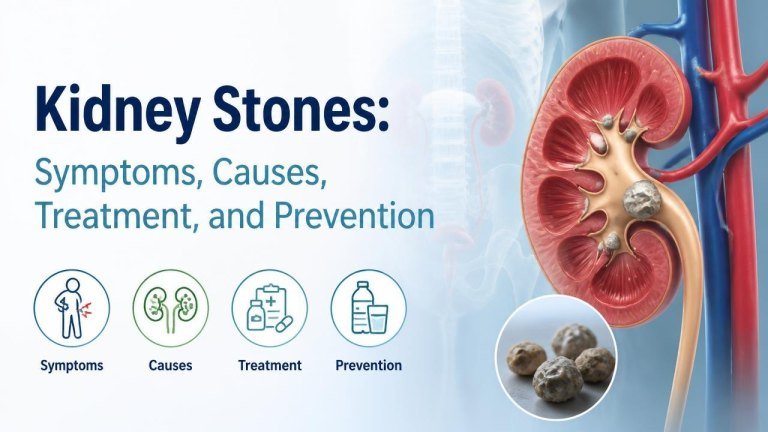
Kidney stones are hard, crystal-like deposits that form inside the kidneys when certain substances in urine become highly concentrated. Some stones pass without causing noticeable symptoms, while others can lead to intense pain and urinary problems.
Learning to recognize early warning signs, understand common risk factors, and seek appropriate medical care can help protect your urinary health.
What Are Kidney Stones?
Kidney stones develop when minerals and salts in urine form crystals that gradually grow into a solid mass. Stones may remain in the kidney or move through the ureter, the narrow tube that carries urine to the bladder. Their size, location, and composition influence whether they cause symptoms.
Even a small stone can trigger significant discomfort if it blocks the flow of urine. Larger stones may require medical treatment if they cannot pass naturally.

Kidney Stone Symptoms
Symptoms often begin when a stone moves into the ureter. Common signs include sharp side pain, blood in the urine, and painful urination, which can also occur with urinary tract infection symptoms.
- Severe pain in the back, side, lower abdomen, or groin
- Pain that comes and goes in waves
- Pink, red, or brown urine
- A frequent or urgent need to urinate
- Burning or discomfort during urination
- Nausea or vomiting
- Cloudy or foul-smelling urine
When to Seek Urgent Medical Help
Contact a healthcare professional promptly if you have fever or chills, persistent vomiting, or difficulty passing urine. These symptoms may indicate an infection or a significant blockage, both of which require timely assessment.
Seek emergency care for severe pain accompanied by fever, confusion, weakness, or an inability to urinate. People who are pregnant, have only one functioning kidney, or have known kidney disease should seek medical advice without delay when symptoms appear, as these can also overlap with urinary tract infection symptoms.
What Causes Kidney Stones?
The main cause is urine that contains high levels of stone-forming substances, including calcium, oxalate, uric acid, or cystine. Insufficient fluid intake makes urine more concentrated and can increase the chance of crystal formation.
Other contributors include dehydration, dietary patterns, and family history. Some stones are associated with medical conditions, urinary infections, or medicines that affect the balance of minerals in urine.
Common Risk Factors
Your risk may be higher if you have previous kidney stones, recurrent urinary infections, or a condition that changes mineral levels in the body.
- A personal or family history of kidney stones
- Not drinking enough water
- A diet high in salt or certain animal proteins
- Obesity or limited physical activity
- Digestive conditions or surgery that affect nutrient absorption
- Gout, hyperparathyroidism, or other metabolic conditions
- Some prescription or over-the-counter medicines
How Kidney Stones Are Diagnosed
A clinician may review your symptoms and medical history, perform a physical examination, and order tests. Evaluation may include urine testing, blood tests, and imaging scans to identify the stone and check for blockage or infection.

If you pass a stone, saving it for laboratory analysis can help identify its type. Knowing the composition may guide a more specific prevention plan.
Kidney Stone Treatment
Treatment depends on the stone’s size, location, type, and effect on urine flow. Small stones may pass naturally with supportive care, while larger or obstructing stones may need a procedure.
Passing a Small Stone
For some people, a clinician may recommend adequate hydration, pain relief, and observation while the stone passes. Medication may also be prescribed to relax the ureter or manage nausea, depending on the individual situation.
Do not force excessive fluids if you have been told that your urine flow is blocked or if drinking worsens vomiting. Follow personalized advice from your healthcare professional.
Procedures for Larger or Stubborn Stones
When a stone does not pass, causes ongoing blockage, or creates complications, treatment may involve shock wave therapy, ureteroscopy, or a procedure to remove or break up the stone.
The appropriate option depends on the stone’s size and position, your overall health, and whether infection or kidney impairment is present.
How to Prevent Kidney Stones
Prevention begins with keeping urine diluted and addressing the factors that contributed to stone formation. The best plan depends on the type of stone and your health history.
Prioritize regular fluid intake, moderate salt consumption, and a balanced eating pattern. A clinician or dietitian may recommend specific changes after testing.
- Drink enough water throughout the day unless a healthcare professional has advised fluid restriction.
- Limit excess sodium, which can increase calcium loss into the urine.
- Maintain a balanced intake of dietary calcium rather than avoiding calcium without medical advice.
- Moderate large amounts of animal protein if advised by your clinician.
- Eat a varied diet rich in vegetables and other minimally processed foods.
- Take prescribed preventive medicines exactly as directed.
Living After a Kidney Stone
Passing a stone does not always mean the problem is permanently resolved. Follow-up may help determine whether you are forming crystals or have a condition such as chronic kidney disease that raises your risk.
Ask your healthcare professional whether you need stone analysis, metabolic testing, or ongoing monitoring. Early prevention is especially important if stones recur or if you have a family history of the condition.
Key Takeaway
Kidney stones can range from a minor inconvenience to a medical emergency. Recognizing severe or unusual symptoms, getting timely professional evaluation, and following a personalized prevention plan can reduce complications and lower the chance of future stones.