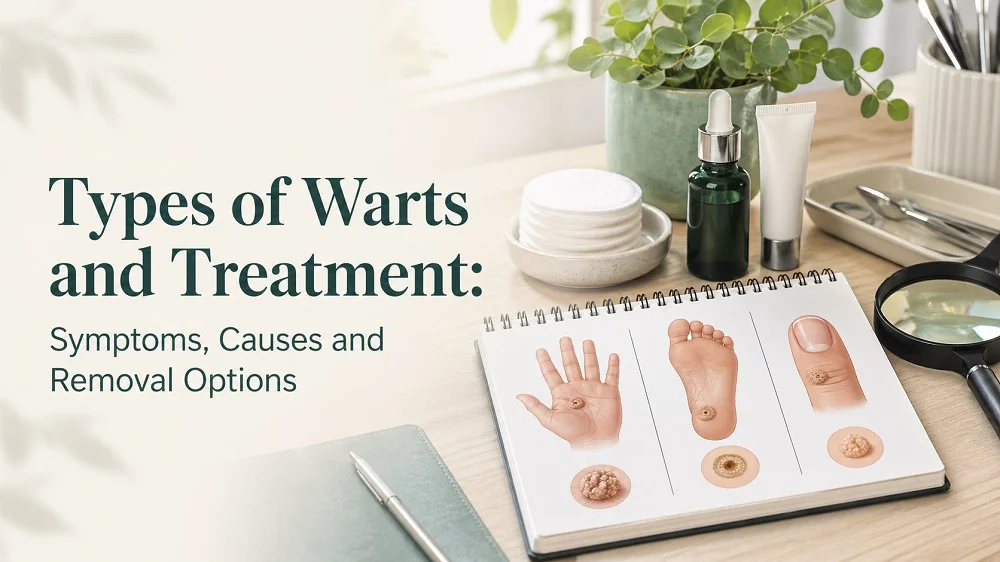
Warts are common skin growths that can appear on the hands, fingers, feet, face, around the nails or in the genital area. They are usually small, rough or raised bumps, and in many cases they are harmless. However, because they can spread from one area of the body to another or from person to person, it is important to understand what they are, why they appear and when medical treatment is needed.
Most warts are caused by human papillomavirus, commonly known as HPV. There are many types of HPV, and different types may cause different forms of warts. Some affect the hands and feet, while others affect the genital or anal area. The appearance, location and treatment approach can change depending on the wart type.
Important medical note: This article is for educational purposes only. It does not replace diagnosis or treatment by a doctor or dermatologist. If a growth is painful, bleeding, changing quickly, located on the face or genitals, or if you have diabetes, poor circulation, immune system problems or are unsure whether it is a wart, seek professional medical advice.
What Is a Wart?
A wart is a non-cancerous skin growth that develops when HPV enters the upper layer of the skin. The virus often enters through tiny cuts, scratches or weak points in the skin barrier. After infection, skin cells may grow faster than usual, creating a raised or thickened bump.
Warts may look rough, smooth, flat, finger-like or cauliflower-like depending on the type. Some are skin-colored, while others may appear white, gray, brown, pink or slightly yellow. They may occur alone or in clusters. Although many warts are painless, plantar warts on the soles of the feet can hurt because body weight pushes them inward.
Warts are especially common in children, teenagers, people who bite their nails, people with frequent skin injuries and those with weakened immune systems. They can also be seen in adults, especially when the virus spreads through direct contact, shared objects or moist public areas.
Are Warts Contagious?
Yes, warts can be contagious. The virus can spread through direct skin-to-skin contact or by touching objects that have been in contact with a wart, such as towels, nail tools, razors, shoes or shower floors. However, not everyone who comes into contact with HPV develops warts. The immune system plays an important role in whether a wart appears.
Warts may also spread on the same person’s body. Scratching, shaving over a wart, biting nails or picking at the skin can move the virus from one area to another. This is why it is important not to cut, tear, burn or pick at warts at home.
Main Types of Warts
Warts are usually classified according to their appearance and where they appear on the body. Knowing the type can help you understand which treatment options may be appropriate and when a doctor should be involved.
1. Common Warts
Common warts usually appear on the fingers, hands, knuckles or around small cuts in the skin. They often have a rough, grainy surface and may look like a small hardened bump. Sometimes tiny black dots can be seen inside the wart. These dots are not “seeds”; they are usually small clotted blood vessels.
Common warts are often harmless but can be uncomfortable or embarrassing, especially when they appear on visible areas such as the hands. They may spread if scratched, picked or cut. Children and people who bite their nails are more likely to develop them around the fingers.
Treatment may not always be necessary, because some common warts disappear on their own over time. However, treatment can be considered if the wart is spreading, painful, frequently irritated or causing cosmetic concern.
2. Plantar Warts
Plantar warts develop on the soles of the feet, especially on weight-bearing areas such as the heel or ball of the foot. Unlike some other warts, they may grow inward because of pressure from walking and standing. This can make them feel like a stone under the skin.
Plantar warts are commonly associated with moist public areas such as swimming pools, locker rooms and shared showers. Wearing sandals or waterproof footwear in these places may reduce the chance of exposure.
Plantar warts can be confused with calluses or corns. A wart may interrupt normal skin lines and may contain tiny dark dots, while a callus is usually caused by pressure or friction. If walking becomes painful or the diagnosis is uncertain, a healthcare professional should examine it.
3. Flat Warts
Flat warts are usually smaller and smoother than common warts. They may appear in larger numbers and are often found on the face, arms, hands or legs. In men, they may spread in the beard area through shaving. In women, they may spread on the legs for the same reason.
Because flat warts can appear on the face, self-treatment should be avoided unless a doctor recommends it. Harsh wart removers may irritate the skin, cause discoloration or leave marks, especially on sensitive facial areas.
4. Filiform Warts
Filiform warts are long, narrow, finger-like growths. They often appear around the mouth, nose, chin, neck or eyelids. They may grow quickly and can be more noticeable than other wart types because of their shape and facial location.
Filiform warts should usually be treated by a dermatologist, especially when they are close to the eyes or lips. Trying to remove them at home can lead to bleeding, infection, scarring or damage to delicate skin.
5. Periungual Warts
Periungual warts grow around or under the fingernails and toenails. They may start as small rough bumps but can become painful as they grow. In some cases, they may affect nail growth, change the shape of the nail or cause the nail to lift slightly.
These warts are more common in people who bite their nails, pick at cuticles or frequently damage the skin around the nails. Early treatment can be helpful because nail-area warts may become more difficult to treat once they spread under the nail.
6. Genital Warts
Genital warts appear on or around the genital area, anus, groin or sometimes inside the vagina, cervix, rectum or urethra. They may be small, soft, flat, raised or cauliflower-like. Some people have itching, discomfort or bleeding, while others may have no symptoms.
Genital warts should always be evaluated by a healthcare professional. Do not use over-the-counter wart removers designed for hands or feet on the genital area. These products can burn sensitive tissue and cause serious irritation.
Genital warts are usually linked to sexually transmitted HPV types. Treatment may remove visible warts, but it may not completely remove the virus from the body. Recurrence can happen, and partners may need medical guidance. HPV vaccination, safer sex practices and regular screening where appropriate can help reduce health risks.
How Are Warts Diagnosed?
Many warts can be diagnosed by appearance during a physical examination. A dermatologist may look at the shape, surface, location and pattern of the growth. In some cases, the doctor may gently trim the top layer to look for small dark dots or assess whether the growth is a callus, corn or wart.
If the diagnosis is unclear, if the growth looks unusual or if skin cancer must be ruled out, a biopsy may be recommended. Not every bump is a wart, so professional diagnosis matters when the appearance is unusual.
Do Warts Go Away on Their Own?
Some warts disappear without treatment, especially in children and young people. This happens when the immune system recognizes and controls the virus. However, it can take months or even years. During that time, the wart may spread, become irritated or cause discomfort.
Waiting may be reasonable for a small, painless wart that is not spreading and is not in a sensitive location. Treatment may be better if the wart is painful, multiplying, bleeding, affecting daily life or located on the face, genitals or near the nails.
How Are Warts Treated?
Wart treatment depends on the type, location, size, number of warts, symptoms and the person’s health condition. There is no single treatment that works perfectly for everyone. Some warts need repeated treatment, and recurrence is possible.

1. Salicylic Acid
Salicylic acid is a common over-the-counter treatment for some non-genital warts. It works gradually by peeling away layers of the wart. It may be sold as a liquid, gel, pad or medicated plaster. This treatment requires patience and consistent use.
It is usually applied only to the wart, not the surrounding healthy skin. Soaking the wart in warm water before application may help soften it. However, people with diabetes, poor circulation, nerve damage or immune problems should not use salicylic acid without medical advice.
2. Cryotherapy
Cryotherapy is a freezing treatment commonly performed by dermatologists. Liquid nitrogen is applied to the wart, causing the tissue to freeze, blister and eventually fall off. Several sessions may be needed, especially for plantar warts or larger warts.
Cryotherapy can cause temporary pain, blistering, swelling or skin color changes. It is often used for common, plantar, flat and filiform warts. Professional treatment is safer than aggressive home freezing, especially on sensitive areas.
3. Cantharidin
Cantharidin is a medication applied by a dermatologist. It causes a blister to form under the wart, helping separate it from the skin. The area is usually covered after application, and the patient may be instructed to wash it off later.
This method is often used for common or plantar warts. It should only be used under medical supervision because blistering, pain and irritation can occur.
4. Electrosurgery and Curettage
Electrosurgery uses heat to destroy wart tissue, while curettage involves scraping or removing the wart. These methods may be used for certain common, plantar or filiform warts. The area is usually numbed before the procedure.
The advantage is that the wart can be removed quickly. The disadvantage is that soreness, bleeding, infection risk or scarring may occur. This is why the procedure should be performed by a qualified healthcare professional.
5. Laser Treatment
Laser treatment may be used for stubborn warts that do not respond to other treatments. The laser targets the wart tissue and the blood supply feeding it. It may be helpful for difficult cases, but it can be more expensive and may require more than one session.
After laser therapy, discomfort, swelling and temporary color changes may occur. Proper aftercare is important to reduce infection and scarring risk.
6. Prescription Creams and Immune-Based Treatments
Some prescription treatments work by stimulating the immune system or slowing wart growth. These may be used for stubborn warts or certain genital warts. Examples include immune-response modifiers or other dermatologist-prescribed medicines.
Prescription treatments should be used exactly as directed. Applying too much, using them on the wrong area or combining them with harsh home remedies can cause irritation, burns or skin damage.
Home Care Tips to Prevent Warts From Spreading
Even when a wart is being treated, daily habits matter. Good hygiene and skin protection can reduce the chance of spreading the virus to other areas of the body or to other people.
- Do not pick, scratch or cut warts.
- Keep warts covered with a clean bandage if they are likely to touch others.
- Do not share towels, socks, shoes, razors or nail tools.
- Wash your hands after touching a wart or applying treatment.
- Wear sandals in public showers, locker rooms and pool areas.
- Keep feet dry and change socks regularly.
- Avoid shaving directly over warts.
- Use separate nail tools for affected nails and clean them carefully.
What Not to Do With Warts
Many people try to remove warts at home using unsafe methods. This can cause burns, infection, bleeding, scarring or spread of the virus. Never cut a wart with a blade, burn it with chemicals, tie it tightly with thread or use unknown herbal mixtures on sensitive skin.
Also, do not use hand-and-foot wart removers on the face, eyelids, lips, genitals or anus. These areas are too sensitive and require medical assessment.
See a doctor urgently if a skin growth is rapidly changing, bleeding without injury, very painful, infected, black, irregular in shape, located on the genitals or if you are unsure whether it is a wart.
When Should You See a Doctor?
You should see a healthcare professional if the wart is painful, spreading, recurrent, bleeding, located on the face or genitals, affecting the nails or making walking difficult. Medical advice is also important if you have diabetes, poor circulation, nerve problems, HIV, cancer treatment history, organ transplant history or use immune-suppressing medication.
People with weakened immune systems may develop more persistent or widespread warts, and treatment may require a more careful plan. Children with many warts, adults with new unusual growths and anyone with genital symptoms should also be evaluated.
Can Warts Be Prevented?
It is not always possible to prevent every wart, but some habits can reduce risk. Protecting the skin barrier is important because HPV can enter through small cuts and cracks. Keep skin moisturized, avoid nail biting and treat small wounds properly.
For genital warts, prevention is different. HPV vaccination can protect against certain HPV types before exposure. Condoms may reduce risk but cannot fully prevent HPV transmission because HPV can affect skin not covered by a condom. Regular medical screening is important for people with a cervix according to local health recommendations.
Frequently Asked Questions
Are all warts caused by HPV?
Most true warts are caused by HPV. However, not every skin bump is a wart. Some growths may be calluses, corns, moles, skin tags or other skin conditions. If you are unsure, a dermatologist can diagnose it.
Are warts dangerous?
Most common skin warts are not dangerous, but they can spread, become painful or cause cosmetic concern. Genital warts need medical evaluation because they are linked to sexually transmitted HPV types.
Can I remove a wart at home?
Some non-genital warts may be treated with over-the-counter salicylic acid, but this is not suitable for everyone. Do not self-treat warts on the face, genitals, anus, eyelids or areas with poor circulation.
Why do warts come back after treatment?
Treatment removes visible wart tissue, but the virus may remain in nearby skin. Recurrence can happen, especially if the immune system has not fully controlled the virus.
Can children get warts?
Yes. Warts are common in children because they often have small cuts, play closely with others and may have developing immune responses. Most childhood warts are harmless, but painful or spreading warts should be checked.
Are plantar warts the same as corns?
No. Plantar warts are caused by HPV, while corns are caused by pressure or friction. They can look similar, so a doctor or pharmacist may help identify the difference.
Should genital warts be treated differently?
Yes. Genital warts require medical evaluation and should not be treated with regular wart removers. A healthcare professional can recommend safe treatments and discuss HPV prevention.
Final Thoughts
Warts are common skin growths caused by HPV, and they can appear in several forms, including common, plantar, flat, filiform, periungual and genital warts. Some disappear on their own, while others need treatment because they are painful, spreading, persistent or located in sensitive areas.
The safest approach is to identify the wart type correctly before choosing treatment. Mild non-genital warts may sometimes be managed with careful over-the-counter options, but facial, genital, nail-area, painful, bleeding or unusual growths should be examined by a healthcare professional. With the right diagnosis, proper treatment and simple prevention habits, most warts can be managed safely and effectively.