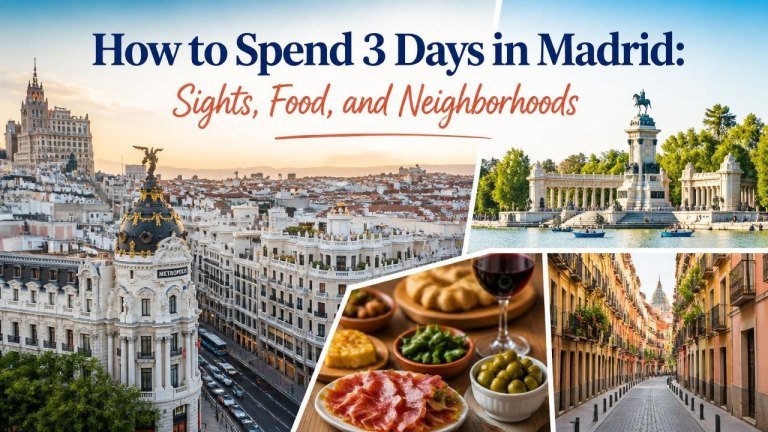
Madrid is a city best discovered at a comfortable pace. Its grand museums, royal architecture, leafy parks, traditional taverns, and lively plazas are close enough to combine in a short visit, yet each neighborhood has its own rhythm. This three-day Madrid itinerary focuses on the city’s essential sights while leaving room for long lunches, unplanned walks, and evening tapas.
Whenever possible, reserve timed entry for major attractions before arriving. Opening hours, temporary closures, ticket conditions, and access arrangements can change, so check the official website of each museum or monument shortly before your visit.
Day 1: Madrid’s historic center and royal landmarks
Begin with Madrid de los Austrias, the city’s oldest central area, then continue toward the Royal Palace and finish the day among the plazas and streets around Sol. This is an ideal introduction to Madrid’s history, architecture, and food culture.
Morning: Plaza Mayor, Mercado de San Miguel, and the old streets
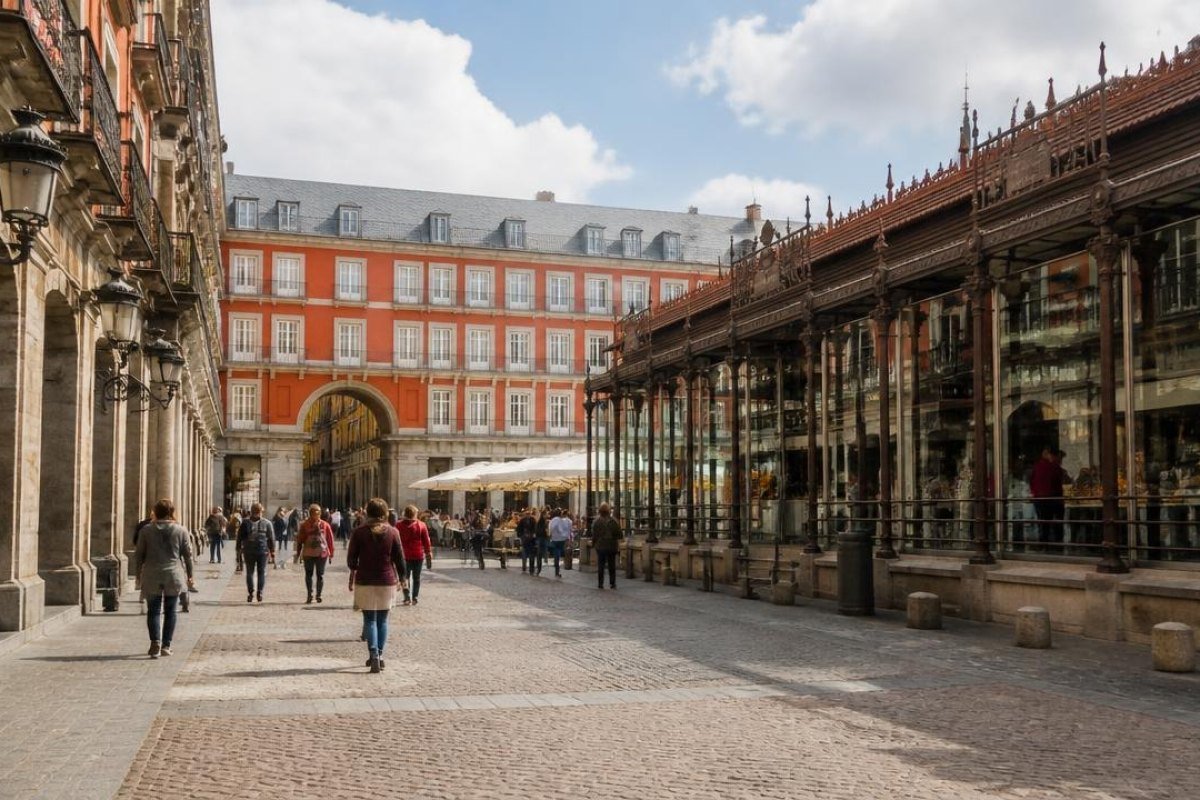
Start at Puerta del Sol, one of Madrid’s main meeting points. From here, walk toward Plaza Mayor through the narrow streets of the historic center. Plaza Mayor is best appreciated early, before the busiest part of the day, when you can take in its arcaded buildings and lively atmosphere without rushing.
Continue to the nearby Mercado de San Miguel for a first taste of Spanish specialties. It is convenient for sampling small portions, although prices can be higher than in traditional neighborhood bars. For a more local breakfast or mid-morning stop, look for a simple café serving coffee and toast, a pastry, or a small sandwich.
Allow time to wander through Calle Mayor, Calle de la Cava Baja, and the surrounding lanes. These streets connect historic monuments with wine bars, taverns, bakeries, and small shops, making them more rewarding when explored without a strict route.
Afternoon: Royal Palace and Almudena Cathedral
Spend the afternoon at the Royal Palace of Madrid. The visit reveals grand state rooms, royal collections, historic furnishings, and the ceremonial scale of Spain’s monarchy. The Royal Armoury and other areas may have separate access arrangements, so review the current visitor information when booking.
Next door, the Almudena Cathedral provides a contrasting experience, with a modern history, striking interior, and prominent position beside the palace. The cathedral, palace, and surrounding esplanades form one of the city’s most impressive architectural groups.
If you still have energy, walk through the Sabatini Gardens or toward Campo del Moro. These green spaces offer a calmer perspective on the palace and are particularly pleasant in the late afternoon. Check access details in advance, as gardens and palace-related sites can follow different schedules.
Evening: La Latina and traditional Madrid dining
Head toward La Latina for dinner. The neighborhood is known for its steep lanes, old taverns, and concentration of restaurants. Order a few dishes to share rather than committing to one large meal: consider croquetas, grilled vegetables, Spanish omelette, cured meats, or a regional stew when available.
For a classic Madrid evening, explore Cava Baja and the surrounding streets before choosing a table. Dining times are often later than visitors may expect, but many restaurants also serve earlier meals. Finish with a relaxed drink in a plaza rather than trying to fit in another major attraction, much like the unhurried combination of tapas and the Albaicín in Granada.
Day 2: The Prado, Retiro Park, and Madrid’s grand boulevard
Your second day combines masterpieces, monumental boulevards, and open-air relaxation. The Paseo del Prado and Retiro area is one of Madrid’s most concentrated cultural zones and can easily fill an entire day.
Morning: A focused visit to the Prado Museum
Reserve the morning for the Prado Museum, one of Europe’s great collections of Spanish and European art. A focused visit is more enjoyable than attempting to see everything. Prioritize artists and works that interest you, then allow time for a slower look at a few galleries.
Highlights commonly sought by first-time visitors include Velázquez, Goya, and El Greco, alongside works by artists from across Europe. Check the museum’s current ticketing and timed-entry requirements before your visit, particularly during weekends, holidays, and major exhibitions.
After leaving the museum, walk along the Paseo del Prado. The route links fountains, historic institutions, landscaped spaces, and some of Madrid’s most recognizable buildings. It is a good place to pause for coffee before continuing toward Retiro.
Afternoon: El Retiro Park and the Crystal Palace
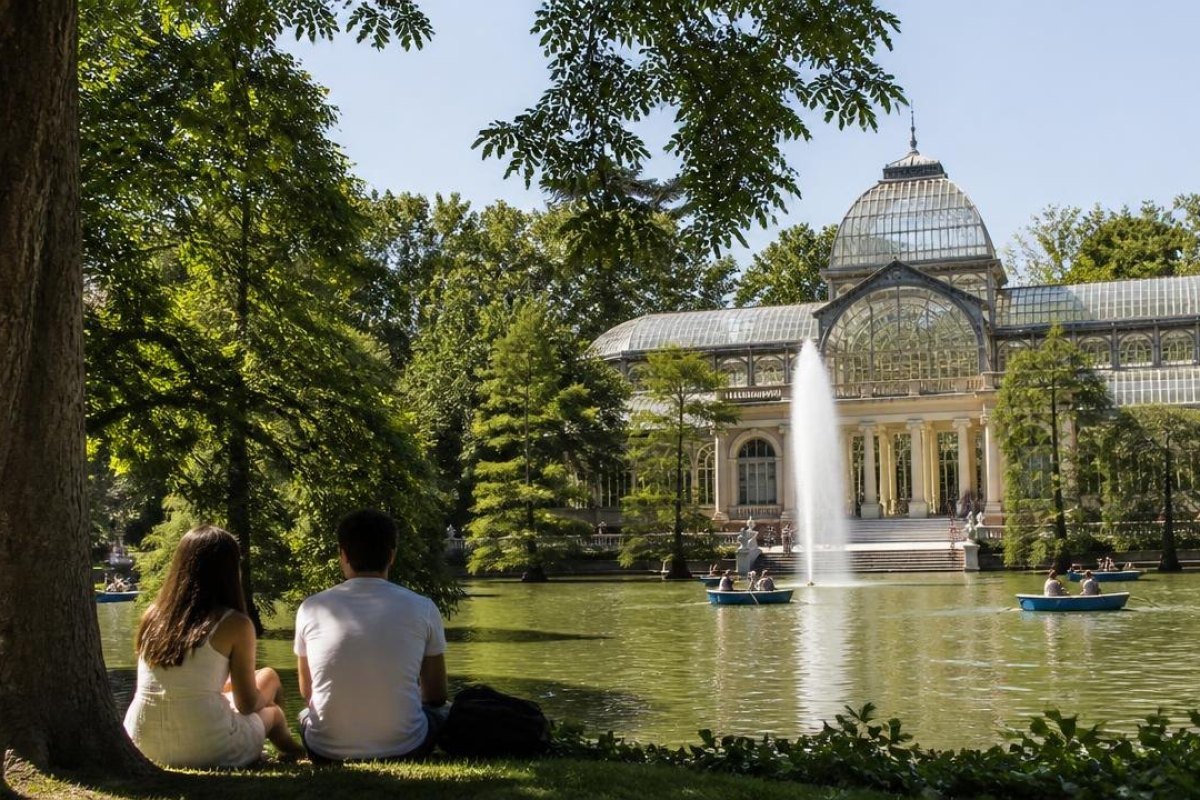
Enter El Retiro Park and slow the pace. Walk beside the large lake, visit the monument to Alfonso XII, and continue toward the Crystal Palace, whose glass-and-iron structure is one of the park’s best-known landmarks. Exhibitions and access conditions can vary, so check the current information if a particular building is important to your plans.
Retiro is more than a quick photo stop. Give yourself time for shaded paths, quiet garden corners, and people-watching. Depending on conditions and availability, you may also see boats on the lake or discover smaller monuments away from the main routes.
Leave the park through the Puerta de Alcalá area and continue toward Plaza de Cibeles. This elegant stretch showcases Madrid’s civic architecture and gives you a natural route back toward the city center.
Evening: Barrio de Las Letras and dinner near Huertas
Spend the evening in Barrio de Las Letras, the Literary Quarter. Its pedestrian-friendly streets, historic associations, galleries, and restaurants make it one of the most atmospheric places to dine in central Madrid.
Look for a restaurant or taberna serving seasonal Spanish food rather than trying to follow a fixed list of dishes. Madrid’s dining culture is flexible: combine a small plate at one stop, a drink at another, and dessert somewhere else. For a classic sweet, try churros with chocolate at a traditional establishment, checking late-night opening times before setting out.
Day 3: Neighborhood character, markets, and modern Madrid
The final day is designed for discovering local atmosphere, creative districts, and contemporary Madrid. Choose between a second major museum, a neighborhood-focused day, or a mixture of both.
Morning: Malasaña, Chueca, and a leisurely breakfast
Begin in Malasaña, a lively district known for independent shops, cafés, vintage stores, and street art. It is a pleasant area for a slow breakfast followed by an unstructured walk. Look beyond the main streets to find small plazas and quieter corners.
Continue toward Chueca, where design shops, restaurants, bakeries, and lively public spaces create a different urban character. The neighborhood is especially enjoyable when you allow yourself to browse rather than move directly between landmarks.
If you prefer a market-based morning, visit Mercado de San Antón or another neighborhood market, keeping in mind that market formats and opening arrangements can change. A market visit works well for a light meal, fresh produce, or a quick look at how residents shop and eat.
Afternoon: Choose Reina Sofía, Thyssen-Bornemisza, or a shopping walk
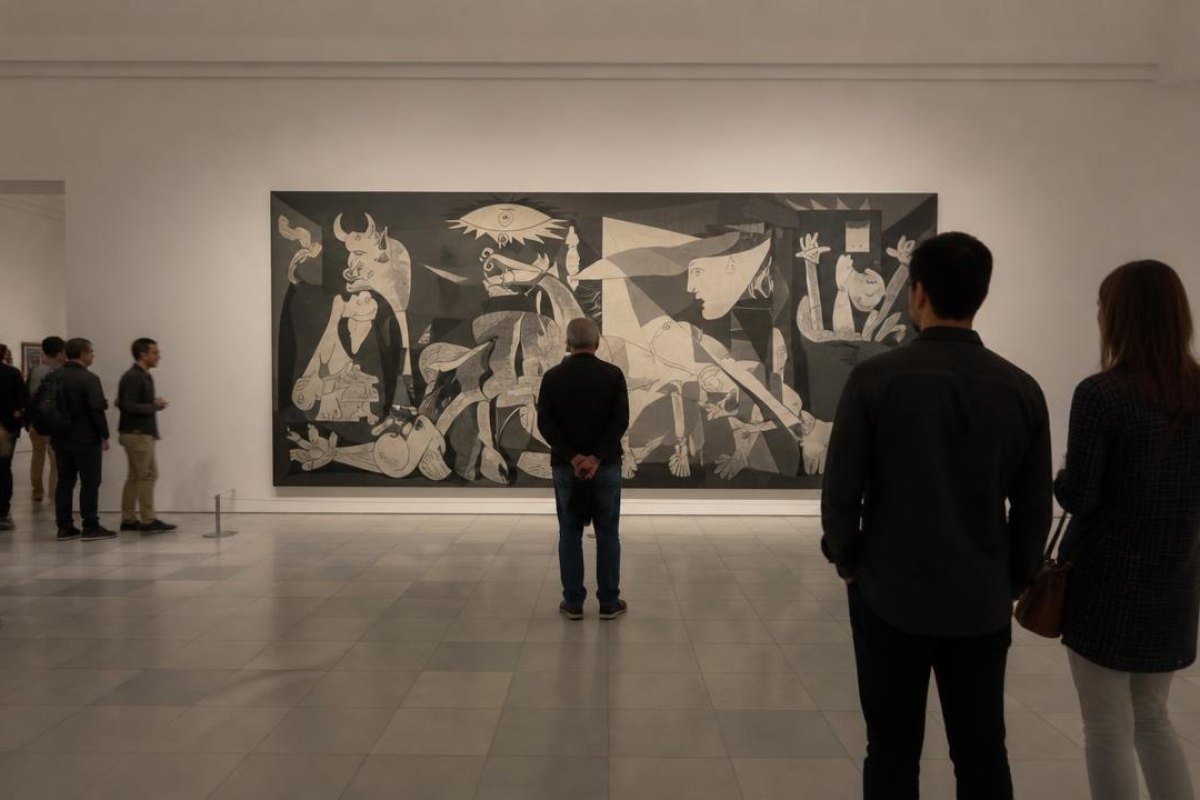
For modern and contemporary art, visit the Reina Sofía Museum, home to Picasso’s Guernica and a wide collection of Spanish and international works. Alternatively, the Thyssen-Bornemisza Museum offers a broad journey through European art, making it a strong choice if you prefer variety across periods and styles.
Do not try to combine every major museum in one afternoon. Choose one institution and explore it properly, or replace the museum with a walk along Gran Vía, continuing toward Plaza de España and the surrounding shopping streets.
Visitors interested in panoramic views can consider a rooftop or elevated viewpoint, but availability, access rules, and weather policies differ. Confirm current details before building your afternoon around one location.
Evening: Sunset, tapas, and a final Madrid stroll
For your last evening, choose the area that best matches your mood. Chamberí offers a more residential feel and traditional dining, while Lavapiés is known for cultural diversity, independent venues, and international food. If you want one more classic central walk, return to Sol, Plaza Mayor, or the Royal Palace after dark.
Make dinner a gradual experience: begin with vermut, share several tapas, and finish with a regional dessert or late coffee. Madrid rewards this unhurried style, particularly when you sit outside in a lively square or choose a family-run taberna away from the busiest tourist routes.
What to eat in Madrid during three days
Madrid’s food culture mixes Castilian traditions, market cooking, and influences from across Spain. You do not need expensive restaurants to eat well; some of the city’s most memorable meals come from simple bars with a short menu and steady local clientele.
- Cocido madrileño: A hearty chickpea-based stew traditionally served in several stages.
- Bocadillo de calamares: A famous fried-squid sandwich often associated with the area around Plaza Mayor.
- Callos a la madrileña: A rich tripe stew for travelers who enjoy robust traditional dishes.
- Tortilla española: Spanish omelette, commonly prepared with potato and egg, sometimes with onion.
- Churros con chocolate: A classic sweet option for breakfast, an afternoon treat, or a late-night stop.
- Vermut and tapas: An easy way to sample the city’s social dining culture without ordering a full meal.
Where to stay for a three-day Madrid itinerary
For first-time visitors, Centro offers the greatest convenience for walking to major sights. Staying near Sol, Plaza Mayor, or the Opera area puts historic landmarks, restaurants, and public transport within easy reach, though these areas can be busy.
Las Letras is a strong choice for travelers who want museums, evening dining, and a central but atmospheric setting. Malasaña suits visitors who prefer independent cafés, nightlife, and a younger neighborhood feel, while Retiro and Salamanca provide a calmer and more polished base.
When choosing accommodation, prioritize walkability, air conditioning in hot months, and a convenient metro connection. Read recent reviews for noise, especially if your room faces a nightlife street.
Getting around Madrid
Much of this itinerary is easiest on foot, particularly in the historic center, Paseo del Prado, and Retiro area. Madrid’s Metro and buses are useful for longer connections, and official tourist transport products may be available depending on your travel dates and zones.
Use a contactless payment option or the appropriate transport ticket where accepted, and follow the current guidance from the regional transport authority. Taxis and app-based services can be practical late at night or when carrying luggage, while cycling is best approached with awareness of traffic and local restrictions, as with getting around Paris.
Practical tips for a smoother visit
Book the Royal Palace and major museums ahead when possible, especially for weekends and busy travel periods. Wear comfortable shoes, carry water in warm weather, and plan a slower midday meal rather than packing every hour with sightseeing.
Keep valuables secure in crowded areas and on public transport, particularly around major stations, markets, and central plazas. Madrid is generally easy to navigate, but sensible city habits remain important.
Finally, leave some space in your schedule. The best moments may be a quiet morning café, a spontaneous gallery visit, or a late walk through streets you had not planned to see. Three days can cover Madrid’s highlights, but the city’s real appeal lies in how naturally the sights, neighborhoods, and meals fit together.