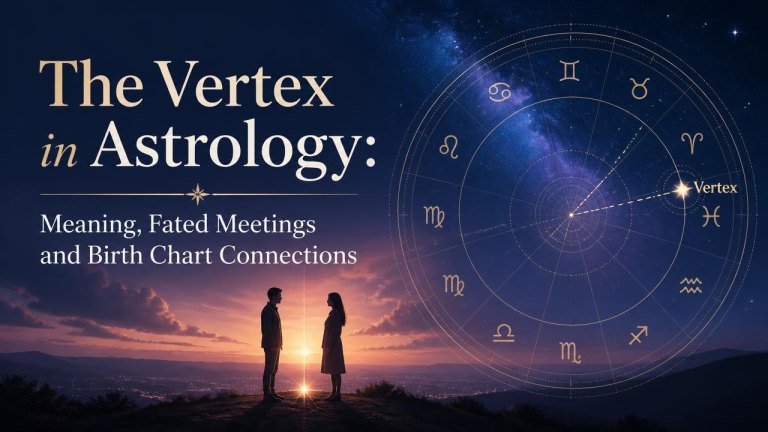
In astrology, the Vertex in astrology is often described as a point of encounter, timing, and meaningful connection. It is not a planet or physical body, but a calculated point in the birth chart that many astrologers associate with people and experiences that seem to arrive unexpectedly yet leave a lasting impression.
The Vertex can offer another perspective on relationships, personal turning points, and the feeling that certain meetings were somehow meant to happen. It does not remove free will or guarantee a particular outcome, but it can highlight circumstances that strongly influence your direction.
What Is the Vertex in Astrology?
The Vertex is a mathematical point found on the western side of the birth chart, usually in the fifth, sixth, seventh, or eighth house. It is calculated from the relationship between the ecliptic, the prime vertical, and the location and time of birth. Because it depends heavily on accurate birth data, a reliable birth time is especially important.
Astrologers often interpret the Vertex as a point connected with external events, significant people, and experiences that seem to enter your life through circumstances beyond your direct control. Its opposite point is called the Anti-Vertex, which is associated with a more personal and self-directed expression.

Why Is the Vertex Associated With Fate?
The Vertex is sometimes called a fated point because it can become prominent when an important person or event appears in your life. This language does not mean that every encounter is predetermined or that you have no choice. Instead, it suggests that some circumstances may carry unusual weight or arrive with a strong sense of significance.
A Vertex experience may feel like an opening, interruption, or redirection. Someone may introduce you to a new path, challenge an old assumption, or awaken qualities that had remained dormant. The sense of fate often comes from the experience of being drawn into a situation rather than deliberately creating it.
The Vertex in the Birth Chart
The sign and house of the Vertex describe the style and life area through which meaningful encounters may occur. The position should be read as one part of the chart rather than as an isolated prediction. Other factors, including the Ascendant, Descendant, seventh house, and planetary aspects, provide essential context.
Vertex by Sign
The Vertex sign can describe the qualities you may encounter through influential people or turning points. For example, a Vertex in Aries may bring experiences involving initiative, courage, and independence, while a Vertex in Libra may emphasize partnership, diplomacy, and balance.
A Vertex in Scorpio can point toward encounters involving intensity, transformation, and emotional honesty. A Vertex in Gemini may highlight communication, learning, and unexpected exchanges of information. These descriptions are symbolic themes, not fixed promises.
Vertex by House
The house placement shows where Vertex-related experiences may become most visible. In the seventh house, important meetings may involve partnerships, clients, or close relationships. In the tenth house, encounters may influence career direction, reputation, or public responsibilities.
A Vertex in the fifth house may connect significant experiences with romance, creativity, children, or pleasure. In the eighth house, the themes may include shared resources, intimacy, psychological change, and deep emotional bonds.
The Vertex in Synastry
Synastry compares two birth charts to explore how people affect one another. When one person’s planet or angle closely contacts the other person’s Vertex, the relationship may feel unusually magnetic, timely, or difficult to dismiss, much like patterns explored through composite charts in astrology.
Vertex contacts are often discussed in romantic relationships, but they can also appear in friendships, professional connections, family relationships, and mentor-student bonds. The defining quality is not necessarily romance; it is the feeling that the connection has personal significance and may change how one or both people see their path.
Important Vertex Synastry Contacts
A conjunction to the Vertex is usually considered the strongest type of contact because the planet’s symbolism is directly fused with the Vertex point. A person’s Sun may bring identity and visibility into the connection, while their Moon may evoke emotional familiarity, vulnerability, or a powerful sense of recognition.
Venus contacts can emphasize attraction, affection, and shared values. Mars may bring desire, motivation, or conflict that stimulates growth. Jupiter can expand possibilities, while Saturn may create responsibility, commitment, or lessons that develop over time.
Contacts from Uranus, Neptune, or Pluto can feel especially memorable. They may correspond with sudden change, idealization, spiritual themes, or profound transformation. However, a single contact should never be used to judge the entire quality or future of a relationship.
The Vertex and Romantic Relationships
In romantic astrology, the Vertex is often associated with the feeling of meeting someone at a crucial moment. The relationship may begin unexpectedly, during a transition, or through circumstances that seem outside ordinary planning. Strong contacts can create recognition, fascination, or an immediate sense that the person matters.
Still, the Vertex does not automatically indicate a healthy, permanent, or compatible relationship. Long-term potential depends on the wider synastry chart, including communication patterns, emotional compatibility, boundaries, shared values, and the condition of both people’s natal charts.
Transits to the Vertex
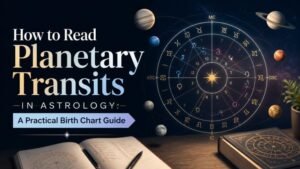
A transit occurs when a planet in the current sky forms an aspect to a point in the birth chart. Transits to the Vertex may coincide with periods when influential people enter your life or when circumstances create a meaningful redirection. These moments may involve new opportunities, encounters, invitations, or developments that alter your priorities.
Fast-moving planets can describe shorter periods of activation, while slower planets may correspond with experiences that unfold over a longer period. Because the Vertex is sensitive to birth-time accuracy, transit interpretations should be approached carefully when the recorded birth time is uncertain.
How to Interpret Your Vertex Responsibly
Begin by checking the Vertex sign, house, and degree in a reliable birth chart calculator. Then examine whether natal planets or angles form close aspects to it. In relationship analysis, compare the Vertex with the other person’s planets, angles, and major chart patterns rather than focusing on one contact alone.
- Consider the exact aspect and its orb.
- Look at the planet involved and what it represents in each chart.
- Compare the Vertex with the Descendant, seventh-house ruler, and relationship indicators.
- Notice whether current transits support the same theme.
- Use the symbolism for reflection, not as a substitute for judgment or consent.
The most useful interpretation combines symbolic meaning with real-life observation. A strong Vertex connection may describe why an encounter feels important, but it does not determine how you respond or what the relationship becomes.
Common Misunderstandings About the Vertex
One common misunderstanding is that the Vertex identifies a single destined soulmate. Astrology is more nuanced than that. The point can describe a wide range of meaningful encounters, including relationships that are brief but transformative or challenging but educational.
Another misconception is that every Vertex contact guarantees immediate intensity. The experience may become significant gradually, especially when Saturn, the lunar nodes, or slower-moving planets are involved. Understanding a Saturn return in astrology can also provide context for how Saturn-related timing develops. The complete chart and the lived circumstances always matter.
Final Thoughts
The Vertex can be a valuable tool for exploring the astrology of timing, connection, and unexpected change. In the birth chart, it points toward areas where influential experiences may enter your life. In synastry, it can help explain why a person feels unusually important or why a meeting seems to arrive at a decisive moment.
Its symbolism is best used with curiosity, discernment, and respect for free will. Rather than asking whether a relationship is absolutely destined, consider what the encounter reveals, what it invites you to learn, and how consciously you choose to move forward.