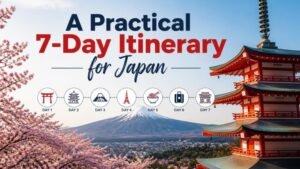
A Practical 7-Day Japan Itinerary by Train
Japan is one of the easiest countries to explore without a car. Its major cities are connected by fast, comfortable trains, while local railways and subways make sightseeing straightforward once you arrive. This 10 days in Japan itinerary follows the classic route from Tokyo to Kyoto and Osaka, with a balanced mix of modern city life, historic neighborhoods, temples, food and day trips.
The route works well for a first visit, especially if you fly into Tokyo and depart from Osaka. An open-jaw flight saves you from returning to your starting point, but the itinerary can also be completed as a round trip from Tokyo if necessary.

At a Glance: Your 7-Day Route
- Days 1–3: Tokyo
- Day 4: Shinkansen to Kyoto
- Days 4–5: Kyoto
- Day 6: Nara day trip, then continue to Osaka
- Day 7: Osaka
This schedule is intentionally active but not rushed. You will see several famous highlights, while still leaving room for neighborhood walks, meals and spontaneous discoveries.
Before You Travel: Planning the Train Journey
Choose the right arrival and departure airports
For the smoothest version of this itinerary, arrive at either Tokyo Haneda or Narita Airport and depart from Kansai International Airport near Osaka. Haneda is generally more convenient for central Tokyo, while Narita has extensive international connections. Kansai International Airport is the main international gateway for Osaka and Kyoto.

If your flights require a return to Tokyo, keep the final day flexible and allow plenty of time for the cross-country train journey. An open-jaw itinerary is usually more comfortable for a seven-day trip.
Should you buy a Japan Rail Pass?
Do not assume that a nationwide rail pass is automatically the cheapest option. For this itinerary, compare the cost of individual tickets with the current Japan Rail Pass price before buying. The most expensive long-distance journeys are the Tokyo–Kyoto and Kyoto–Osaka legs, while city transport is usually handled separately.
Rail pass prices and conditions can change. If you are considering a pass, check the official Japan Rail Pass website shortly before departure, including the rules for Nozomi trains and any required supplementary tickets.
Booking the Shinkansen
The Tokaido Shinkansen connects Tokyo, Kyoto and Osaka. The fastest services can cover Tokyo to Kyoto in roughly two hours, although the exact journey depends on the train and stopping pattern. You can buy tickets at major stations or use an official online reservation service such as smartEX.
Reserve seats in advance during major holidays, weekends, busy travel seasons and periods when large luggage is common. If you have a suitcase exceeding the standard dimensions, check the current oversized-baggage rules before boarding. Keep your ticket or digital boarding information accessible until you leave the station.
Day 1: Arrive in Tokyo and Explore Shibuya
After arriving in Tokyo, keep your first day light. Check in, collect an IC transport card if available, and get used to the city’s scale. An IC card can be useful for many local trains, subways and buses, although it may not cover every service or long-distance journey.
Begin in Shibuya, where you can see the famous crossing, browse department stores and explore smaller side streets. Continue toward Harajuku and Meiji Jingu if you still have energy. The contrast between the busy commercial streets and the wooded shrine grounds makes this an ideal introduction to Tokyo.
For dinner, choose a neighborhood restaurant rather than trying to cross the city again. Tokyo’s food options range from ramen and yakitori to sushi, izakaya dishes and regional specialties from across Japan.
Day 2: Traditional Tokyo in Asakusa and Ueno
Start in Asakusa, one of Tokyo’s best areas for historic atmosphere. Visit Senso-ji, walk through the surrounding lanes and look for traditional snacks, crafts and small restaurants. Go early if you prefer a quieter experience, particularly around the temple’s main approach.
From Asakusa, continue to Ueno by local train or subway. Ueno Park is home to museums, gardens and cultural attractions. Choose one or two museums rather than attempting to see everything in a single afternoon.
Finish the day around Ameyoko, where market-style stalls and casual eateries create a lively evening atmosphere. Alternatively, travel to Akihabara for electronics, arcades, anime and gaming culture.

Day 3: Choose Between Modern Tokyo and a Day Trip
Use your third day for an area you missed or select a short day trip. First-time visitors who want more Tokyo can explore 7 days in Tokyo, visit the Imperial Palace area, or spend time in Daikanyama, Nakameguro and Ebisu.
Another option is Odaiba, a waterfront district with broad promenades, museums and modern architecture. It is a good choice when you want a slower day after navigating central Tokyo.
If you prefer to leave the city, consider Kamakura for temples, coastal scenery and the Great Buddha. Check current transport conditions and attraction information before setting out, and avoid packing too many distant stops into one day.
Day 4: Tokyo to Kyoto by Shinkansen
Travel from Tokyo to Kyoto in the morning. Tokyo Station and Shinagawa Station are both useful departure points, depending on where you stay. Buy a bento or drink before boarding, and keep an eye out for views of Mount Fuji when traveling on the correct side of the train and when weather permits.
After arriving at Kyoto Station, leave your luggage at your hotel or use a reliable luggage-storage or delivery service. Where to stay in Kyoto can shape how easily you reach the city’s historic areas, which are much easier to enjoy without a large suitcase.
Afternoon in Higashiyama
Spend the afternoon in Higashiyama, one of Kyoto’s most atmospheric districts. Walk through the lanes around Kiyomizu-dera, Yasaka Pagoda and Ninenzaka. The streets can become crowded, so move patiently and avoid blocking entrances or photographing residents without permission.
Continue toward Yasaka Shrine and Gion in the early evening. Gion is a living neighborhood, not an open-air theme park; stay on public streets, respect private property and follow local photography guidance.

Day 5: Fushimi Inari and Arashiyama
Begin early at Fushimi Inari Taisha. The torii gates continue up the hillside, so you do not need to complete the entire trail to enjoy the experience. An early visit is particularly worthwhile because the lower section becomes busy later in the morning.
Return toward central Kyoto and travel to Arashiyama. Visit the bamboo grove, explore Tenryu-ji if it fits your interests, and walk beside the Katsura River. The district attracts large crowds, so allow extra time for local transport and walking between sights.
Kyoto rewards a slower pace. Rather than adding several distant temples, choose one garden, temple or traditional neighborhood for a more relaxed afternoon.

Day 6: Nara Day Trip and Evening in Osaka
Travel from Kyoto to Nara in the morning using a local or rapid train service. Nara Park brings together several major sights, including Todai-ji and Kasuga Taisha. The park is walkable, but comfortable shoes are essential.
Wild deer are accustomed to visitors, but they remain animals. Feed them only with approved deer crackers, keep paper and food away from them, and avoid teasing or chasing them. Follow signs and staff instructions, especially in busy areas.
In the late afternoon, continue to Osaka and check in. Staying near Namba, Umeda or another well-connected area makes the final evening convenient.
Osaka after dark
Explore Dotonbori and nearby Namba for neon signs, takoyaki, okonomiyaki and casual street-level dining. Osaka is famous for its relaxed food culture, but popular restaurants may have queues. Keep your plans flexible and consider eating slightly earlier or later than the busiest period.
Day 7: Osaka’s Markets, Castle and Waterfront
Begin at Osaka Castle and its surrounding park, allowing time for the journey from your accommodation. The castle area combines a historic landmark with broad green spaces and city views.
Continue to Kuromon Market if you want to browse seafood, fruit, snacks and prepared foods. Market opening patterns vary by vendor, so treat it as a daytime stop rather than a guaranteed early-morning breakfast destination.
Spend the afternoon in Umeda for department stores, observation decks and modern architecture, or choose the Osaka Bay area for aquariums and waterfront attractions. If you are flying from Kansai International Airport, leave enough time for the airport transfer and check the latest transport status before departure.
Where to Stay on This Itinerary
Tokyo
Choose Shinjuku or Shibuya for nightlife and extensive connections, Tokyo Station or Ginza for central access, or Asakusa for a quieter historic atmosphere. The best choice depends on whether you prioritize evening dining, airport access or traditional surroundings.
Kyoto
Kyoto Station is practical for rail connections and luggage. Downtown Kyoto offers more restaurants and evening convenience, while Gion and Higashiyama provide atmosphere but can be more expensive and quieter after sightseeing hours.
Osaka
Namba is ideal for food, nightlife and access to southern Osaka. Umeda is a major transport hub with excellent shopping and convenient connections to northern Osaka and the airport.
Practical Train and Luggage Tips
- Use station names carefully: Kyoto and Shin-Osaka are different stations, and Osaka has several major rail hubs operated by different companies.
- Allow transfer time: Large stations can involve long walks, multiple levels and confusing signage.
- Travel light: A medium suitcase is easier on crowded trains, narrow pavements and hotel stairs.
- Send large luggage ahead: Japan has dependable luggage-delivery services, but arrange them through your hotel or an official provider and confirm delivery timing.
- Keep quiet on trains: Phone calls are generally discouraged, and passengers usually keep conversations subdued.
- Check disruptions: Weather, earthquakes, maintenance and special events can affect services. Check official railway updates on the day of travel.
Food to Try Along the Route
Tokyo is a good place for sushi, ramen, tempura and regional cuisine from across Japan. In Kyoto, look for tofu dishes, seasonal kaiseki-style meals, matcha sweets and traditional confectionery. Nara is known for local specialties such as persimmon-leaf sushi, while Osaka is the place to try takoyaki, okonomiyaki and kushikatsu.
Reservations are sensible for small or highly rated restaurants, especially at dinner. For casual dining, department-store food halls and station buildings can provide quality options without complicated planning.
When to Take This Trip
Spring brings pleasant sightseeing conditions and famous cherry blossoms, but popular areas can be exceptionally busy. Autumn offers colorful foliage and comfortable temperatures. Summer is hot and humid in many cities, while winter usually brings clearer skies and fewer visitors, although daylight hours are shorter.
Public holidays and school vacation periods can increase demand for trains and accommodation. Check the national holiday calendar and reserve important train journeys early when traveling during peak periods.
How to Make the Itinerary More Relaxed
If seven days feels too short, remove the Nara day trip or reduce Tokyo to two full days. If you prefer culture over city nightlife, spend an additional night in Kyoto and visit Nara as a half-day or full-day excursion from there.
For families, travelers with mobility concerns or visitors carrying large luggage, plan fewer neighborhoods per day. Japan’s railway network is efficient, but stations and sightseeing districts can involve considerable walking.
Final Advice for a Smooth Week in Japan
Build your trip around a few fixed reservations and leave the rest flexible. Book accommodation near a convenient station, use luggage delivery when appropriate, and avoid changing hotels every night. The most enjoyable Japan itineraries are not necessarily the ones with the longest attraction list; they are the ones that leave enough time to notice the details between destinations.
Before departure, confirm current train rules, airport procedures, attraction reservations, luggage requirements and any entry documentation that applies to your nationality. With those details checked, this Tokyo–Kyoto–Nara–Osaka route offers an efficient and memorable introduction to Japan by train.