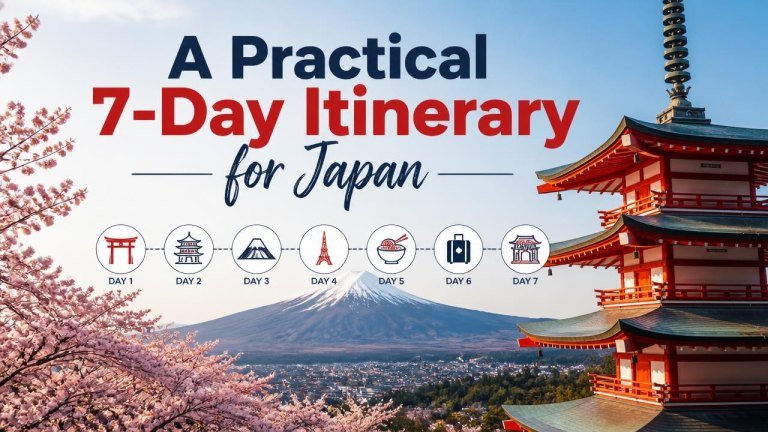
Japan rewards travelers who balance careful planning with room for spontaneous discoveries. This seven-day route is designed for a first visit, combining Tokyo’s futuristic energy, Kyoto’s historic atmosphere, and Osaka’s lively food culture. It uses the Tokaido Shinkansen to reduce long travel days while keeping the itinerary realistic.
A Practical 7-Day Itinerary for Japan
This route works best with an open-jaw plan: arrive in Tokyo and depart from Osaka, if suitable flights are available. If your flights require a return to Tokyo, allow extra time at the end rather than scheduling a same-day international connection.
Stay near a major railway station, travel with a manageable suitcase, and group attractions by neighborhood. Japan’s public transport is extensive, but large stations can be confusing, so building in a little extra time makes each day more comfortable.
Before You Go
Check the latest entry requirements, passport validity rules, and any arrival procedures for your nationality before booking. Requirements can change, so use official Japanese government and airport information close to departure.
Reserve accommodation early during cherry blossom season, autumn foliage, Golden Week, and major holiday periods. For popular restaurants, observation decks, museums, and special cultural experiences, confirm whether advance reservations are required.
Pack comfortable walking shoes, a lightweight day bag, and layers suitable for the season. A small amount of cash is useful, although cards and mobile payments are widely accepted in many urban areas. Keep your passport and important travel documents secure.
Day 1: Arrive in Tokyo and Explore Shibuya
After arriving in Tokyo, check in, leave your luggage, and keep the first day flexible. The best plan is to stay in one nearby district rather than attempting a long list of attractions while adjusting to the time difference.
Begin with Shibuya Crossing, then explore the surrounding streets, department stores, cafés, and viewing spots. From Shibuya, walk or take a short train ride toward Harajuku and visit the peaceful grounds of Meiji Jingu if you still have energy.
Finish in Shinjuku with a casual dinner. The area offers everything from ramen and izakaya dining to department-store food halls. Keep the evening gentle: an early night can make the next day much more enjoyable.

Day 2: Traditional Tokyo, Markets, and City Views
Start early in Asakusa, where Sensoji Temple and Nakamise-dori provide an atmospheric introduction to Tokyo’s older neighborhoods. Be respectful at religious sites, follow posted photography rules, and avoid blocking entrances or worshippers.
Continue toward the Sumida River or Tokyo Skytree area. Choose one major observation experience rather than trying to visit several towers in the same day. Visibility varies with weather, so flexibility is useful.
In the afternoon, explore Ueno Park, its museums, or the nearby Ameyoko area. If you prefer modern culture, replace Ueno with Akihabara for electronics, games, anime, and themed shopping. Return to your hotel before preparing for the intercity journey.
Day 3: Tokyo to Kyoto by Shinkansen
Take the Tokaido Shinkansen from Tokyo or Shinagawa to Kyoto. The journey takes roughly two hours and ten minutes on the fastest commonly available services, though the exact duration and service pattern depend on the train selected.
After checking in, visit Fushimi Inari Taisha. Its torii-lined paths can become very busy later in the day, so an afternoon arrival may be better suited to a shorter walk, while a longer hike is best started earlier.
Spend the evening around Gion and Higashiyama. Walk quietly through preserved streets, enjoy a Kyoto-style dinner, and remember that geisha districts are working neighborhoods rather than open-air attractions. Do not photograph private homes, performers, or restricted areas without permission.
Day 4: Kyoto’s Temples and Historic Streets
Begin with Kiyomizu-dera and the lanes of Higashiyama. Arriving early helps you experience the area with fewer crowds and gives you more time for temple grounds, small craft shops, and traditional cafés.
Continue to Nishiki Market for a food-focused visit. Treat the market as a place to browse and sample responsibly: follow vendor instructions, avoid eating while walking where requested, and do not touch products without asking.
In the afternoon, choose either Nijo Castle and central Kyoto or the Philosopher’s Path and nearby temples. Avoid crossing the city repeatedly; a compact route usually delivers a richer experience than checking off distant sights.
Day 5: Arashiyama and a Slower Kyoto Evening
Travel to Arashiyama in the morning. Visit the bamboo grove early, then continue to Tenryu-ji and the riverside paths. The district is more than one famous photo spot, so allow time to explore respectfully beyond the busiest entrance.
If you want a quieter experience, consider nearby gardens or a short walk along the Katsura River. Visitors who prefer history can add a temple or villa whose opening arrangements are confirmed in advance.

Return to central Kyoto for a relaxed evening. Try kaiseki-inspired dining, tofu cuisine, soba, or a casual neighborhood restaurant. Kyoto’s most memorable meals are often found by slowing down rather than moving between several reservations.

Day 6: Kyoto to Osaka and the City’s Food Scene
Travel from Kyoto to Osaka by a local or rapid railway service. The journey is relatively short, so there is no need to leave before dawn unless you have a specific morning reservation. Store luggage at your hotel or use an official baggage service where available.
Explore Osaka Castle and its surrounding park, then move toward Namba or Dotonbori. The castle grounds offer a welcome change of pace, while the Namba area is ideal for bright signs, shopping, and Osaka’s famous street-food culture.
For dinner, try takoyaki, okonomiyaki, kushikatsu, or another local specialty. Eat at a venue with clear hygiene standards and follow restaurant rules, especially where queues, ticket machines, or table ordering systems are used.
Day 7: Choose Your Osaka Finale
Use your final day according to your departure time. For a city-focused morning, explore Umeda, visit a department-store food hall, and enjoy a high-level city view if tickets and weather allow.
If you prefer a more traditional atmosphere, walk through Shinsekai and nearby neighborhoods. If you are traveling with children or want a full-day attraction, Universal Studios Japan may work well, but advance planning and timed-entry arrangements can be important.
Leave generous time for the airport transfer. Confirm the correct airport, terminal, railway route, and luggage arrangements the day before departure, particularly if you are traveling during a busy period.
Where to Stay
Tokyo
Choose Shinjuku for extensive dining and transport connections, Shibuya for nightlife and contemporary culture, or Asakusa for a more traditional atmosphere. Tokyo Station, Shinagawa, and Ueno can be practical bases if your itinerary includes early railway travel.
Kyoto
Staying near Kyoto Station simplifies luggage handling and onward transport. Central Kyoto is convenient for restaurants and evening walks, while Gion and Higashiyama offer atmosphere but may be quieter and more expensive.
Osaka
Namba is ideal for food and nightlife, while Umeda is useful for railway connections and a more business-oriented city center. Select the area that best matches your departure airport and evening plans.
Transport and Luggage Tips
Use an IC card where accepted for everyday urban journeys, but check the latest payment and refund arrangements before relying on it. Keep your route details accessible offline in case mobile coverage or station Wi-Fi is limited.
For the Tokyo–Kyoto segment, compare train options and reserve seats through official channels when appropriate. During busy travel periods, popular services can fill more quickly, and oversized luggage may require specific seating arrangements.
Travel with a compact suitcase whenever possible. Stations often involve stairs, long corridors, and crowded platforms. Consider forwarding large luggage between hotels so that you can travel more easily between cities.
Food to Try
Japan’s regional food culture is one of the highlights of this route. In Tokyo, look for sushi, soba, and modern dining. Kyoto is known for refined seasonal cuisine, tofu dishes, tea culture, and traditional sweets.
In Osaka, sample okonomiyaki, takoyaki, and kushikatsu. Vegetarian and allergy-friendly travelers should explain dietary restrictions clearly, ideally with a translated card, because broths, sauces, and seasonings may contain unexpected ingredients.
How to Adjust This Itinerary
For a less hurried trip, remove Osaka and add another Kyoto night. For more modern city life, spend a third night in Tokyo and make Kyoto a two-night stay. Travelers interested in nature can replace one urban day with a carefully planned excursion, but check seasonal transport and weather conditions first.
The most important principle is neighborhood grouping: choose fewer attractions, allow realistic travel time, and leave space for meals, queues, weather changes, and unplanned discoveries.
Final Planning Checklist
Before departure, confirm your flight airports, hotel addresses, intercity transport, attraction reservations, and luggage plan. Save essential information offline and note the nearest station for each accommodation.
Check official updates for weather and transport disruptions, especially during typhoons, heavy snow, earthquakes, or major public holidays. Attraction hours, admission systems, and reservation policies can change, so verify them shortly before visiting.
Most of all, travel with consideration. Keep public spaces clean, queue patiently, speak quietly on trains, respect temple and shrine etiquette, and remember that the best Japan itinerary is one that remains enjoyable from the first morning to the final evening.