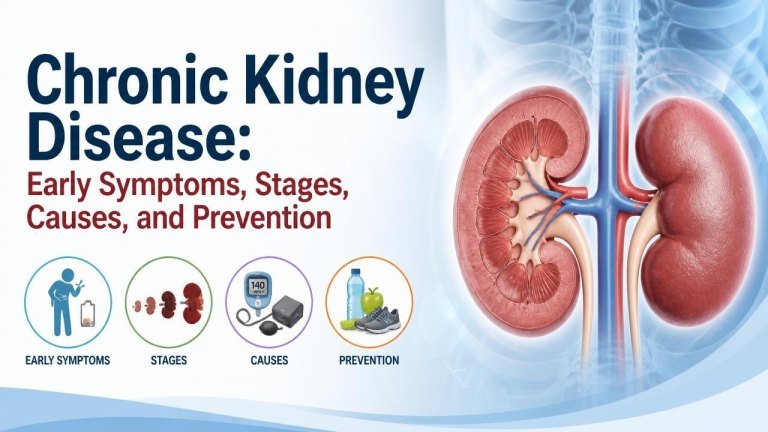
Chronic kidney disease (CKD) is a long-term condition in which the kidneys become damaged or lose function over time. Because kidney damage can develop gradually, many people have few or no noticeable symptoms in the early stages. Understanding the warning signs, risk factors, testing process, and prevention strategies can support earlier care and better health outcomes.
What Is Chronic Kidney Disease?
Chronic kidney disease means that kidney damage or reduced kidney function persists for three months or longer. Healthy kidneys filter waste and extra fluid from the blood, help control blood pressure, balance minerals, and support red blood cell production. When kidney function declines, waste and fluid may build up in the body.
CKD can remain stable for years, or it can progress to more severe kidney failure. Regular medical monitoring is important because treatment may help slow progression and reduce complications.
Early Symptoms of Chronic Kidney Disease
Early CKD often causes no obvious symptoms. The kidneys can lose a significant amount of function before a person feels unwell, which is why testing is especially important for people with diabetes and prediabetes, high blood pressure, or a family history of kidney disease.

As the condition develops, possible symptoms may include:
- Fatigue or reduced energy
- Swelling in the ankles, feet, hands, or around the eyes
- Changes in urination, such as increased frequency, foamy urine, or nighttime urination
- Dry, itchy skin
- Muscle cramps or weakness
- Nausea, reduced appetite, or an unpleasant taste in the mouth
- Difficulty concentrating or trouble sleeping
- Shortness of breath, particularly when fluid builds up
These symptoms can have many causes and do not confirm CKD. Seek medical advice if they are persistent, worsening, or accompanied by visible blood in the urine, severe swelling, chest discomfort, or significant breathing difficulty.
Stages of Chronic Kidney Disease
Doctors generally classify CKD using the estimated glomerular filtration rate (eGFR), a measure of how well the kidneys filter blood. Urine tests, symptoms, underlying conditions, and changes over time also help determine the overall picture.
Stages 1 and 2: Kidney Damage With Mild or Near-Normal Function
In the early stages, eGFR may be normal or only mildly reduced, but tests show signs of kidney damage, such as albumin in the urine or structural changes. People commonly have no symptoms. Controlling blood pressure, managing blood sugar, avoiding kidney-harming medicines when possible, and attending follow-up appointments are important steps.
Stage 3: Moderate Loss of Kidney Function
Stage 3 is often divided into 3a and 3b because kidney function varies across this range. Some people develop anemia symptoms, fatigue, swelling, changes in urination, or mineral and bone problems. Regular blood and urine testing can help identify complications and guide treatment.
Stage 4: Severe Loss of Kidney Function
At stage 4, the kidneys have substantially reduced filtering ability. Symptoms may become more noticeable, including nausea, itching, swelling, and poor appetite. Care usually includes planning for possible advanced treatment, while continuing efforts to protect remaining kidney function.
Stage 5: Kidney Failure
Stage 5 is also called kidney failure or end-stage kidney disease. The kidneys can no longer adequately remove waste and extra fluid. Treatment options may include dialysis, kidney transplantation, or a carefully planned supportive approach based on the person’s health and preferences.

Common Causes and Risk Factors
The most common causes of CKD include diabetes and high blood pressure. Both conditions can damage the small blood vessels and filtering structures inside the kidneys over time.
Other causes and risk factors include:
- Glomerulonephritis and other diseases that inflame or damage kidney filters
- Polycystic kidney disease and other inherited conditions
- Repeated kidney infections or urinary obstruction
- Autoimmune diseases such as lupus
- Heart and blood vessel disease
- Obesity, smoking, and limited physical activity
- Long-term or frequent use of certain medicines, including some nonsteroidal anti-inflammatory drugs
- A personal or family history of kidney disease
Some people have more than one risk factor. Identifying the cause helps clinicians choose appropriate treatment and monitoring.
How Chronic Kidney Disease Is Diagnosed
Diagnosis usually combines a blood test with a urine test. The blood test estimates kidney filtration, while the urine test can detect albumin or other signs of kidney damage. Repeating abnormal results helps determine whether the problem is persistent.
A healthcare professional may also review blood pressure, medical history, medicines, family history, and imaging results. Do not stop prescribed treatment or supplements without medical advice, particularly if kidney function may be reduced.
How to Help Prevent or Slow CKD
Not every case of CKD can be prevented, but several habits can reduce risk and help protect kidney function:
- Keep blood pressure within the target range recommended by a healthcare professional.
- Manage blood glucose if you have diabetes.
- Choose a balanced eating pattern with appropriate sodium and protein for your health needs.
- Stay physically active and work toward a healthy weight.
- Avoid smoking and limit alcohol according to medical guidance.
- Use over-the-counter pain relievers cautiously, especially if used frequently.
- Drink fluids appropriately; excessive fluid intake is not suitable for everyone with kidney disease.
- Attend recommended kidney tests if you have risk factors.
People with diagnosed CKD should ask about a personalized plan for medicines, nutrition, exercise, and follow-up testing. A renal dietitian may be helpful when dietary changes become more complex.
When to Speak With a Healthcare Professional
Arrange a medical evaluation if you have persistent swelling, changes in urination, unexplained fatigue, or risk factors such as diabetes and high blood pressure. Prompt care is especially important for severe shortness of breath, confusion, chest pain, or a sudden major change in urine output.
Because early CKD may be silent, routine screening can be more useful than waiting for symptoms. Ask a healthcare professional whether blood and urine testing is appropriate for you.
Key Takeaway
Chronic kidney disease can progress quietly, but early detection offers an opportunity to address its causes and protect kidney function. Know your risk factors, follow recommended testing, manage blood pressure and blood sugar, and seek medical advice about persistent symptoms. Individual treatment should always be based on guidance from a qualified healthcare professional.