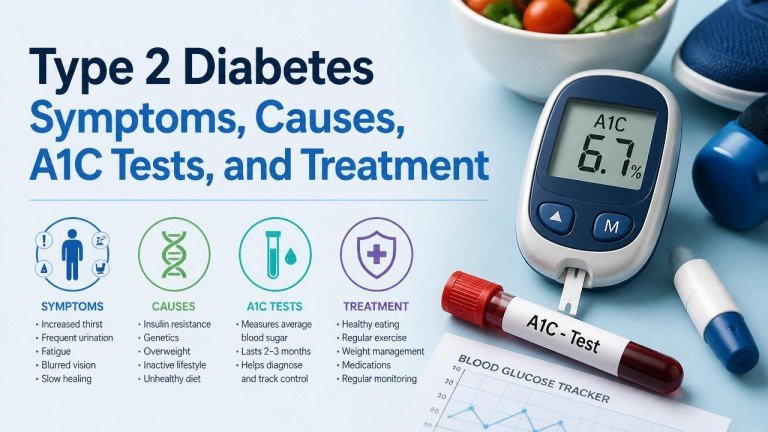
Type 2 diabetes is a common condition that affects how the body uses blood glucose, or blood sugar. It often develops gradually, so some people have few noticeable symptoms at first. Understanding the warning signs, risk factors, A1C testing process, and treatment options can help you take action early and protect your long-term health.
What Is Type 2 Diabetes?
Type 2 diabetes occurs when the body becomes less responsive to insulin, the hormone that helps glucose move from the bloodstream into cells. Over time, the pancreas may also produce less insulin. This combination can cause high blood sugar, insulin resistance, and damage to blood vessels and nerves if the condition is not managed.
Unlike type 1 diabetes, type 2 diabetes is not caused by the immune system destroying insulin-producing cells. It can develop at any age, although the risk often increases with age, family history, excess body weight, and limited physical activity.
Common Type 2 Diabetes Symptoms
Symptoms may appear slowly and can be easy to overlook. Some people have no clear symptoms and learn they have diabetes through a routine blood test. Possible signs include increased thirst, frequent urination, and unusual fatigue.

- Blurred vision
- Increased hunger
- Slow-healing cuts or sores
- Frequent infections, including skin, gum, or urinary infections
- Tingling or numbness in the hands or feet
- Unexplained weight loss, particularly when blood sugar is very high
- Dry, itchy skin
These symptoms can have causes other than diabetes. However, persistent or worsening signs deserve medical evaluation. Seek urgent care for severe weakness, vomiting, confusion, trouble breathing, or signs of severe dehydration.
What Causes Type 2 Diabetes?
Type 2 diabetes develops through a combination of genetic, metabolic, and lifestyle factors. The central problem is usually insulin resistance: muscle, liver, and fat cells do not respond effectively to insulin, leaving more glucose in the blood.
The pancreas may initially compensate by producing extra insulin. Eventually, it may not keep up with the body’s needs. This can lead to persistently elevated blood glucose and, over time, diabetes.
Risk Factors for Type 2 Diabetes
Having one or more important risk factors does not guarantee that you will develop diabetes, and people without obvious risk factors can still be affected. Important factors include family history, overweight or obesity, and low physical activity.
- Older age, although type 2 diabetes can affect younger adults and children
- High blood pressure or unhealthy cholesterol levels
- A history of gestational diabetes
- Polycystic ovary syndrome
- Prediabetes
- Sleep apnea or other conditions associated with insulin resistance
- Certain medicines or medical conditions
Risk factors can vary among individuals and populations. A healthcare professional can recommend screening based on your personal history and overall health.
How the A1C Test Diagnoses Diabetes
The A1C test is a blood test that estimates your average blood glucose level over roughly the previous two to three months. It measures the percentage of hemoglobin with glucose attached to it. Because it does not usually require fasting, it is a convenient tool for diagnosing and monitoring diabetes.
In general, an A1C result below the diabetes range is considered normal, a result in the intermediate range may indicate prediabetes, and a result in the diabetes range may support a diagnosis. A clinician may repeat the test or use another glucose test to confirm the result, especially when symptoms are absent.
A1C results can be affected by conditions involving red blood cells, hemoglobin, blood loss, kidney disease, pregnancy, or certain treatments. Tell your healthcare professional about relevant medical conditions so the result can be interpreted correctly.
What A1C Results Mean for Treatment
Your A1C target should be individualized according to your age, health, treatment plan, risk of low blood sugar, and personal circumstances. A single result does not tell the whole story, so clinicians may also review home glucose readings, symptoms, medications, and overall health.
Regular A1C monitoring can show whether a treatment plan is working. Testing frequency depends on factors such as whether your glucose is at target, whether your medicine has changed, and whether you have complications.

Type 2 Diabetes Treatment Options
Treatment focuses on keeping blood glucose in a safer range while reducing the risk of complications. A complete plan may include healthy eating, regular physical activity, and prescribed medication.
Nutrition and Meal Planning
A diabetes-friendly eating pattern does not have to eliminate all carbohydrates. Instead, it emphasizes balanced portions, high-fiber foods, vegetables, lean proteins, and unsaturated fats. Limiting sugary drinks and highly processed foods can help reduce rapid increases in blood glucose.
Working with a registered dietitian or diabetes educator can make meal planning more practical. The best approach should fit your culture, budget, schedule, preferences, and medical needs.
Physical Activity and Weight Management
Physical activity can improve insulin sensitivity, support heart health, and help regulate blood glucose. Walking, cycling, swimming, strength training, and other activities may support bone health. Start at a level that is safe for you and increase gradually when appropriate.
If weight loss is recommended, even a modest, sustainable change may improve blood glucose for some people. Avoid extreme diets or rapid weight-loss programs without medical guidance.
Diabetes Medicines and Insulin
Many people begin with lifestyle changes and a medication plan. Medicines may help the body use insulin more effectively, reduce glucose production, increase glucose release through urine, or stimulate insulin production. The choice depends on your blood glucose, heart and kidney health, other conditions, side-effect risks, and preferences.
Some people eventually need insulin or other injectable medicines. Needing insulin is not a personal failure; diabetes can change over time as the pancreas produces less insulin. Take medicines exactly as prescribed and ask before changing or stopping them.
Monitoring and Preventing Diabetes Complications
Managing type 2 diabetes involves more than checking blood glucose. Regular care may include monitoring blood pressure, checking cholesterol, examining the feet, and receiving recommended eye and kidney assessments.
High blood glucose over time can affect the heart, blood vessels, kidneys, eyes, nerves, and feet. Not smoking, getting recommended vaccinations, caring for your feet, sleeping well, and attending follow-up appointments can support overall health.
Ask your healthcare team how often you need A1C testing and screening for complications. Your schedule may change as your treatment and health needs change.
When to Contact a Healthcare Professional
Make an appointment if you have ongoing thirst, frequent urination, unexplained fatigue, blurred vision, slow-healing wounds, or other possible symptoms. Testing is especially important if you have several risk factors or a history of prediabetes.
Contact your care team promptly for repeatedly high glucose readings, frequent low glucose episodes, signs of infection, or medication side effects. Seek emergency help for severe confusion, fainting, difficulty breathing, persistent vomiting, or extreme weakness.
Living Well With Type 2 Diabetes
Type 2 diabetes can usually be managed with an organized, flexible plan. Set practical goals, track the information your care team recommends, and ask questions when instructions are unclear. Early diagnosis, consistent follow-up, and personalized treatment can help reduce complications and support a healthy, active life.
Do not make major changes to medication, diet, or exercise without discussing them with a qualified healthcare professional. The right plan depends on your symptoms, test results, medical history, and daily needs.