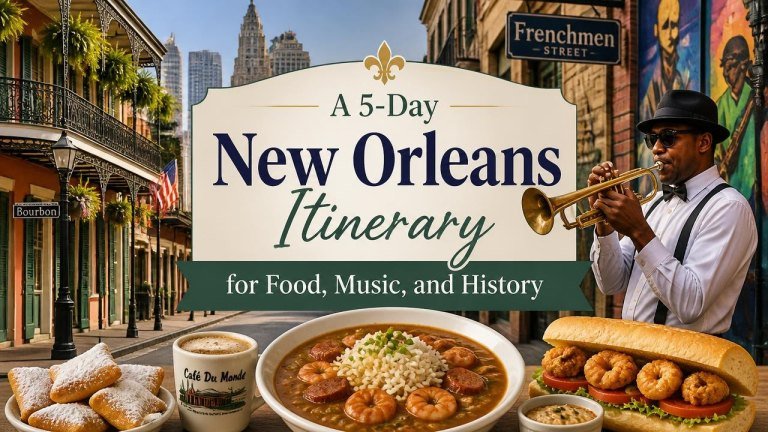
New Orleans rewards travelers who leave room for discovery. This five-day itinerary balances the city’s Creole flavors, jazz traditions, and layered history without rushing from one attraction to the next. Use it as a framework, much like this food, art, and history itinerary, then adjust restaurant bookings, museum visits, and evening music plans around your interests.
A 5-Day New Orleans Itinerary for Food, Music, and History
New Orleans is easiest to enjoy by grouping nearby neighborhoods together. The plan below focuses on the French Quarter, Garden District, Tremé, Marigny, and the city’s major museums and parks. Walking works well in compact areas, while streetcars, buses, taxis, and rideshares can help connect districts.
Before You Go: How to Plan the Trip
Reserve popular restaurants and ticketed attractions in advance, especially on weekends or during festival periods. Check official attraction websites before visiting because opening hours, performance schedules, and admission policies can change.
Comfortable shoes are essential, and lightweight clothing is useful for much of the year. Summer can be hot and humid, while rain may arrive quickly. Carry water, allow extra time for transportation, and keep valuables secure in crowded nightlife areas.

For local transit, check current New Orleans RTA information before departure. Streetcars are particularly useful for exploring St. Charles Avenue, Canal Street, and parts of Mid-City, but service changes and delays can occur.
Day 1: French Quarter Landmarks, Classic Flavors, and First Jazz Notes
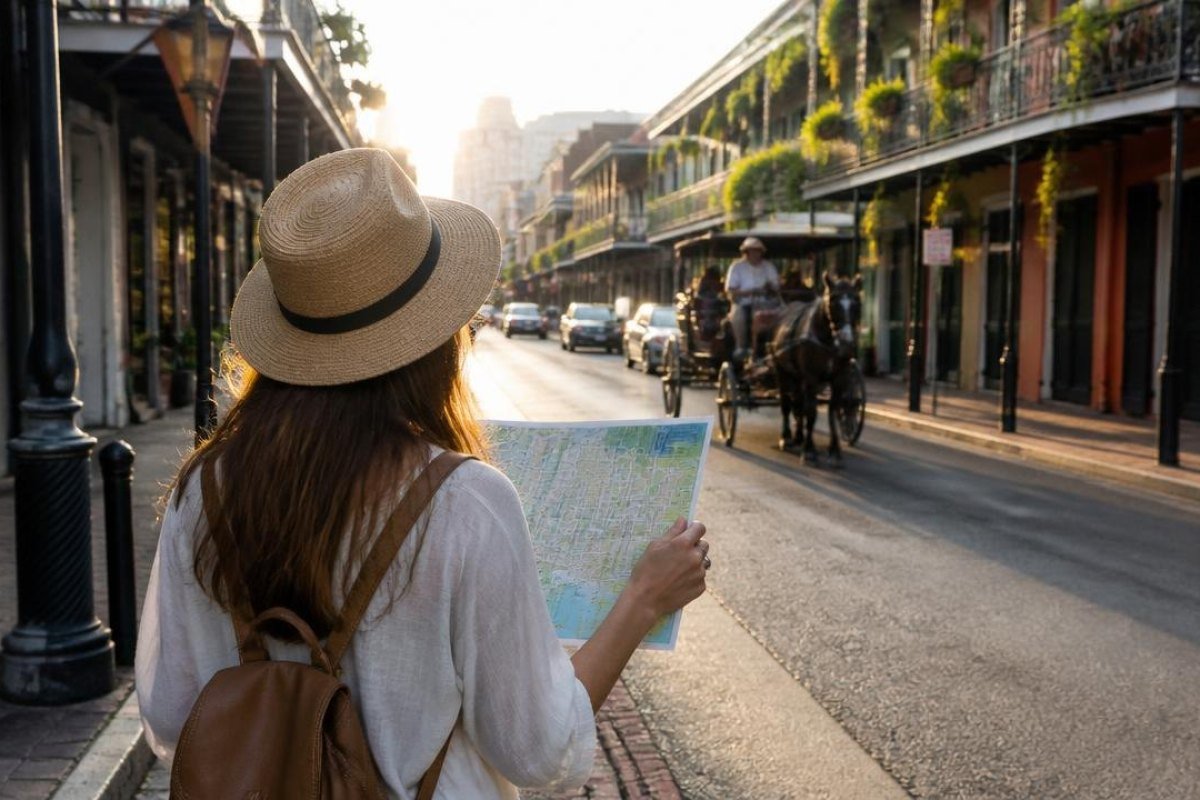
Begin in the French Quarter, the historic heart of New Orleans. Start around Jackson Square, where the surrounding architecture, cathedral, museums, and riverfront create an easy introduction to the city.
Morning: Jackson Square and the Vieux Carré
Walk through Jackson Square and along the nearby streets to admire Creole cottages, wrought-iron balconies, and shaded courtyards. Visit St. Louis Cathedral from the square, then choose one of the nearby Louisiana State Museum sites if you want more context about the city’s colonial, cultural, and political history.
Continue toward the French Market and the Mississippi River. This is a good time to browse local stalls, take photographs, and get oriented before the afternoon heat or evening crowds arrive.
Afternoon: Beignets, Riverfront Views, and French Quarter Food
Take a break for a beignet and coffee at a well-known café, then explore Royal Street, Chartres Street, and the quieter residential edges of the Quarter. For lunch, look for local specialties such as gumbo, po’boys, or red beans and rice.
Keep the afternoon flexible. You might visit a small historic house museum, browse independent galleries, or walk toward the riverfront. Avoid planning too many indoor attractions in a row; the atmosphere of the neighborhood is part of the experience.
Evening: Dinner and Live Music
Choose dinner in the French Quarter, then attend live music at a venue with a current schedule that matches your taste. New Orleans has everything from traditional jazz to brass bands, blues, funk, and contemporary local acts.
For a more focused music experience, consider a performance connected with the New Orleans Jazz National Historical Park or a respected club. Check the venue’s current event calendar, age policy, seating arrangements, and cover charge before setting out.
Day 2: Garden District Architecture, Magazine Street, and Uptown Dining
Spend the second day outside the French Quarter, combining historic residential streets with independent shops and restaurants. This route highlights Garden District mansions, St. Charles streetcars, and Magazine Street shopping.
Morning: St. Charles Avenue and the Garden District
Ride or walk along St. Charles Avenue and explore the Garden District at a relaxed pace. The neighborhood is known for grand homes, mature live oaks, decorative ironwork, and distinctive architectural details, much like the varied character highlighted in this guide to city neighborhoods.
A guided walking tour can add useful background about local families, architecture, cemeteries, and the area’s development. If you explore independently, remain on public sidewalks and respect residential properties.
Afternoon: Magazine Street and a Leisurely Lunch
Continue toward Magazine Street for cafés, boutiques, bookstores, antique shops, and galleries. Rather than trying to cover the entire street, choose a manageable section and leave time for a long lunch featuring seafood, Creole cooking, or Louisiana vegetables.
This is also a good afternoon for a short rest at your accommodation. New Orleans evenings often run late, and a slower middle of the day makes the rest of the itinerary more enjoyable.
Evening: Uptown Food and Neighborhood Music
Book dinner in the Garden District, Lower Garden District, or Uptown. Restaurant styles range from polished dining rooms to casual neighborhood spots, so choose according to your budget and desired atmosphere.
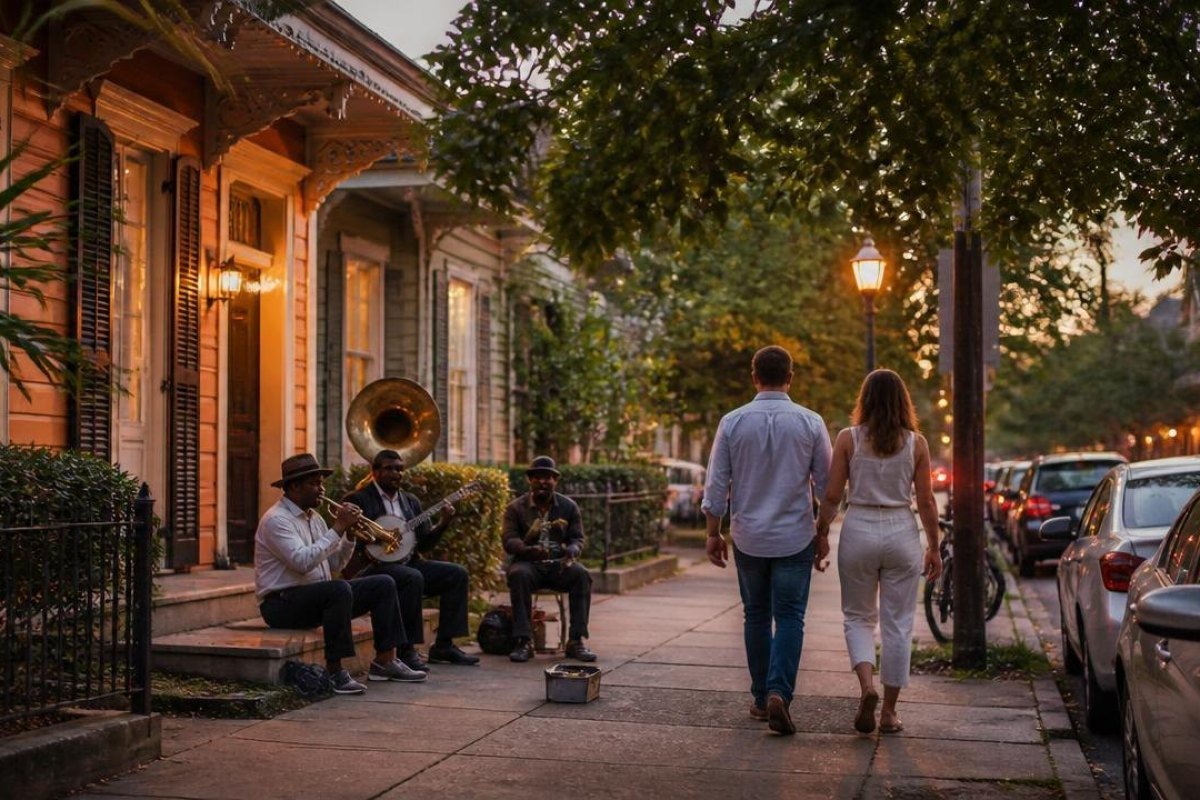
For music, look beyond the busiest tourist corridors. Smaller venues may offer local musicians, intimate rooms, and a stronger sense of the city’s current creative scene. Confirm tonight’s schedule before traveling across town.
Day 3: The National WWII Museum and the Arts District
Make the third day your main museum and contemporary culture day. Begin with the National WWII Museum, then explore the Central Business District and Warehouse District at a comfortable pace.
Morning and Early Afternoon: The National WWII Museum
Allow several hours for the museum rather than treating it as a quick stop. Its galleries examine the American experience of World War II through personal accounts, military artifacts, and immersive exhibits.
Review the official visitor information before arriving, particularly if you want to add a film or special experience. The museum is substantial, so prioritize the galleries most relevant to your interests and take breaks when needed.
Late Afternoon: Warehouse District Museums
After lunch, walk through the nearby Arts District. Depending on current exhibitions, you may choose a contemporary art museum, a photography collection, or another cultural institution. The area’s converted warehouses and broad streets provide a different visual character from the French Quarter.
Leave some unstructured time for gallery browsing, public art, and a quiet coffee stop. Exhibition schedules change, so verify current details before committing to a particular museum.

Evening: Dinner with a Modern New Orleans Focus
Choose a restaurant that reflects the city’s evolving food culture. Alongside classic dishes, look for menus shaped by Gulf seafood, regional produce, and multicultural influences.
If you still have energy, return to the French Quarter for a late set or try a music venue in the Marigny. A rideshare or taxi may be more convenient late at night, particularly if you have been drinking.
Day 4: Tremé, Congo Square, the Jazz Museum, and Frenchmen Street
Day four focuses on the African American history and musical traditions that helped shape New Orleans. Move slowly through Tremé and the Marigny, where the city’s cultural stories are closely connected to streets, squares, churches, and music venues.
Morning: Tremé and Congo Square
Start near Armstrong Park and Congo Square. Learn about the neighborhood’s importance through a museum, cultural center, or guided tour. This area is especially valuable for understanding Black New Orleans history, community traditions, and the roots of jazz.
Consider visiting the New Orleans Jazz Museum if its current exhibitions and schedule fit your plans. Allow time to read displays rather than moving quickly from one room to the next.
Afternoon: Local Food and the Marigny
Have lunch at a neighborhood restaurant or casual counter-service spot. Try a dish you have not yet sampled, such as crawfish-based specialties, fried seafood, or a carefully prepared plate of Creole comfort food.
Then walk toward the Marigny and browse its colorful residential streets. Take photographs from public areas, pause in local shops, and keep the afternoon unhurried before the evening music crowds arrive.
Evening: Frenchmen Street Music Crawl
Frenchmen Street is a natural choice for a night of live music. Instead of committing to one venue for the whole evening, check several current listings and choose a few stops based on music style, cover policies, and available space.
Stay aware of your surroundings, travel with companions when possible, and use official venue information for entry details. The best night may involve one excellent set rather than trying to visit every club.
Day 5: City Park, Slow Food, and a Final Night of New Orleans
Use the final day to slow down and choose between a park-and-museum outing or a more relaxed neighborhood day. City Park offers a welcome change of pace, much as exploring things to do beyond a national park can broaden a trip, while a final meal and music performance provide a satisfying close to the trip.
Morning: City Park and Cultural Attractions
Visit City Park for large live oaks, open lawns, gardens, and cultural attractions. Depending on your interests and the current schedule, consider the New Orleans Museum of Art, the Sydney and Walda Besthoff Sculpture Garden, or another park-based activity.
Plan around the weather and check each attraction separately. Outdoor areas are best enjoyed with comfortable footwear, sun protection, and enough time to wander without rushing.
Afternoon: A Final Taste of the City
Choose a relaxed lunch or late brunch, then revisit a favorite area. You might return to the French Quarter for one last pastry, explore a section of Magazine Street you missed, or browse a local market for edible gifts.
Good final souvenirs include regional cookbooks, locally made hot sauces, coffee, artwork, and music recordings. For food products, check airline and customs requirements before packing liquids, perishable items, or fragile purchases.
Evening: A Memorable Farewell
End with a reservation at a restaurant you were excited to try or return to the dish that surprised you most. Follow dinner with a final live performance, choosing between traditional jazz, brass band energy, or late-night blues.
Keep the final night practical if you have an early departure. Confirm transportation, pack before going out, and leave extra time for airport travel or unexpected delays.
What to Eat During Five Days in New Orleans
A successful food itinerary mixes iconic dishes with the city’s broader culinary traditions. Look for gumbo, jambalaya, po’boys, beignets, and seafood, but do not overlook modern restaurants and neighborhood cafés.
Try not to schedule heavy meals at every sitting. Alternate richer dishes with lighter breakfasts, fresh salads, fruit, or smaller portions. Ask restaurants about reservations, dress expectations, dietary accommodations, and menu changes before arriving.
How to Get Around New Orleans
The French Quarter, Marigny, and parts of the Garden District are rewarding on foot. For longer distances, use the RTA network, taxis, or rideshares. Review current routes and service alerts before leaving, especially when traveling to City Park, Uptown, or the airport.
Streetcars are scenic but may take longer than expected. Build in extra time, avoid standing in traffic lanes while photographing them, and keep belongings close in busy areas. At night, choose the transport option that feels most comfortable for your group.
Practical Tips for a Better Trip
New Orleans is a city of late dinners, spontaneous music, and changing weather. The most useful habits are to book key attractions, check schedules daily, and protect time for rest.
Carry a small amount of cash for small purchases and tips, but do not rely on cash-only assumptions. Restaurant, attraction, and transportation policies vary. Verify current details directly with the business or agency before your visit.
Finally, explore respectfully. New Orleans is not simply a backdrop for nightlife; it is a living city with distinct communities, religious traditions, historic neighborhoods, and working artists. Spend money locally, follow posted rules, and listen to the stories behind the places you visit.