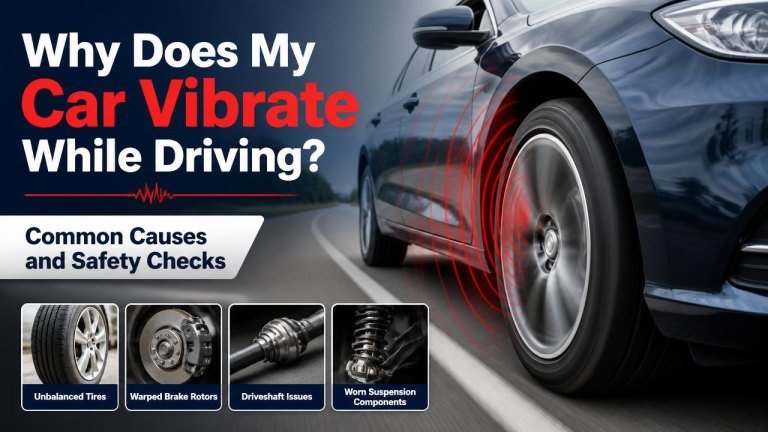
Feeling your car vibrate while driving can be unsettling, especially when the shaking becomes stronger at certain speeds or during braking. Some causes are relatively simple, such as a wheel imbalance, while others involve components that affect steering, control, and braking.
The location, timing, and intensity of the vibration can provide useful clues. Use the checks below to understand possible causes, but remember that a persistent or severe vibration should be inspected by a qualified mechanic.
What Does the Vibration Feel Like?
Before checking individual parts, pay attention to when the vibration starts, where you feel it, and how it changes. These details can help narrow down the source.
- Steering-wheel vibration often points toward the front wheels, tires, steering, or suspension.
- Seat or floor vibration may suggest a rear wheel, driveline, exhaust, or engine-related issue.
- A vibration that appears only at a specific speed range is commonly associated with wheels, tires, or rotating components.
- Shaking that occurs mainly during acceleration or braking may involve the drivetrain, brakes, or suspension.
Common Causes of Car Vibrations
Several problems can create similar symptoms. A careful inspection is usually needed to identify the exact cause, but these are among the most common possibilities.

Unbalanced or Damaged Wheels and Tires
A wheel that is out of balance can cause a rhythmic shake that becomes more noticeable as speed increases. Missing wheel weights, uneven tire wear, a bent rim, or a tire with internal damage can all contribute to the problem. Tire pressure warning signs can also help identify a related tire issue.
Look for uneven tread wear, bulges or bubbles, and missing balance weights. Check tire pressures when the tires are cold and compare them with the vehicle manufacturer’s recommended values. Do not continue driving on a tire with visible structural damage.
Wheel Alignment Problems
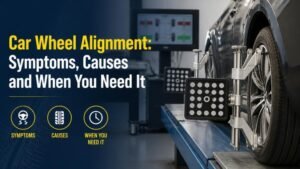
Poor alignment may cause the vehicle to pull to one side, produce uneven tire wear, or feel unstable. It does not always create a strong vibration by itself, but alignment issues can develop alongside tire and suspension problems.
Warning signs include rapid edge wear, an off-center steering wheel, and drifting or pulling on a reasonably straight road. A professional alignment check can confirm whether the angles are within specification.
Brake Problems
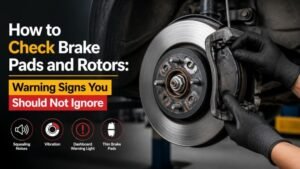
If the vibration appears mainly when you press the brake pedal, the braking system deserves immediate attention. A brake disc or rotor with uneven thickness, a sticking caliper, or worn brake hardware can cause shaking through the steering wheel or body.
Pay attention to brake-pedal pulsation, steering shake during braking, and burning smells or unusual heat near a wheel. If the vehicle pulls while braking or stopping distance feels different, arrange an inspection promptly.
Worn Suspension or Steering Components
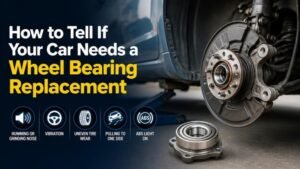
Loose or worn components can allow excessive wheel movement and make the car vibrate, wander, or feel unstable. Possible sources include control-arm bushings, ball joints, tie-rod ends, wheel bearings, and shock absorbers or struts.
Symptoms may include clunking over bumps, excessive body movement, and loose or vague steering. These can be signs of suspension problems and worn components. Because these parts affect vehicle control, avoid delaying an inspection when several symptoms appear together.
Driveline or Axle Problems
Vibration that occurs mainly under acceleration can come from a worn constant-velocity joint, driveshaft, universal joint, or other driveline component. The sensation may become stronger when climbing a hill or applying more throttle.

Listen for clicking while turning, clunks when changing direction, or a vibration that changes with throttle input. Driveline repairs should generally be handled by a qualified technician because damaged rotating parts can worsen quickly.
Engine or Transmission Issues
If the car vibrates while stopped, idling, or shifting, the source may be related to the engine or transmission rather than the wheels. Worn engine mounts, a misfire, fuel or ignition problems, and transmission faults can all produce noticeable shaking.
Look for rough idle, hesitation or loss of power, and an illuminated check-engine light. A flashing warning light, severe shaking, or unusual exhaust odor is a reason to stop driving and seek professional assistance.
Safe Checks You Can Perform
Basic observations can help you describe the problem accurately without taking unnecessary risks. Perform these checks only when the car is safely parked and the engine and brakes have cooled.
- Inspect each tire for low pressure, cuts, bulges, exposed cords, or objects lodged in the tread.
- Look for obvious loose wheel nuts or signs that a wheel has shifted. Do not drive if you suspect a wheel is not securely attached.
- Notice whether the vibration changes with speed, braking, acceleration, or turning.
- Check for warning lights, fluid leaks, smoke, unusual smells, or new noises.
- Review recent work, such as a tire change, wheel installation, brake repair, or pothole impact.
When Should You Stop Driving?
Some vibrations can be driven to a repair shop cautiously, but certain symptoms indicate a potentially dangerous fault. Put safety first if the vehicle’s control or braking ability seems affected.
Stop driving and arrange assistance if you notice severe or rapidly worsening shaking, tire damage, loss of steering control, or braking problems. Also stop if a wheel appears loose, smoke is present, or a loud mechanical noise accompanies the vibration.
How a Mechanic Diagnoses the Problem
A technician will usually begin with a road-test description and a visual inspection. Depending on the symptoms, the inspection may include tire and wheel measurements, brake checks, and steering and suspension testing.
The vehicle may also be checked for wheel-bearing play, driveline wear, engine fault codes, and damaged mounts. Providing details about the speed, road conditions, and driving action that trigger the vibration can make diagnosis faster and more accurate.
How to Prevent Future Vibrations
Regular maintenance can reduce the chance of vibration-related problems. Keep tires at the correct pressure, rotate and inspect them as recommended, and have wheels balanced when new tires are installed or a vibration develops.
Address pothole impacts, uneven tire wear, and new warning noises promptly. Routine brake, suspension, and steering inspections can also identify worn components before they affect vehicle stability, while knowing how to handle a flat tire can help during a roadside emergency.
Final Takeaway
A vibrating car may have a simple wheel or tire issue, but it can also signal a problem with the brakes, suspension, steering, drivetrain, or engine. Focus on when the vibration occurs, where you feel it, and whether other warning signs appear.
If the vibration is strong, worsening, or accompanied by unsafe handling, do not ignore it. A timely professional inspection is the safest way to identify the cause and prevent a minor fault from becoming a serious repair or safety problem.