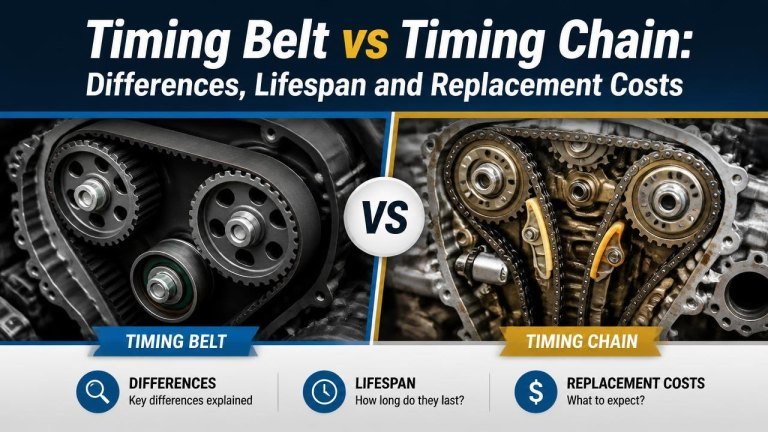
Although they perform the same essential task, a timing belt and a timing chain are not interchangeable components. Both keep the engine’s crankshaft and camshaft synchronized so the valves open and close at the correct moment. The main differences involve construction, maintenance, noise, lifespan and repair cost.
Knowing which system your vehicle uses can help you follow the correct service schedule, recognize potential problems and avoid expensive engine damage.
What Does a Timing Belt Do?
A timing belt is a reinforced, toothed belt that connects the engine’s crankshaft and camshaft. Its teeth maintain precise synchronization, while the belt’s flexible material allows the engine to operate quietly and efficiently.
In many engines, the timing belt also drives the water pump, tensioners or idler pulleys. This is why technicians often recommend replacing related components at the same time rather than installing a belt on its own.

What Does a Timing Chain Do?
A timing chain uses metal links and sprockets to synchronize the crankshaft and camshaft. It operates inside the engine and is generally lubricated by engine oil, unlike a conventional timing belt, which is usually protected by a dry cover.
Chains are built for durability, but they are not maintenance-free. A worn chain tensioner, damaged guide or neglected oil change can allow the chain to stretch or become noisy.
Timing Belt vs Timing Chain: Key Differences
The most important differences relate to materials, service requirements and failure consequences. A belt is lighter and often quieter, while a chain is usually more resistant to age-related deterioration but can develop problems in a poorly maintained engine.
| Feature | Timing Belt | Timing Chain |
|---|---|---|
| Construction | Reinforced rubber or composite material | Metal links and sprockets |
| Location | Usually behind a protective cover | Inside the engine |
| Lubrication | Normally runs dry | Requires engine oil |
| Noise | Typically quieter | May produce more mechanical noise |
| Routine service | Replacement is usually scheduled | Condition and oil maintenance are especially important |
| Typical repair complexity | Can require substantial labor | Often involves extensive engine-side labor |
How Long Does a Timing Belt Last?
A timing belt has a finite service life because its material gradually ages, even if the vehicle is driven only occasionally. The correct replacement interval depends on the vehicle manufacturer, engine design, mileage and time since installation.
Heat, oil contamination, coolant leaks and long periods of storage can accelerate wear. Always use the owner’s manual or the manufacturer’s service information rather than relying on a universal mileage estimate.
Timing Belt Warning Signs
Timing belts do not always provide obvious warning before failure, but certain symptoms deserve immediate attention. Look for visible cracking, frayed edges or oil contamination when the belt is inspected by a qualified technician.
- Unusual ticking or slapping noises near the belt cover
- Difficulty starting or an engine that will not start
- Misfiring, rough running or reduced performance
- Oil or coolant leaks near the timing-belt area
How Long Does a Timing Chain Last?
Timing chains are often designed to last much longer than timing belts, but their lifespan depends heavily on regular oil changes, correct oil specification and overall engine condition. A chain can stretch, and its guides or tensioner can wear out.
Frequent short trips, low oil levels, contaminated oil and extended service intervals can increase wear. A vehicle with a chain still needs routine maintenance and should not be treated as maintenance-free.

Timing Chain Warning Signs
A worn chain system may produce a rattling noise during startup or acceleration. Other signs can include an illuminated engine warning light, poor performance and fault codes related to camshaft or crankshaft timing.
- Rattle from the front of the engine
- Rough idle or repeated misfires
- Reduced fuel economy or sluggish acceleration
- Difficulty starting the engine
- Timing-related diagnostic trouble codes
Timing Belt and Timing Chain Replacement Costs
Replacement costs vary widely because labor time, engine layout, parts quality and regional labor rates all affect the final bill. The parts package, accessibility and related components are usually more important than the belt or chain alone.
A timing-belt service may include the belt, tensioner, idler pulleys and water pump. A timing-chain repair may require a chain, guides, tensioner, sprockets, seals and fresh engine oil. Chain repairs can be particularly labor-intensive because the system is located inside the engine.
What Makes the Final Bill Higher?
Several factors can increase the cost of either repair, including a complex engine design, limited access and additional damage discovered during disassembly.
- Multiple camshafts or timing chains
- Replacement of a water pump, guides or tensioners
- Oil or coolant leaks that caused component damage
- Valve or piston damage after timing failure
- Use of original-equipment or premium replacement parts
What Happens If the Timing System Fails?
If the belt or chain loses synchronization, the engine may stop running immediately. In an interference engine, pistons and valves can collide, causing major internal damage. In other engines, the result may be limited to a no-start condition, but the vehicle will still require diagnosis and repair.
Do not continue driving after hearing a sudden timing-related noise or experiencing severe misfiring. Stopping promptly may help prevent additional damage.
How to Maintain a Timing Belt or Chain
The best maintenance approach depends on the system fitted to your engine. Follow the scheduled service interval for a belt, and protect a chain with clean engine oil and timely inspections.
- Check the owner’s manual for the exact belt replacement interval.
- Use the recommended oil grade and change it at the specified interval.
- Repair oil and coolant leaks promptly.
- Have unusual noises, misfires or warning lights diagnosed quickly.
- Replace associated tensioners, guides, pulleys or pumps when recommended.
- Keep records of previous timing-system work.
Which Is Better: a Timing Belt or Timing Chain?
Neither system is automatically better for every driver. A belt can provide quiet operation, lower weight and predictable scheduled maintenance. A chain can offer long service potential, provided the engine receives proper lubrication and the tensioner and guides remain healthy.
The most practical choice is usually determined by the vehicle’s design, maintenance history and total ownership costs. Before buying a used car, confirm the vehicle’s VIN and whether the timing system has been replaced or inspected, then include that work in your ownership budget if records are missing.
Final Takeaway
Timing belts and timing chains both keep the engine synchronized, but they have different maintenance demands and failure risks. A belt normally requires planned replacement, while a chain depends heavily on oil quality, tensioner condition and timely diagnosis.
Check your manufacturer’s service information, respond to warning signs promptly and use a qualified technician for timing-system work. Preventive maintenance is usually far less expensive than repairing an engine after timing failure.