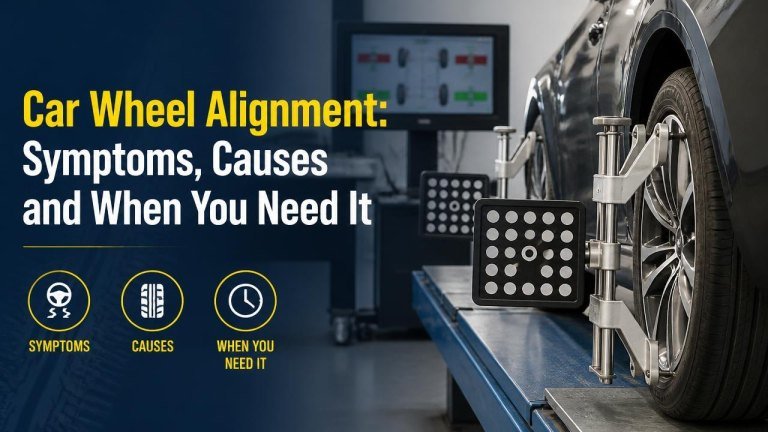
Proper wheel alignment helps your vehicle drive straight, handle predictably and wear its tires evenly. When the alignment angles are outside the manufacturer’s specifications, the vehicle may pull to one side, the steering wheel may sit crooked or the tires may wear faster than expected.
What Is Wheel Alignment?
Wheel alignment is the adjustment of the angles at which the wheels meet the road. A technician checks the suspension and steering geometry, then adjusts suitable components so the wheels point in the correct direction and maintain consistent contact with the road. Correct wheel angles, stable steering response and even tire contact all contribute to safer, smoother driving.
Alignment commonly involves three measurements:
- Toe: Whether the front edges of the tires point slightly inward or outward when viewed from above.
- Camber: Whether the top of a wheel leans inward or outward when viewed from the front.
- Caster: The angle of the steering axis, which influences straight-line stability and steering feel.
Common Symptoms of Poor Wheel Alignment
Alignment problems do not always appear suddenly. Some symptoms develop gradually, so noticing changes in how your vehicle feels can help you arrange an inspection before tire damage becomes severe. Watch for uneven tread wear, changes in steering behavior and unusual vehicle movement.
The Vehicle Pulls to One Side
If your vehicle consistently drifts left or right on a reasonably level road, incorrect alignment may be contributing to the problem. However, road slope, uneven tire pressure and brake issues can produce similar behavior, so a professional check is the best way to identify the cause.
The Steering Wheel Is Off-Center
A steering wheel that remains turned while the vehicle travels straight can indicate that the wheels are not aligned correctly. An off-center wheel, inconsistent straight-line travel or a need for frequent steering corrections deserves attention, particularly after suspension or steering work.
Uneven or Rapid Tire Wear
Inspect the tread regularly for wear concentrated along one edge, a feathered pattern or differences between tires on the same axle. These patterns may point to incorrect alignment, although incorrect inflation, worn suspension parts and tire defects can also cause abnormal wear.
Unusual Handling or Vibration
A vehicle with alignment trouble may feel less stable during cornering or may require more effort to keep in a straight line. Vibration is more often associated with wheel imbalance, a bent wheel or tire damage, but it should still be investigated rather than ignored.
What Causes Wheel Alignment Problems?
Alignment can change when suspension components move, bend or wear. Common causes include pothole impacts, curb contact and normal component wear. In some cases, the original settings may also change after repairs or modifications.
- Hitting potholes, road debris or curbs
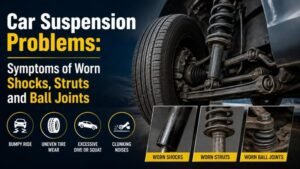
- Worn tie-rod ends, ball joints, control-arm bushings or other suspension parts
- A collision or impact that bends a steering or suspension component
- Replacing suspension components without completing a final alignment
- Lowering or modifying the suspension
- Driving for long periods with incorrect tire pressure, which can worsen irregular wear
Wheel Alignment vs. Wheel Balancing
Alignment and balancing address different problems. Wheel alignment corrects suspension angles, while wheel balancing distributes weight around the wheel and tire assembly. A vehicle may need one service or both.
Balancing is commonly associated with vibration that increases with speed. Alignment is more often associated with pulling, a crooked steering wheel or uneven tread wear. Because symptoms can overlap, a technician should inspect the tires, wheels, steering and suspension before recommending repairs.
When Should You Get a Wheel Alignment?
Arrange an alignment inspection after a significant impact, when fitting certain suspension parts or whenever you notice persistent symptoms. It is especially sensible to seek advice if the vehicle pulls consistently, the steering wheel is visibly off-center or the tires show uneven wear.
Many drivers also ask for an alignment check when installing new tires. The check can identify an existing problem that might otherwise shorten the life of the new tires, although the need for adjustment depends on the inspection results and the vehicle manufacturer’s specifications.
How a Professional Alignment Service Works
A technician typically begins by checking tire pressures, tread condition and the steering and suspension components. The vehicle is then placed on an alignment machine that measures the wheel angles against the manufacturer’s specifications. Before adjustment, the technician should identify worn or damaged parts because alignment cannot repair damage, loose components can affect readings and accurate measurements depend on a sound vehicle.
After any necessary repairs, the technician adjusts the available alignment settings and may provide a before-and-after report. Ask what was measured, which settings were changed and whether any component needs further attention.
Can You Prevent Alignment Problems?
You cannot prevent every impact, but several habits can reduce the risk of premature tire and suspension problems. Maintain recommended tire pressure, avoid potholes when it is safe to do so and have steering symptoms checked promptly. Regularly examine tread wear and do not ignore a new change in handling.
When driving over a rough surface or a curb cannot be avoided, slow down safely and keep the wheels as straight as practical. After a hard impact, inspect the tire and wheel for visible damage and arrange a professional evaluation if the vehicle no longer feels normal.
Final Takeaway
Wheel alignment affects tire life, handling and steering confidence. Symptoms such as pulling, an off-center steering wheel and uneven tread wear should not be dismissed, especially after an impact. A qualified technician can determine whether the cause is alignment, tire pressure, balancing or a worn component, helping you address the real problem before it becomes more expensive or affects vehicle control.