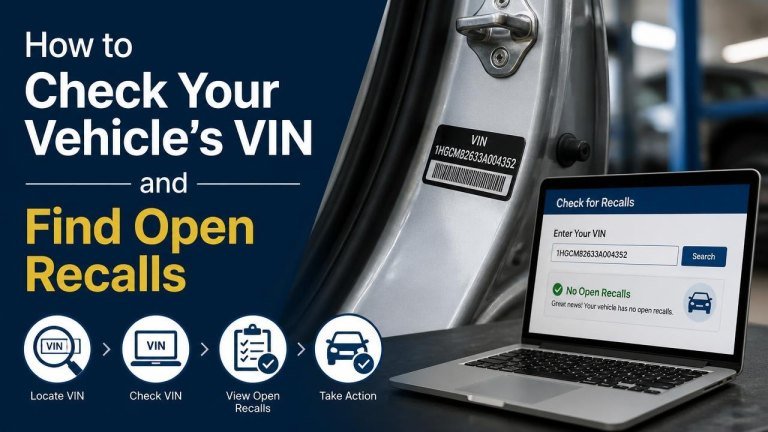
Checking your vehicle’s VIN is one of the simplest ways to find important information about its safety history. A VIN recall check can reveal whether the manufacturer has issued a safety recall that still needs to be repaired.
Most recall repairs are completed at no cost through an authorized dealership, but you must first identify the vehicle and confirm whether any recall remains open. Here is how to check your VIN and what to do with the results.
What Is a VIN?
A vehicle identification number, or VIN, is a unique 17-character code assigned to most modern vehicles. It identifies details such as the vehicle’s manufacturer, model, body type, and production information.
A VIN is different from a license plate number. The plate may change when a vehicle is sold or registered in another location, while the VIN generally remains with the vehicle throughout its life.
Where to Find Your Vehicle’s VIN
You can usually find the VIN in several places. Check the following locations:
- The lower corner of the dashboard on the driver’s side, visible through the windshield
- The driver’s-side doorjamb or door pillar
- Your vehicle registration documents
- Your insurance card or policy documents
- The vehicle title
- The owner’s manual or purchase paperwork
Compare the VIN on your documents with the number on the vehicle. Enter each character carefully, because a single incorrect letter or number can produce the wrong result. VINs commonly avoid certain letters, including “I,” “O,” and “Q,” to reduce confusion with numbers.
How to Check for Open Recalls
Use the Official Recall Search Tool
For vehicles sold or registered in the United States, use the National Highway Traffic Safety Administration’s official VIN lookup tool. Enter the complete 17-character VIN to search for unrepaired safety recalls associated with the vehicle.
You can also contact the vehicle manufacturer or an authorized dealership. A dealership service department can usually check the VIN in the manufacturer’s system and explain which recall repairs are available.
Check the Manufacturer’s Website
Many automakers provide a recall lookup page on their official websites. These tools may show additional manufacturer information and can help you find a nearby dealer or schedule service.
Use an official manufacturer website rather than relying only on an unrelated third-party site. Independent websites may provide helpful background information, but they may not have the most complete or current repair status.
How to Read Recall Search Results
A recall search may show one or more campaigns connected to the VIN. Review the results for:
- The recall identification number or campaign reference
- A description of the safety problem
- The potential safety risk
- The affected vehicle component
- The recommended action
- Whether the repair has been completed or remains open
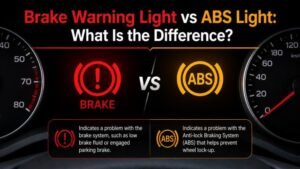
An open recall means the manufacturer’s required remedy has not been recorded as completed for that vehicle. The result may not always indicate that the vehicle is unsafe to drive immediately, but it does mean you should follow the manufacturer’s instructions and arrange the repair as soon as possible. Understanding vehicle warning lights can also help identify other safety concerns.
What to Do If Your Vehicle Has an Open Recall
- Read the recall notice carefully. Pay attention to warnings about driving, parking, towing, or carrying passengers.
- Contact an authorized dealership. Provide the VIN and recall campaign information when booking an appointment.
- Ask about parts and availability. Some repairs may require a special part or additional scheduling.
- Follow interim safety instructions. If the notice recommends avoiding use of the vehicle, follow that guidance until the repair is completed.
- Keep the repair documentation. Save the work order or service receipt for your records.
Recall repairs are generally handled through the manufacturer’s authorized service network. Ask the dealership whether any related concerns require separate diagnosis or approval.
What If the VIN Search Shows No Recalls?
A result showing no open recalls is useful, but it does not guarantee that the vehicle has never had a safety issue. A recall may have been announced recently, may not yet appear in a database, or may be connected to a different VIN entry.
Check the VIN again for accuracy and consider contacting the manufacturer or a dealership if you have concerns. You should also inspect the vehicle regularly and respond to dashboard warning lights, unusual noises, fluid leaks, or other signs of a mechanical problem. A recall search is not a substitute for routine maintenance or a professional inspection.
Important Limits of a VIN Recall Check
A VIN lookup generally focuses on safety recalls and may not show every type of repair or service campaign. It may not include common automobile malfunctions:
- Completed recalls
- Routine maintenance
- Previous accident repairs
- Owner complaints that did not result in a recall
- Every technical service bulletin
- Recalls that apply to a different market or vehicle configuration
If you are buying a used vehicle, combine a recall search with a vehicle history report, an independent inspection, a title check, and a review of maintenance records.
Check the VIN Before Buying a Used Vehicle
Run the VIN before completing a purchase, not only after bringing the vehicle home. Ask the seller for the VIN and compare it with the number physically displayed on the vehicle. If the seller refuses to provide it or the numbers do not match, treat that as a warning sign.
Open recalls should not automatically end a purchase, but you should understand the issue and confirm that a repair is available. If the recall involves a serious safety risk or unavailable parts, consider delaying the purchase until the problem is resolved, especially when reviewing engine overheating causes.
Make VIN Checks Part of Your Safety Routine
Checking a vehicle’s VIN takes only a few minutes and can help you identify safety repairs that might otherwise be missed. Check the VIN when buying a used vehicle, after receiving a recall notice, or whenever you want to verify the status of a known safety campaign.
Use an official recall database or the vehicle manufacturer’s website, enter the VIN carefully, and arrange any required repair promptly. Keeping your recall information and service records organized makes it easier to protect your vehicle, yourself, and everyone who rides in it.