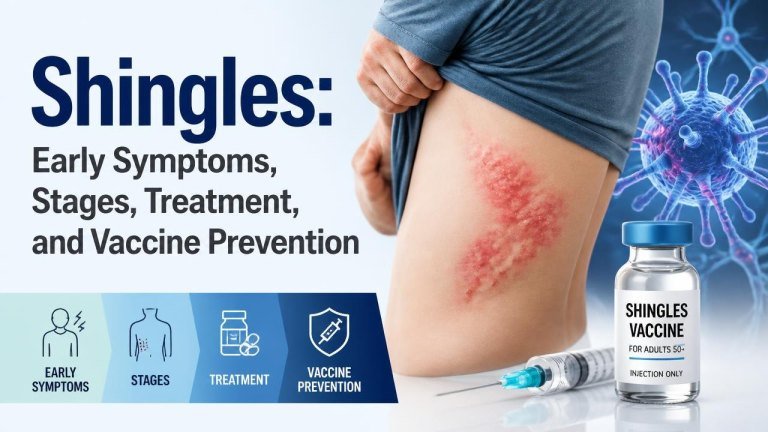
Shingles is a painful skin rash caused by reactivation of the varicella-zoster virus—the same virus that causes chickenpox. It can affect anyone who has had chickenpox, although the risk generally increases with age or a weakened immune system.
Recognizing early warning signs and seeking prompt medical advice can help shorten the illness and reduce the risk of complications. This guide explains shingles symptoms, stages, treatment, and vaccine prevention.
What Is Shingles?
After chickenpox, the varicella-zoster virus remains inactive in nerve tissue. Years later, it may become active again and travel along a nerve to the skin, causing shingles. The rash often appears as a band on one side of the body, but it can also affect the face or other areas.
Shingles is usually not spread through casual contact. However, a person with active, uncovered blisters can transmit the virus to someone who has never had chickenpox or received the chickenpox vaccine. That person would develop chickenpox, not shingles.
Early Symptoms of Shingles
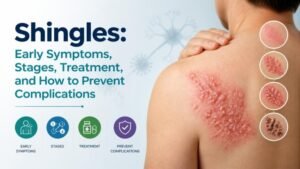
The first symptoms may begin before any rash appears. Common early clues include burning or tingling pain, skin sensitivity, and itching in a localized area.
- Pain, burning, tingling, or numbness on one side of the body
- Increased sensitivity to touch
- Itching or an unusual skin sensation
- Headache, fatigue, fever, or chills
- An upset stomach in some people
Early shingles pain can resemble a muscle strain, nerve pain, or another skin condition. If unexplained pain is followed by a one-sided rash, contact a healthcare professional promptly.
Stages of Shingles
Shingles commonly develops in several stages, although the timing and severity vary. Understanding these stages can help you know what to expect and when to seek care.
1. Early or Prodromal Stage
Before the rash develops, the affected area may feel painful, tingly, or unusually sensitive. Some people also experience fatigue, headache, or fever. This stage can last for several days.
2. Rash and Blister Stage
A red or discolored rash usually appears in a stripe-like pattern along one side of the body. Groups of fluid-filled blisters may develop over the next few days. The rash is often one-sided, painful, and clustered along a nerve pathway.
Blisters can break open and release fluid. Until they crust over, keep the rash covered when possible, avoid scratching, and wash your hands regularly. Avoid close contact with pregnant people who are not immune to chickenpox, newborns, and people with weakened immune systems.
3. Crusting and Healing Stage
The blisters gradually dry and form scabs. Healing may take several weeks, and temporary changes in skin color can remain after the rash clears. Do not pick at scabs, because this may increase the risk of scarring or skin infection.

4. Recovery and Possible Nerve Pain
Most people recover, but nerve pain can continue after the rash disappears. This condition, called postherpetic neuralgia, may cause persistent pain, burning sensations, or sensitivity to touch in the affected area. Medical treatment may help manage these symptoms.
When to Seek Medical Care
Contact a healthcare professional as soon as you suspect shingles, especially if the rash began recently. Antiviral treatment works best when started early, often within the first few days of the rash, although a clinician may recommend treatment later in some situations.
Seek urgent medical attention for a rash near the eye or ear, facial weakness, vision changes, severe headache, confusion, widespread blisters, or signs of infection such as increasing redness, warmth, swelling, pus, or worsening pain. People with weakened immune systems should seek advice promptly.
Shingles Treatment
A healthcare professional may prescribe antiviral medicine such as acyclovir, valacyclovir, or famciclovir. These medicines can help reduce the duration and severity of symptoms when used appropriately. Take them exactly as prescribed.
Other care may include:
- Cool, clean compresses to soothe the skin
- Loose-fitting clothing that does not rub the rash
- Keeping the affected area clean and dry
- Over-the-counter pain medicine when appropriate for you
- Prescription treatment for severe pain or lingering nerve pain
Ask a healthcare professional or pharmacist before taking pain relievers, particularly if you have kidney disease, stomach ulcers, take blood thinners, are pregnant, or use other medicines.
Can You Prevent Shingles?
Vaccination is the main way to reduce the risk of shingles and its complications. The shingles vaccine is designed for eligible adults, including many older adults and some people with weakened immune systems. Recommendations can vary by country, age, health conditions, and vaccine history.
Ask your healthcare professional whether vaccination is appropriate for you. The vaccine can lower the risk of shingles and long-lasting nerve pain, but it does not treat an active outbreak.
Living Safely During an Outbreak
Until the blisters have crusted over, avoid direct contact between the rash and people who may not be immune to chickenpox. Cover the rash, do not share towels or clothing, and wash your hands after touching the affected area.
Shingles is not usually spread through respiratory droplets in the same way as a cold or flu. Transmission is mainly associated with direct contact with fluid from active blisters. Good hygiene and keeping the rash covered help protect others.
Key Takeaways
- Shingles may begin with localized pain, tingling, itching, or skin sensitivity before a rash appears.
- The rash commonly forms a painful, one-sided band of blisters.
- Early medical evaluation is important because antiviral medicines work best when started promptly.
- A rash near the eye or ear, vision changes, facial weakness, or severe symptoms requires urgent care.
- Vaccination can help prevent shingles and reduce the risk of persistent nerve pain.
This article is for general information and does not replace personalized medical advice. If you think you may have shingles, contact a qualified healthcare professional.