Shingles is a painful rash caused by reactivation of the varicella-zoster virus, the same virus that causes chickenpox. It can affect anyone who has had chickenpox, although the risk generally increases with age or a weakened immune system.
Recognizing the early warning signs and getting prompt medical advice can make a meaningful difference. Treatment is most effective when started early, especially before the rash has been present for several days.
What Is Shingles?
After chickenpox, the varicella-zoster virus remains inactive in nerve tissue. Years later, it can reactivate and travel along a nerve to the skin, producing localized pain, a one-sided rash, and fluid-filled blisters.
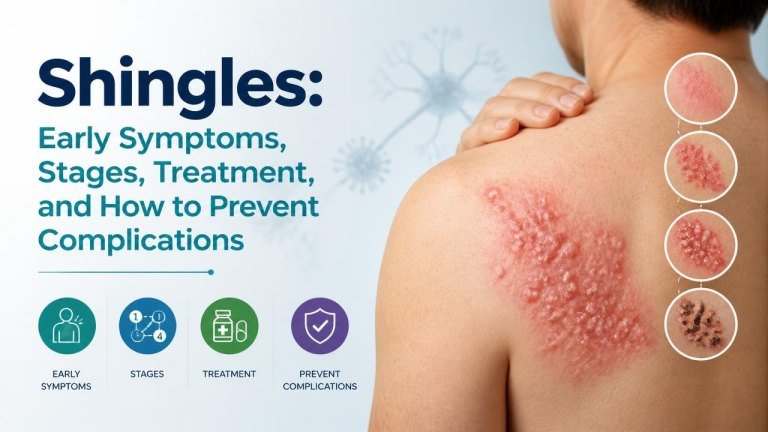
Shingles usually affects one side of the body or face and often follows a band-like pattern. It does not spread across the entire body in the way many common rashes do. People with shingles can pass the virus to someone who has never had chickenpox or the chickenpox vaccine, but that person would develop chickenpox rather than shingles.

Early Symptoms of Shingles
The first symptoms may begin before any visible rash appears. Early symptoms can include burning or tingling, skin sensitivity, and sharp or aching pain in a defined area.
Some people also develop itching, numbness, headache, fever, chills, fatigue, or sensitivity to light. Because the pain may resemble a pulled muscle, dental problem, or heart or abdominal condition, shingles can be difficult to recognize at first.
A rash that appears as a strip of spots or blisters on one side of the torso, face, or neck is a strong reason to contact a healthcare professional promptly.
The Stages of Shingles
Shingles typically develops in phases, although the timing and severity vary. Knowing the prodrome phase, blister stage, and healing phase can help you understand what is happening and when medical care is important.
1. Early or Prodrome Stage
In the first stage, discomfort may occur along one nerve pathway without a rash. The area may feel painful, itchy, or unusually sensitive to touch. General symptoms such as tiredness or fever can also occur.
This stage may last for a few days. Since many conditions cause localized pain without a rash, diagnosis may not be possible until skin changes appear.
2. Rash and Blister Stage
Small red patches or raised spots usually develop in the painful area. These can become clusters of fluid-filled blisters over the next several days. The rash is often one-sided, painful, and arranged in a band.
The blisters may break open and release fluid. Until they crust over, avoid touching them and keep the rash covered when possible. Do not share towels, clothing, or personal items that have touched the affected skin.
3. Crusting and Healing Stage
Blisters gradually dry and form scabs. Healing may take several weeks, and temporary changes in skin color can remain after the rash disappears. Gentle skin care, loose clothing, and keeping the area clean can improve comfort during recovery.
Pain can sometimes continue after the skin has healed. Ongoing nerve pain is called postherpetic neuralgia and should be discussed with a healthcare professional.
How Shingles Is Treated
A clinician may prescribe an antiviral medicine such as acyclovir, valacyclovir, or famciclovir. These medicines work best when started early and may help shorten the illness and reduce the risk of some complications. They should be taken exactly as prescribed.
Other treatment may include pain relief, cool compresses, and medicines for nerve pain or itching when appropriate. Ask a healthcare professional or pharmacist which over-the-counter pain reliever is safe for you, particularly if you have kidney disease, stomach ulcers, take blood thinners, or have other medical conditions.
Do not apply irritating products to the rash, and avoid scratching. If the rash is near the eye, do not wait for it to improve on its own.
When to Seek Medical Care
Contact a healthcare professional as soon as possible if you suspect shingles, especially when the rash has just appeared. Early assessment is particularly important for people who are older, pregnant, or immunocompromised.
Seek urgent medical attention for a rash near the eye or on the tip of the nose, vision changes, severe headache, confusion, facial weakness, widespread blisters, difficulty breathing, or signs of a serious infection such as increasing warmth, swelling, pus, or rapidly worsening pain.
Possible Complications
Most people recover, but shingles can cause complications. The most common is postherpetic neuralgia, in which nerve pain continues after the rash heals. It may feel burning, stabbing, itching, or extreme sensitivity to touch.
Other complications can include eye inflammation or vision problems, hearing or balance symptoms, bacterial infection of the skin, and neurological problems. The risk of complications is higher with increasing age, delayed treatment, or a weakened immune system.
How to Reduce the Risk of Complications
There is no guaranteed way to prevent every complication, but several steps can help. Get early medical evaluation, take prescribed treatment as directed, and avoid scratching or picking at blisters.
Keep the rash clean and dry, wear loose clothing, wash your hands frequently, and avoid close contact with people who are pregnant, immunocompromised, or too young to have received protection against chickenpox while blisters are open.
Shingles Vaccination
A shingles vaccine can reduce the risk of shingles and related complications. Recommendations depend on factors such as age, health history, and immune status, so ask a healthcare professional whether vaccination is appropriate for you.
Vaccination does not treat an active shingles vaccination outbreak. If you currently have a painful rash or are unsure whether you have shingles, seek medical advice before making vaccination decisions.
Frequently Asked Questions
Is shingles contagious?
Shingles itself is not spread from person to person. However, fluid from open blisters can transmit the varicella-zoster virus to someone who has not had chickenpox or vaccination. Covering the rash and avoiding direct contact can reduce the risk.
Can you have shingles without a rash?
Rarely, people can experience shingles-like nerve pain without visible blisters. This can be difficult to diagnose, so persistent or unexplained one-sided pain should be assessed by a healthcare professional.
How long does shingles last?
The rash commonly heals over several weeks, but the exact course varies. Pain may last longer, particularly in people who develop postherpetic neuralgia. Contact a clinician if symptoms are worsening or not improving.
Key Takeaway
Shingles often begins with localized nerve pain followed by a one-sided blistering rash. Prompt medical care, appropriate antiviral treatment, and attention to warning signs can help limit illness and reduce the risk of complications. Vaccination may also provide important protection for eligible people.
This article is for general information and does not replace advice from a qualified healthcare professional.