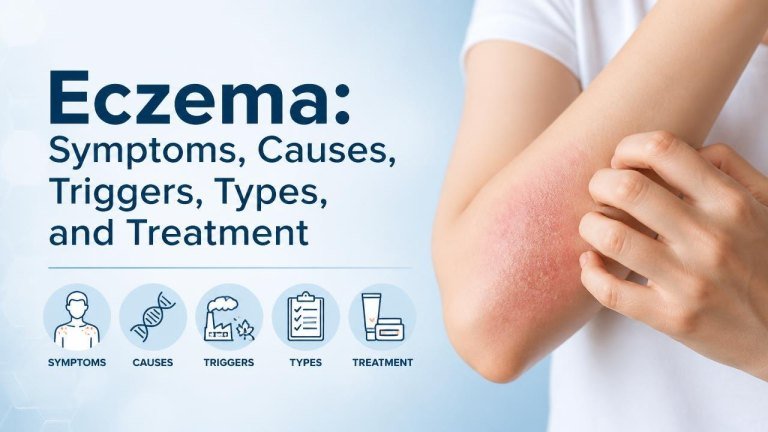
Eczema is a common group of inflammatory skin conditions that can cause dryness, itching, irritation, and recurring rashes. It may affect people of any age, and symptoms can range from mild patches to painful, intensely inflamed skin.
Although eczema is not usually contagious, it can significantly affect sleep, comfort, confidence, and daily activities. Understanding its symptoms, triggers, types, and treatment options can make flare-ups easier to manage and help you know when to seek medical advice.
What Is Eczema?
Eczema describes several conditions that make the skin dry, inflamed, and itchy. In many cases, the skin barrier does not retain moisture effectively or protect the body from irritants. This can allow substances to penetrate more easily and trigger inflammation.
Eczema often follows a pattern of flare-ups and calmer periods, similar to the recurring pattern seen with irritable bowel syndrome triggers. It is not caused by poor hygiene, and it cannot be passed from one person to another through contact.

Common Symptoms of Eczema
Symptoms vary according to a person’s age, skin tone, eczema type, and the stage of a flare-up. Common signs include persistent itching, dry or scaly skin, and redness or discoloration.
- Dry, rough, or cracked skin
- Itching that may become worse at night
- Inflamed patches that may appear red, brown, purple, gray, or darker than the surrounding skin
- Small bumps, blisters, or areas that ooze fluid
- Thickened skin after repeated scratching
- Crusts, tenderness, or bleeding from broken skin
- Rashes on the face, hands, elbows, knees, scalp, or other areas
Scratching can create a cycle of itching and skin damage. Broken skin may also become infected, especially if it becomes increasingly painful, warm, swollen, or covered with pus or spreading crusts.
What Causes Eczema?
Eczema usually develops through a combination of inherited tendencies, immune-system activity, and environmental influences. A weakened skin barrier can lead to moisture loss and make the skin more sensitive to irritants and allergens.
Some people have a personal or family history of eczema, asthma, or hay fever. However, not everyone with eczema has allergies, and a flare-up does not always have one obvious cause.
Common Eczema Triggers
Triggers differ from person to person. Identifying personal patterns can help reduce flare-ups without making unnecessary lifestyle changes. Frequent triggers include fragrances, heat and sweating, and stress.
- Soaps, detergents, cleaning products, and scented cosmetics
- Wool, rough fabrics, or tight clothing
- Hot or cold weather and low humidity
- Sweat and overheating
- Dust, pollen, pet dander, or smoke
- Frequent handwashing or prolonged contact with water
- Stress, fatigue, or disrupted sleep
- Skin infections or minor injuries
Keeping a simple symptom diary can help connect a flare-up with a product, activity, climate change, or emotional stress, much as tracking asthma triggers and symptoms can help identify patterns. Do not eliminate foods from your diet unless a qualified clinician recommends it, particularly for children.
Types of Eczema
“Eczema” includes several related conditions. Their appearance, location, and typical triggers can differ, so an accurate diagnosis is useful when symptoms persist.
Atopic Dermatitis
Atopic dermatitis is the most familiar form of eczema and often begins in childhood, although adults can develop it too. It commonly causes itchy patches, dry skin, and recurring inflammation.
In babies, it may affect the face and scalp. In older children and adults, it often appears in skin folds such as the elbows and knees, although any area can be involved.
Contact Dermatitis
Contact dermatitis occurs when the skin reacts to a substance. Irritant contact dermatitis results from direct damage caused by materials such as detergents, while allergic contact dermatitis involves an immune reaction to a specific allergen.
Common causes include fragrances, metals, cosmetics, adhesives, hair products, and cleaning chemicals. The rash often appears where contact occurred, although it can spread beyond that area.
Dyshidrotic Eczema
Dyshidrotic eczema causes small, intensely itchy blisters on the fingers, palms, or soles of the feet. The affected skin may later peel, crack, or become painful.
Heat, sweating, stress, metal sensitivity, and repeated exposure to water or irritants may contribute to flare-ups in some people.
Nummular Eczema
Nummular eczema produces round or oval patches that may resemble coins. These lesions can be very itchy, scaly, or moist, and they often appear on the arms, legs, or trunk.

Dry skin, insect bites, minor skin injuries, and environmental changes may play a role. A clinician may need to distinguish it from fungal infections or other circular rashes.
Seborrheic Dermatitis
Seborrheic dermatitis affects areas rich in oil-producing glands, including the scalp, face, ears, and upper chest. It may cause flaking, greasy scale, and irritation.
Dandruff is a mild form of seborrheic dermatitis. Symptoms may become more noticeable during periods of stress, illness, or seasonal change.
How Is Eczema Diagnosed?
Healthcare professionals usually diagnose eczema by reviewing the medical history, examining the skin, and asking about symptoms, products, activities, and possible triggers.
Tests are not always necessary. If the rash is unusual, persistent, or suspected to be caused by an allergy, a clinician may recommend additional evaluation, such as patch testing. Other conditions, including psoriasis, fungal infections, scabies, and allergic reactions, can resemble eczema.
Eczema Treatment Options
Treatment aims to repair the skin barrier, reduce inflammation, control itching, and prevent new flare-ups. A personalized plan may combine daily moisturization, trigger avoidance, and prescribed or over-the-counter medicines.
Moisturizers and Skin Care
Apply a thick, fragrance-free cream or ointment several times a day, especially within a few minutes of bathing. Products containing petrolatum or other barrier-supporting ingredients can help seal in moisture.
Use lukewarm water, keep baths and showers brief, and choose gentle cleansers. Pat the skin dry rather than rubbing it, and moisturize while the skin is still slightly damp.
Medicines for Inflammation and Itching
Clinicians may recommend topical corticosteroids to calm inflammation during a flare. Other prescription creams or ointments may be appropriate when corticosteroids are unsuitable, when sensitive areas are affected, or when eczema is difficult to control.
Severe or widespread eczema may require specialist treatment, which can include phototherapy or medicines that affect the immune response. Use these treatments exactly as directed, particularly on the face, around the eyes, or on thin skin.
Managing Itching and Preventing Scratching
Keeping fingernails short, wearing soft clothing, and using a cool compress may reduce itch intensity. Some people benefit from cotton gloves at night or protective clothing that limits unconscious scratching.
Because scratching can worsen inflammation and damage the skin, treating the underlying flare is more effective than relying only on distraction or temporary relief.
How to Prevent Eczema Flare-Ups
Prevention focuses on consistent habits rather than perfect avoidance of every possible trigger. Regular moisturizing, gentle skin care, and attention to personal triggers can help maintain a stronger skin barrier.
- Use fragrance-free products when possible.
- Wash clothing with a mild, unscented detergent and rinse thoroughly.
- Wear breathable fabrics and avoid rough materials against affected skin.
- Protect your hands from cleaning chemicals with suitable gloves.
- Keep the home comfortably humid in very dry conditions.
- Manage heat and sweat by wearing light layers and changing damp clothing.
- Follow the treatment plan even when symptoms improve if your clinician recommends maintenance care.
When to See a Healthcare Professional
Seek medical advice if eczema is severe, spreading, interfering with sleep, or not improving with appropriate home care. Professional guidance is also important when the diagnosis is uncertain or symptoms repeatedly return, just as persistent sleep apnea symptoms warrant evaluation.
Get prompt care for signs of infection, such as increasing pain, warmth, swelling, pus, fever, or rapidly spreading redness. Eczema that becomes covered with clustered blisters or develops sudden, extensive pain also requires urgent assessment.
Living Well With Eczema
Eczema can be frustrating, but a consistent routine often makes symptoms more manageable. Track flare-up patterns, use products that your skin tolerates, and ask a healthcare professional for help when self-care is not enough.
With the right diagnosis and treatment plan, many people can reduce itching, protect their skin barrier, and enjoy longer periods between flares.