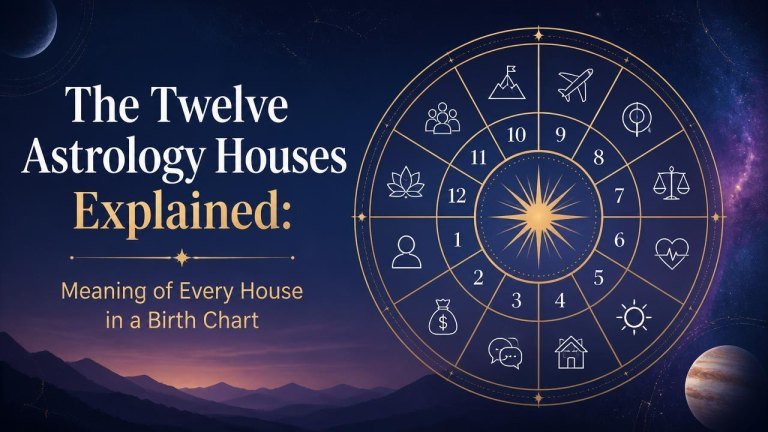
In astrology, the twelve houses describe the areas of life where planetary energy becomes visible. While signs show how a planet expresses itself and planets suggest what is happening, houses reveal where those experiences unfold, including the role of the Moon sign in a birth chart.
Reading the houses can make a birth chart feel more personal and practical. The first house begins the chart at the Ascendant, and the remaining houses move through themes such as money, communication, family, work, partnership, shared resources, beliefs, career, friendship, and inner life.
How the Twelve Houses Work in a Birth Chart
Each house represents a distinct life department. A house may contain planets, a zodiac sign on its cusp, or both. Planets placed in a house often make that area especially active, while the sign on the house cusp describes its style. Pay attention to the house cusp, the planets inside, and the house ruler when interpreting its meaning.
Some houses are traditionally grouped by their position in the chart. Angular houses tend to show visible, active experiences; succedent houses relate to development and stability; cadent houses emphasize learning, adjustment, and movement. These categories add context, but the complete chart always matters more than one placement in isolation.

First House: Identity, Appearance, and Beginnings
The first house, also called the Ascendant or rising-sign house, describes your approach to life and the impression you make on others. It is associated with self-image, personal style, and new beginnings.
This house can reflect your instinctive behavior, physical presence, and the way you take initiative. A planet in the first house is often noticeable in your personality and may strongly influence how you present yourself. The sign on the Ascendant colors your manner, pace, and first response to unfamiliar situations.
Second House: Money, Possessions, and Values
The second house concerns personal resources and the principles that guide your sense of security. Its themes include income, possessions, and self-worth.
This house is not limited to financial wealth. It also shows what you value, how you use your talents, and what helps you feel stable. Planetary placements here may describe attitudes toward earning, spending, saving, and developing practical skills. They can also reveal whether confidence grows through independence, creativity, knowledge, or material achievement.
Third House: Communication, Learning, and Siblings
The third house governs everyday communication and the immediate environment. It is linked with conversation, basic learning, and siblings.
This house describes how you gather information, process familiar ideas, and interact with neighbors or people in your daily surroundings. It can also relate to writing, speaking, short journeys, and practical education. Strong third-house themes often encourage curiosity, observation, and a desire to stay mentally engaged.
Fourth House: Home, Family, and Emotional Roots
The fourth house represents your private foundation and connection to home. Its central themes are family history, emotional security, and home life.
Often associated with the IC, or Imum Coeli, this house points toward the inner self beneath the public identity. It may describe early family experiences, ancestry, living conditions, and the kind of private space you need to feel grounded. Planets here can make family, belonging, and personal retreat especially important throughout life.
Fifth House: Creativity, Romance, and Pleasure
The fifth house is associated with joyful self-expression and the desire to create. It includes romance, creativity, and play.
This house also relates to hobbies, performance, artistic expression, children, and activities undertaken for enjoyment rather than obligation. It shows how you seek recognition and what helps you feel lively and inspired. A strong fifth house can encourage bold self-expression, although its style depends on the sign and planets involved.
Sixth House: Work, Health, and Daily Routines
The sixth house focuses on the habits and responsibilities that shape everyday life. Its themes include daily work, health routines, and service.
This house can describe your relationship with schedules, practical tasks, colleagues, and skill development. It is often considered when exploring patterns of wellness, but it should not replace professional medical advice. The sixth house asks how you organize your time, care for your body, and contribute through useful work.
Seventh House: Partnerships and One-to-One Relationships
The seventh house describes significant one-to-one bonds and the qualities you encounter through other people. It is associated with partnership, commitment, and cooperation.
Although commonly linked with marriage, this house can include business partnerships, close alliances, and open rivals. It often shows what you seek or recognize in others, as well as the relationship patterns that help you understand yourself. The sign on the Descendant may describe the qualities you are drawn to in committed connections.

Eighth House: Shared Resources, Intimacy, and Transformation
The eighth house concerns what is shared, merged, or deeply private. Its major themes include shared finances, intimacy, and transformation.
This house may relate to inheritances, taxes, debts, investments, and financial agreements with others. On an emotional level, it explores trust, vulnerability, sexuality, grief, and renewal. Its symbolism is often intense because it deals with transitions that require release, honesty, and a new relationship with power.
Ninth House: Beliefs, Travel, and Higher Learning
The ninth house expands the mind beyond familiar surroundings. It is connected with higher education, worldview, and long-distance travel.
This house describes the search for meaning through philosophy, religion, spirituality, law, culture, and personal experience. It can also relate to publishing, teaching, and encounters that broaden your perspective. Where the third house gathers immediate information, the ninth house looks for larger patterns and guiding principles.
Tenth House: Career, Reputation, and Public Life
The tenth house represents your visible ambitions and relationship with the wider world. Its themes include career direction, public reputation, and achievement.
Associated with the Midheaven, or MC, this house can describe professional goals, authority, leadership, and the legacy you want to build. It does not dictate one specific job. Instead, it shows the kind of contribution or recognition that may feel meaningful, along with the responsibilities you accept in public life.
Eleventh House: Friends, Communities, and Future Goals
The eleventh house focuses on social networks and hopes for the future. It is associated with friendship groups, community, and long-term goals.
This house describes the people and causes that support your aspirations. It may reveal how you participate in organizations, collaborate with peers, and contribute to collective projects. The eleventh house also points to the benefits of networking and the kind of future you imagine beyond personal achievement.
Twelfth House: Solitude, Spirituality, and the Unconscious
The twelfth house is the most private area of the chart and is often connected with what operates behind conscious awareness. Its themes include solitude, spiritual life, and the unconscious.
This house can describe retreat, dreams, compassion, hidden patterns, and experiences that are difficult to explain through ordinary logic. It is sometimes associated with isolation or self-undoing, but it can also support healing, imagination, contemplation, and profound inner growth. Its lessons often become clearer when you make space for rest and reflection.
How to Read the Houses Together
The twelve houses work as a connected cycle rather than twelve unrelated definitions. For example, the first house emphasizes identity, while the seventh explores partnership; the second concerns personal resources, while the eighth examines shared resources. These opposing house pairs create a dialogue between individual needs and collective experience, much like a relationship’s shared chart.
To begin reading your chart, identify your Ascendant and note which signs and planets occupy each house. Then consider the house ruler, the planetary aspects, and any repeated themes. A single placement rarely tells the entire story, so look for patterns across several parts of the chart.
Frequently Asked Questions About Astrology Houses
What if a house has no planets?
An empty house is not inactive or unimportant. Its meaning can be explored through the sign on its cusp, the ruling planet, and the current planetary transits affecting it. Everyone has all twelve houses, whether or not planets are placed in each one.
Which house is the most important?
No single house is universally the most important. The first, fourth, seventh, and tenth houses are called angular houses and often have strong visibility, but importance depends on the full chart. Look for clusters of planets, angular placements, and themes repeated by signs, aspects, and retrograde planets in a birth chart.
Why does an accurate birth time matter?
The houses depend heavily on the birth time because the Ascendant changes as the chart rotates. A reliable time helps determine the rising sign, house cusps, and Midheaven. If the time is uncertain, house interpretations may be less precise than interpretations based on planets and signs alone.
Final Thoughts on the Twelve Astrology Houses
The astrology houses turn a birth chart into a map of lived experience. They show where questions of identity, relationships, purpose, and inner development may unfold.
Use house meanings as a framework rather than a fixed prediction. The most useful interpretation combines the house, its sign, its ruler, and the planets connected with it. Viewed together, the twelve houses offer a practical language for exploring the many areas of a life.