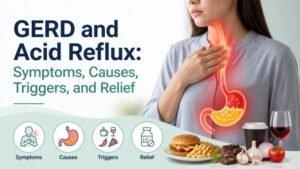
Gastroesophageal reflux disease (GERD) is a common digestive condition in which stomach contents repeatedly flow back into the esophagus. Acid reflux and GERD can happen occasionally to anyone, but frequent or bothersome symptoms may require medical evaluation and treatment.
What Is GERD?
GERD develops when the lower esophageal sphincter does not close properly or relaxes too often. This allows stomach acid, food, or digestive juices to move upward and irritate the esophageal lining. Over time, repeated reflux may cause inflammation and tissue damage.
Common Symptoms of GERD
GERD symptoms can vary from mild to severe and may occur after meals, when lying down, or during the night. Common symptoms include:
- Heartburn, a burning sensation behind the breastbone or in the upper abdomen
- A sour or bitter taste caused by regurgitation
- Chest or upper abdominal discomfort
- Difficulty or pain when swallowing
- A feeling of food sticking in the throat or chest
- Chronic cough, throat clearing, or hoarseness
- A sore throat or unpleasant breath
Some people have GERD without typical heartburn. These less obvious symptoms are sometimes called laryngopharyngeal reflux and may affect the throat or voice.
GERD Warning Signs
Seek prompt medical care for trouble swallowing, persistent vomiting, vomiting blood, black stools, unexplained weight loss, or symptoms that are becoming more frequent. Chest pain can have serious causes, so seek emergency help if it is severe, sudden, or accompanied by shortness of breath, sweating, weakness, or pain spreading to the arm, back, neck, or jaw.
Causes and Risk Factors
GERD usually results from a combination of factors rather than one single cause. Important contributors may include:
- A weak or poorly functioning lower esophageal sphincter
- A hiatal hernia, in which part of the stomach moves upward through the diaphragm
- Excess abdominal pressure related to overweight or obesity
- Pregnancy and hormonal changes
- Delayed stomach emptying
- Smoking or exposure to tobacco smoke
- Some medications, including certain drugs that affect muscle tone or digestion
Large meals, lying down soon after eating, and individual food triggers can also make reflux worse. Common triggers include fatty foods, spicy foods, chocolate, caffeine, alcohol, mint, and acidic foods, although triggers differ from person to person.
How GERD Is Diagnosed
Doctors often diagnose GERD based on a person’s symptom pattern, medical history, and response to initial treatment. A physical examination may help identify other possible causes of discomfort.
Tests for Persistent or Complicated Symptoms
When symptoms do not improve, are unusual, or suggest complications, a clinician may recommend:
- Upper endoscopy to examine the esophagus, stomach, and upper small intestine
- Esophageal pH monitoring to measure acid exposure over time
- Impedance monitoring to detect non-acid reflux
- Esophageal manometry to assess swallowing and sphincter function
- A barium swallow in selected situations
These tests can help confirm reflux, evaluate esophageal inflammation, and rule out other conditions.

GERD Treatment
Treatment depends on symptom severity, frequency, complications, and overall health. Many people benefit from a combination of lifestyle measures and medication.
Medicines
Common medication options include:
- Antacids, which can provide short-term relief by neutralizing stomach acid
- H2 blockers, which reduce acid production and may help with occasional symptoms
- Proton pump inhibitors (PPIs), which more strongly reduce acid production and are often used for frequent GERD
Use medicines according to a healthcare professional’s advice, especially if symptoms are frequent or treatment is needed for an extended period. A clinician can help choose the appropriate dose and duration and review possible interactions.
Procedures and Surgery
People with persistent symptoms, medication intolerance, or certain complications may be evaluated for procedures. Options can include surgery or endoscopic treatments designed to strengthen the reflux barrier. These approaches should be discussed with a specialist after a careful evaluation of benefits, risks, and expected results.
Lifestyle Changes That May Help
Practical changes can reduce reflux for many people. Helpful strategies for GERD and acid reflux relief include:
- Eat smaller meals and avoid overeating
- Stay upright for at least two to three hours after eating
- Identify and limit personal food or drink triggers
- Raise the head of the bed if nighttime reflux is a problem; extra pillows alone may not provide consistent support
- Work toward a healthy weight if appropriate
- Avoid smoking and limit alcohol
- Wear clothing that does not tightly compress the abdomen
- Keep a symptom diary to identify links between meals, habits, and symptoms
Lifestyle changes work best when they are personalized. Not every commonly listed trigger affects every person, so focus on patterns that you can observe and maintain.
GERD Complications
Untreated or poorly controlled reflux can cause esophagitis, narrowing of the esophagus, or ulcers. Long-term irritation may also lead to Barrett’s esophagus, a change in the esophageal lining that requires medical monitoring because it can increase the risk of esophageal cancer.
Regular follow-up is especially important when symptoms are severe, persistent, or associated with swallowing problems.
When to Talk With a Doctor
Make an appointment if heartburn occurs often, disrupts sleep, requires frequent over-the-counter medication, or does not improve with basic lifestyle changes. A healthcare professional can confirm whether GERD is the cause and create a safe, effective treatment plan.
GERD is manageable for many people. Recognizing persistent symptoms, making targeted lifestyle changes, and following an appropriate treatment plan can help reduce discomfort and protect the esophagus.