
Travelling around Europe by train for the first time can feel complicated, but the basic process is easier than it appears. Most journeys follow the same pattern: choose a realistic route, compare ticket options, reserve the trains that require reservations, arrive at the correct station and keep your travel documents accessible, much as you would when following a first-time guide to Kyoto.
Europe is not one single railway system. Each country has its own operators, booking platforms, train types and rules. The key to a successful trip is allowing enough time for connections and checking the conditions attached to every ticket before paying.
Why Train Travel Is a Good Way to See Europe
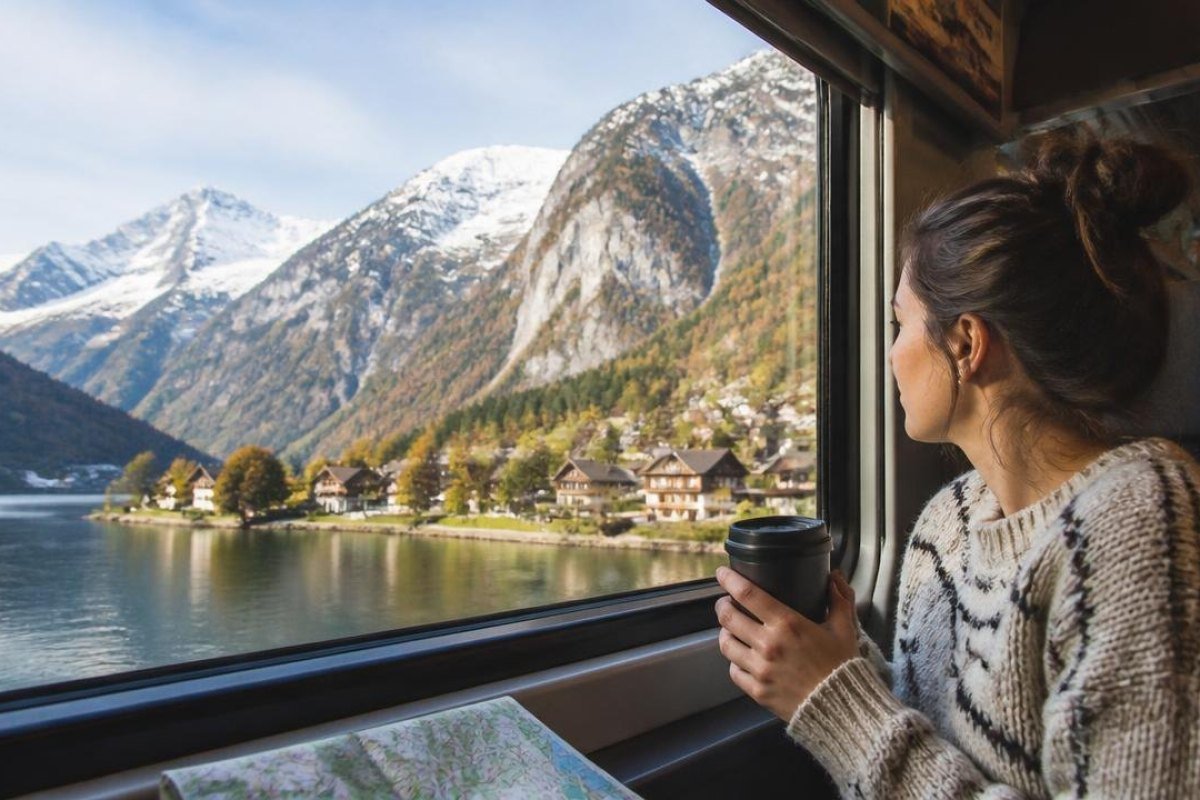
European rail travel can take you from a city centre to another city centre without the airport transfers, security queues and baggage procedures associated with flying. On many routes, the journey itself becomes part of the experience, with views of mountain valleys, coastlines and historic towns along the way.
Trains are especially convenient for connecting major destinations such as things to do in Paris, Amsterdam, Brussels, London, Berlin, Vienna, Prague, Munich, Milan and Zurich. However, travel times vary widely, so a route that looks short on a map may still involve several changes.

For a first trip, choose fewer destinations and stay longer in each one. A relaxed itinerary with two or three-night stays is usually more enjoyable than changing cities every day.
Plan a Realistic First-Time Rail Route
Start by listing the places you genuinely want to visit, then arrange them in a logical geographical order. Avoid crossing the continent repeatedly just to add another famous city. A route such as London–Paris–Brussels–Amsterdam or Munich–Salzburg–Vienna–Budapest is easier to understand than an itinerary that constantly doubles back.
Use a journey planner to compare departure times, journey duration and number of changes. Treat the fastest option as a guide rather than an instruction: a connection with only a few minutes may be risky, particularly in a large station or when crossing an international border.
Allow Extra Time for Connections
Leave a sensible buffer when changing trains. Allow more time if you must change stations, pass through a large terminal, collect a bicycle or travel on separate tickets. A connection protected by a single through-ticket generally offers stronger assistance if a delay causes you to miss the next train than a journey assembled from unrelated tickets.
For independent tickets, assume that you may be responsible for buying a replacement ticket if the first train is delayed. This is one of the most important differences between a convenient itinerary and a stressful one.
Choose Between Point-to-Point Tickets and a Rail Pass
There are two main approaches: buying individual tickets for each journey or using a rail pass such as an Interrail or Eurail pass. The better choice depends on your nationality, age, route, travel dates and how many trains you expect to take.
Individual tickets may be economical when your itinerary is fixed and you are willing to book early. A rail pass can offer more flexibility when you want to change plans, but it may not include every reservation or supplement.
When Individual Tickets Make Sense
Point-to-point tickets are often practical for a short trip with a fixed itinerary, a small number of journeys or several routes where advance fares are available. Check whether the fare is refundable, changeable or tied to a specific train before booking.
When a Rail Pass May Be Useful
A rail pass may suit travellers planning several journeys across participating countries who value flexibility and do not want to purchase every route separately. Passes normally have rules about travel days, eligible trains, activation and reservations, so read the conditions carefully before relying on one.
Compare the total cost, including seat reservations, overnight-train supplements and local transport to or from stations. The cheapest-looking pass is not always the cheapest complete journey.
Understand Train Reservations
Some European trains allow passengers to board with a valid ticket and choose an available seat. Others require a reservation, particularly high-speed services, international trains and many overnight trains. A rail pass does not automatically guarantee a seat.
When booking, check whether the reservation is included or charged separately. Popular departures can sell out, especially during holidays, weekends and major events. If your plans are firm, reserve important long-distance journeys early.
Keep your ticket, reservation and any rail-pass details available offline. Conductors may inspect digital documents when mobile reception is weak, so screenshots or downloaded files can be useful.

How to Read a European Train Ticket
Before travelling, identify the train number, departure time, platform information and destination shown on your ticket. The final destination on the train may differ from the city where you are getting off, so use the train number as well as the destination board.
Some tickets are valid only on one specific departure. Others allow travel on a range of services during a particular day. Terms such as “non-flexible”, “advance”, “semi-flexible” or similar labels can have different meanings between operators.
Check whether your ticket covers the whole journey or only one segment. If you have separate tickets, note exactly where one ticket ends and the next begins.
Navigate Stations with Confidence
Arrive early enough to find the correct concourse, platform and carriage. Large stations may have several halls, multiple exits and trains departing from platforms that are far apart. Some cities, including getting around Rome, also have more than one station, so confirm the exact station name before leaving your accommodation.
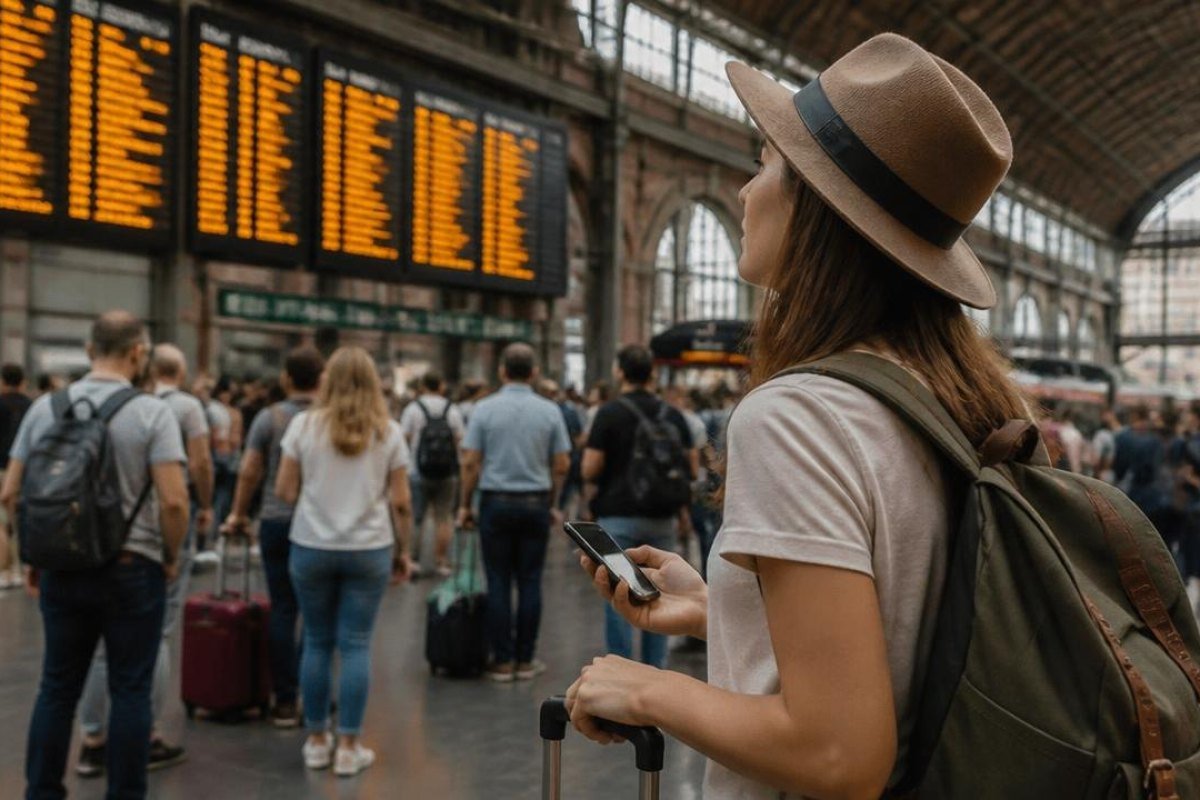
Departure boards commonly show the train number, final destination, intermediate stops and platform. Platforms can sometimes be announced shortly before departure, so wait near the main board and check for updates rather than relying only on an earlier screenshot.
Do not assume that the train will wait if you are running late. Once on board, store your luggage without blocking aisles, doors or designated spaces.
Changing Stations in the Same City
Some journeys require a transfer between different stations. Treat this as a separate urban journey: allow time for walking, metro or tram connections and possible ticket purchases. If your connection involves a different station, avoid booking the next train too tightly.
Pack for Comfortable Train Travel
Pack light enough to lift your luggage into a train and move it through a station without help. A medium suitcase or travel backpack is usually easier than several small bags. Keep valuables and essential documents in a small bag that stays with you.
Useful items include headphones, water, a small snack, a portable charger and a light layer for changing temperatures. European trains vary considerably in seating, luggage storage and onboard facilities.
Do not leave passports, wallets or electronic devices unattended in stations or on trains. At busy terminals, keep bags closed and within sight, especially when boarding or getting off.
Cross Borders and Check Travel Documents
Many journeys within the Schengen Area do not involve routine passport checks at every border, but travellers should still carry a valid passport or other accepted travel document. Border controls can be introduced temporarily, and countries outside the Schengen Area have separate entry requirements.
Before departure, verify passport validity, visa requirements and any conditions linked to your nationality. Rules can change, so use the official government or consular sources relevant to your passport rather than relying on an old travel forum.
Keep your accommodation details, travel insurance information and emergency contacts accessible. If you are travelling with children, pets or medication, check the specific rules for every country on your route.
What to Do If Your Train Is Delayed or Cancelled
When a delay occurs, first check the operator’s announcements and the departure board. Ask staff whether your ticket is valid on the next service before boarding another train, particularly when you have a separate ticket or a reserved seat.
Under EU rail passenger rules, eligible travellers may have rights to rerouting, reimbursement, assistance or compensation after certain delays, cancellations and missed connections. The exact protection can depend on the service, ticket structure, country and applicable exemptions.
Save evidence such as tickets, delay confirmations and receipts for reasonable expenses. If you need to make a claim, follow the railway company’s procedure and check the relevant deadline. Separate tickets may provide less protection than a single through-ticket.
Simple Ways to Keep Your Trip on Budget
Compare the complete journey cost rather than only the headline fare. Include station transfers, seat reservations, luggage-related costs, overnight accommodation and local transport after arrival.
Book popular long-distance routes early when your plans are fixed, but do not buy restrictive tickets for every leg if your itinerary is likely to change. Travelling at less busy times can sometimes offer more choice and a calmer station experience.
Choose accommodation near a station only when the location is also convenient for sightseeing. A slightly higher fare for a central arrival can be worthwhile if it saves a late-night taxi or a complicated transfer.
First-Time Europe Train Travel Checklist
- Confirm the exact departure station and arrival station.
- Check the train number, departure time and connection details.
- Read the ticket’s refund and change conditions.
- Find out whether a seat reservation is required.
- Download tickets and reservations for offline use.
- Carry a valid passport and check current entry requirements.
- Allow extra time for large stations and station changes.
- Keep luggage manageable and valuables close.
- Save receipts and delay evidence if something goes wrong.
- Recheck schedules shortly before travelling, particularly during strikes, engineering works or severe weather.
Final Advice for a Smooth First Journey
Your first European rail trip does not need to be perfect to be memorable. Build a route with realistic travel days, keep your documents organised and leave breathing room around important connections.
When in doubt, check the railway operator’s own information for the latest platform, reservation, disruption and ticket details. With a little preparation, travelling by train becomes one of the easiest ways to experience Europe at a comfortable pace.