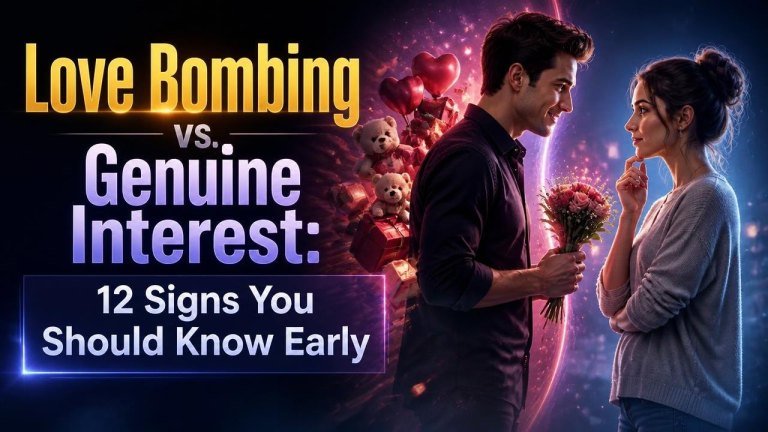
At the beginning of a relationship, intense attention can feel flattering and exciting. Frequent messages, dramatic compliments, surprise gifts, and immediate promises about the future may seem like proof that someone is deeply interested. Sometimes they are simply enthusiastic. In other cases, they may be signs of love bombing: overwhelming affection used to create quick emotional attachment and influence.
The difference between love bombing and genuine interest is rarely found in one romantic gesture. It becomes clearer through
What Love Bombing Really Means
Love bombing is a pattern of excessive attention, praise, affection, or promises that arrives very quickly and creates pressure to bond before trust has had time to develop. The behavior may be intentional manipulation, or it may come from someone with poor emotional boundaries. Either way, its impact can be confusing and destabilizing.
Genuine interest feels different because it allows a relationship to unfold naturally. It includes curiosity rather than control, steady effort rather than emotional extremes, and room for both people to remain themselves. A caring person can be enthusiastic without making you feel indebted, rushed, or responsible for their happiness.
12 Signs to Notice Early
1. The Intensity Arrives Immediately
A love bomber may describe you as perfect, extraordinary, or unlike anyone they have ever met after only a few conversations. Rapid intensity can feel validating, but it is often based on fantasy rather than real knowledge of who you are.
Genuine interest develops through gradual discovery, realistic appreciation, and time-tested attraction. Someone can be excited about you while still recognizing that you are both getting to know one another.
2. They Make Huge Promises Too Soon
Talk about marriage, living together, shared finances, or a lifelong future can appear before you have established basic trust. These promises may create a powerful sense of destiny, even when the relationship has not yet faced ordinary challenges.
Healthy interest keeps future conversations open but proportionate. It respects the current stage of the relationship and avoids using grand promises as emotional leverage.
3. Contact Becomes Constant
Love bombing often includes nonstop texts, calls, social media messages, and demands for immediate replies. If a delayed response leads to guilt, accusations, or emotional withdrawal, the attention is no longer simply affectionate.
Someone genuinely interested will appreciate communication while respecting your schedule, your need for private time, and normal response delays. Connection should feel welcome, not like an obligation to remain permanently available.
4. Compliments Feel Excessive or Generic
Thoughtful compliments are specific and connected to things a person has actually noticed. Love bombing often relies on repeated claims that you are flawless, uniquely superior, or the only person who truly understands them.
Pay attention to whether praise reflects who you really are or an idealized image. Genuine appreciation is specific, grounded in experience, and able to coexist with the understanding that nobody is perfect.
5. They Push for Quick Exclusivity
A new partner may pressure you to stop dating others, define the relationship immediately, or make commitments before you feel ready. The urgency can be disguised as devotion, but it limits your ability to make a free and informed choice.
A healthy person discusses relationship expectations without issuing ultimatums. They allow mutual decision-making, respect your pace, and understand that commitment is stronger when it is chosen rather than pressured.
6. Boundaries Trigger a Strong Reaction
One of the clearest warning signs is what happens when you say no. A love bomber may become angry, wounded, sarcastic, or suddenly cold when you decline a date, request less contact, or protect your personal space.
Genuine interest responds to boundaries with respect, curiosity, and emotional self-control. Disappointment is normal; punishment, guilt, and intimidation are not.
7. Gifts Create an Unspoken Debt
Expensive gifts, surprise deliveries, or lavish experiences can be kind gestures, but they become concerning when they appear very early or are used to secure access and loyalty. You may start feeling that you owe time, affection, sex, or commitment in return.

Healthy generosity comes without hidden conditions, pressure to reciprocate, or reminders of what the giver has spent. You should be able to accept or decline a gesture without fearing a change in their treatment.
8. They Mirror You Too Perfectly
Finding shared interests can be exciting, yet immediate agreement on every value, preference, and life goal may be performative. Some people mirror a new partner to create the impression of a rare, perfect match.
Real compatibility leaves room for individual differences, honest disagreement, and independent opinions. A trustworthy partner does not need to become your exact reflection to build closeness.
9. They Try to Isolate You
Watch for comments that criticize your friends, question your family ties, or suggest that other people do not understand you. Isolation may begin as apparent concern and gradually become an attempt to make the new relationship your only source of support.
Genuine interest supports your existing relationships, respects your support network, and does not demand exclusive emotional access. A healthy connection adds to your life rather than shrinking it.
10. Their Attention Changes After You Commit
Some love bombers become intensely attentive until they feel secure in your attachment. Once you commit, their affection may diminish, criticism may increase, or they may begin another cycle of extreme closeness followed by distance.
Look for stable behavior over time, not only a powerful beginning. Genuine interest is demonstrated through reliability, follow-through, and care that does not disappear after they receive reassurance.
11. They Avoid Accountability
When problems arise, a manipulative partner may blame stress, past relationships, or your reaction instead of acknowledging their behavior. They may apologize dramatically but repeat the same conduct soon afterward.
Emotional maturity includes taking responsibility, offering a sincere repair, and changing behavior consistently. A meaningful apology is measured by what happens next, not by how emotional it sounds.
12. You Feel Rushed, Confused, or Drained
Your emotional response is valuable information. Even when the person appears charming, you may notice anxiety, pressure, loss of focus, or a feeling that you must manage their reactions carefully.
Genuine interest usually creates emotional safety, freedom to be honest, and growing confidence. Excitement is welcome, but persistent confusion and exhaustion deserve attention rather than dismissal.
Common Mistakes People Make
Many people assume that intense affection is automatically more authentic than calm, consistent care. Others ignore warning signs because they fear seeming ungrateful, overly cautious, or emotionally unavailable.
- Do not judge a relationship by chemistry alone; assess patterns across time.
- Do not confuse jealousy with devotion or constant contact with emotional intimacy.
- Do not abandon your routines and support system to prove your interest.
- Do not accept apologies as evidence of change without consistent follow-through.
How to Protect Your Pace and Perspective
You do not need to accuse someone of love bombing to establish healthy limits. Slow down major decisions, keep your normal routines, and notice whether the person responds well when you are unavailable or disagree with them.
Ask yourself whether you feel free to say no, whether their actions match their words, and whether the connection supports your wider life. Discuss expectations directly, avoid financial entanglements early on, and speak with trusted friends if the relationship feels unusually intense or confusing.
If someone repeatedly ignores boundaries, isolates you, threatens you, or makes you afraid, treat the situation seriously. Seek support from people you trust or a qualified professional, and prioritize your safety over preserving the relationship.
General Evaluation: Look for Patterns, Not Perfection
Love bombing versus genuine interest is not always an obvious choice between a bad person and a perfect partner. People can be enthusiastic, insecure, or inexperienced without intending harm. The most useful question is whether they can hear your concerns, respect your limits, and adjust their behavior.
Healthy relationships are built through patience, reciprocity, and trust earned over time. When affection remains steady without pressure, promises are matched by action, and you can stay connected to yourself, the relationship has a much stronger foundation. Early excitement matters, but the way someone treats your boundaries tells you far more.