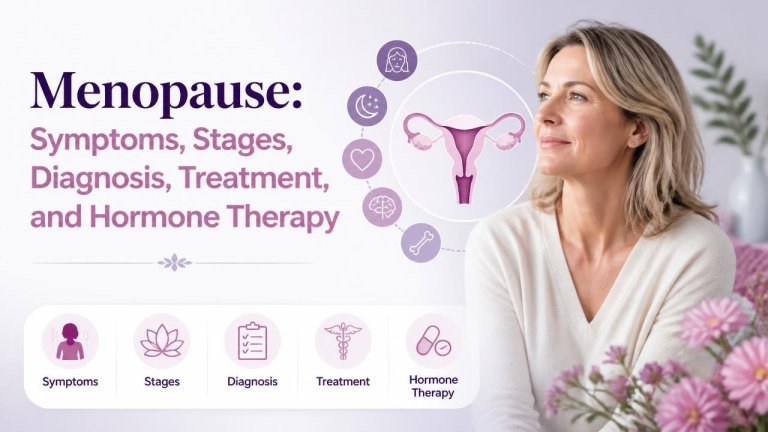
Menopause is a natural stage of life that marks the end of menstrual periods and reproductive years. Although it is a normal biological transition, symptoms can affect sleep, mood, comfort, work, relationships, and overall quality of life.
This guide explains the menopause stages, common symptoms, diagnosis, treatment choices, and the potential benefits and risks of hormone therapy. Individual experiences vary, so a healthcare professional can help tailor care to your needs.
What Is Menopause?
Menopause is reached after a person has gone 12 consecutive months without a menstrual period, when there is no other obvious cause. It happens because the ovaries gradually produce less estrogen and progesterone. The transition often begins several years earlier and is called perimenopause.
Menopause most often occurs naturally in midlife, but it may happen earlier because of surgery, certain medical treatments, or conditions affecting ovarian function. Menopause before the expected age should be discussed with a qualified clinician because it may require additional evaluation and care.

The Stages of Menopause
The menopause transition does not follow exactly the same pattern for everyone. Understanding its stages can make changing periods and symptoms easier to interpret.
Perimenopause
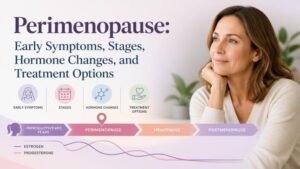
Perimenopause is the period leading up to menopause. Hormone levels can fluctuate, causing irregular periods, changing flow, hot flashes, sleep problems, or mood changes. Ovulation may still occur, so pregnancy remains possible during this stage.
Menopause
Menopause is confirmed retrospectively after 12 months without a period, provided another cause is not responsible. Symptoms may continue during this stage, even though menstrual bleeding has stopped.
Postmenopause
Postmenopause refers to the years after menopause. Some symptoms improve over time, while others may persist. Lower estrogen levels can also affect bone strength, vaginal and urinary health, and cardiovascular risk factors.
Common Symptoms of Menopause
Symptoms may begin during perimenopause and range from mild to disruptive. Common experiences include:
- Hot flashes and night sweats
- Irregular, heavier, lighter, or skipped periods
- Sleep difficulties and daytime fatigue
- Mood changes, irritability, anxiety, or low mood
- Difficulty concentrating or a feeling of mental “fogginess”
- Vaginal dryness, discomfort during sex, or reduced sexual desire
- Urinary urgency, recurrent urinary symptoms, or discomfort
- Headaches, palpitations, joint aches, or changes in skin and hair
Symptoms can have many causes, so new, severe, or persistent problems should not automatically be attributed to menopause. Care is especially important when symptoms interfere with daily activities, relationships, sleep, or emotional well-being.
How Is Menopause Diagnosed?
For many people in the typical age range, a clinician can diagnose perimenopause or menopause from symptoms and menstrual history. Routine hormone testing is not always necessary because hormone levels fluctuate considerably during the transition.
A medical evaluation may include a discussion of medications, health conditions, surgeries, pregnancy possibility, and bleeding patterns. Testing may be considered when menopause occurs unusually early, symptoms are atypical, periods stop for another possible reason, or the diagnosis is uncertain.
Seek medical advice for heavy bleeding, bleeding after menopause, bleeding between periods, bleeding after sex, severe pelvic pain, or symptoms that appear suddenly or are difficult to explain.
Menopause Treatment Options
Treatment depends on the symptoms, their impact, personal preferences, and medical history. Some people need no medical treatment, while others benefit from a combination of lifestyle changes, nonhormonal medication, local therapies, or systemic hormone therapy.

Lifestyle and Self-Care Strategies
Practical changes may reduce symptoms and support long-term health. Helpful approaches include regular physical activity, adequate sleep, balanced nutrition, and maintaining social connections.
- Identify and reduce personal hot-flash triggers, such as heat, alcohol, spicy foods, or stress.
- Use breathable layers, a cool bedroom, and a consistent sleep routine.
- Include weight-bearing and resistance exercises to support bone health.
- Avoid tobacco and discuss alcohol intake with a healthcare professional.
- Use water-based or silicone lubricants and vaginal moisturizers for dryness.
- Consider counseling, cognitive behavioral therapy, or stress-management techniques for mood and sleep concerns.
Nonhormonal Treatments
Several prescription and nonprescription approaches may help particular symptoms. Depending on the situation, a clinician may discuss medicines for hot flashes, sleep, mood, or vaginal and urinary discomfort. Treatment should be chosen carefully because medicines can have side effects and interactions.
For vaginal dryness and related symptoms, local nonhormonal products may be useful. Persistent urinary symptoms, pain, or recurrent infections deserve a clinical assessment rather than self-treatment alone.
Hormone Therapy for Menopause
Menopausal hormone therapy replaces some of the hormones the body produces in lower amounts after menopause. It is the most effective treatment for hot flashes and night sweats and can also help with menopause-related vaginal symptoms and bone loss while it is being used.
Systemic therapy travels through the bloodstream and may be available as tablets, patches, gels, sprays, or other formulations. People who still have a uterus generally need a progestogen with systemic estrogen to help protect the uterine lining. Those who have had their uterus removed may be able to use estrogen alone, depending on their medical history.
Local Vaginal Hormone Therapy
Low-dose vaginal estrogen and other local options are used primarily for vaginal and urinary symptoms. Because treatment is applied locally, exposure throughout the body may be lower than with systemic therapy, but suitability still depends on individual circumstances.
Benefits and Risks
Hormone therapy can provide substantial relief, particularly when symptoms are moderate or severe. The balance of benefits and risks depends on age, timing, dose, duration, the type of therapy, and personal health history.
Hormone therapy may not be appropriate for everyone. A clinician should carefully review a history of certain cancers, unexplained vaginal bleeding, blood clots, stroke, liver disease, or other conditions before treatment begins. Do not start, stop, or change hormone therapy without medical guidance.
Menopause and Long-Term Health
Menopause is an opportunity to review preventive care, not a disease that must be “cured.” Discuss blood pressure, cholesterol, blood sugar, bone health, cancer screening, vaccinations, nutrition, physical activity, and mental health with a healthcare professional.
Hormone therapy should not be prescribed solely to prevent heart disease or dementia. Decisions should focus on symptom relief and other appropriate indications, using the lowest effective dose for the appropriate duration and with regular reassessment.
When to Contact a Healthcare Professional
Make an appointment if symptoms are affecting your quality of life, you are unsure whether changes are related to menopause, or you want to discuss treatment. Seek prompt evaluation for postmenopausal bleeding, very heavy bleeding, chest pain, sudden shortness of breath, one-sided weakness, or severe depression.
Keeping a record of periods, symptoms, sleep, triggers, medications, and treatments can help you and your clinician make informed decisions. The right plan may change over time as symptoms and health needs evolve.
Key Takeaway
Menopause is a normal transition, but difficult symptoms deserve attention. Understanding the stages of menopause, recognizing warning signs, and discussing evidence-based options—including hormone therapy when appropriate—can help you make confident decisions about your health.