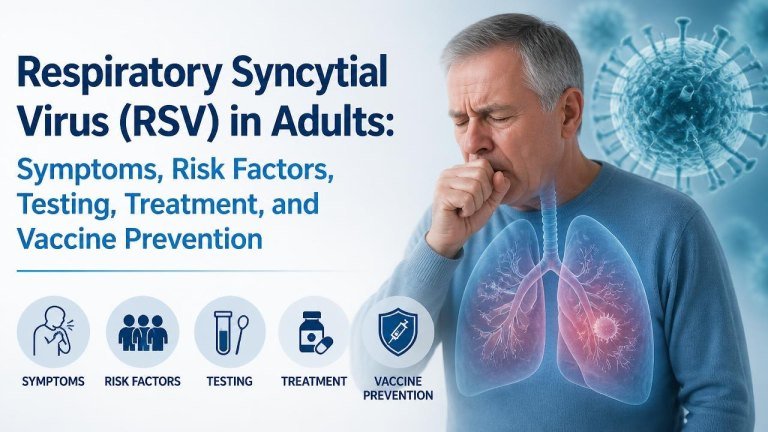
Respiratory syncytial virus (RSV) is a common respiratory infection that can affect people of all ages. In many adults, it causes a mild, cold-like illness. However, RSV may lead to more severe disease, including pneumonia or worsening of existing heart and lung conditions, particularly in older adults and people with weakened immune systems.
Knowing the typical symptoms, understanding personal risk factors, and recognizing when to seek medical care can help adults respond to RSV safely and promptly.
What Is RSV?
RSV is a contagious virus that infects the nose, throat, and lungs. It spreads through respiratory droplets, close personal contact, and contact with contaminated surfaces followed by touching the eyes, nose, or mouth. People can transmit RSV before they realize they are sick.
Symptoms often begin several days after exposure. The infection may resemble a common cold, but some adults develop inflammation in the lower airways, including bronchiolitis or pneumonia.
RSV Symptoms in Adults
Adult RSV symptoms can vary from mild to severe. Common symptoms include:
- Runny nose or nasal congestion
- Cough
- Sneezing
- Fever
- Wheezing
- Sore throat
- Headache
- Fatigue
- Reduced appetite
Some adults experience shortness of breath, chest discomfort, or a cough that becomes more persistent. Symptoms may overlap with influenza, COVID-19, and other respiratory infections, so symptoms alone cannot reliably identify RSV.
When RSV Symptoms May Be Serious
Seek prompt medical advice for difficulty breathing, bluish or gray lips or skin, chest pain, confusion, severe weakness, dehydration, or symptoms that rapidly worsen. Adults with chronic lung disease should contact a healthcare professional early if their usual symptoms become harder to control.
Who Is at Higher Risk of Severe RSV?
Most healthy adults recover without complications, but the risk of severe illness rises with older age and certain medical conditions. Higher-risk adults may include those with:
- Chronic obstructive pulmonary disease or asthma
- Heart failure or other significant cardiovascular disease
- Diabetes or chronic kidney disease
- A weakened immune system
- Frailty or other conditions that affect the ability to recover from infection
People living in long-term care settings may also face increased exposure to respiratory viruses. If you are unsure whether your health history places you at higher risk, discuss it with your clinician.
How RSV Is Diagnosed
A healthcare professional may diagnose RSV based on symptoms, an examination, and information about recent exposure. Testing can be especially useful when symptoms could be caused by RSV, influenza, or COVID-19, or when the result may affect medical decisions.
Available tests may include nasal or respiratory samples analyzed with molecular tests or antigen tests. The choice of test depends on the clinical situation, local availability, and the healthcare setting. A negative result does not always rule out infection, particularly when testing is performed at the wrong point in the illness.

RSV Treatment for Adults
There is usually no routine antiviral treatment for uncomplicated RSV in adults. Care generally focuses on relieving symptoms and supporting recovery. Helpful measures may include:
- Rest and adequate fluids
- Using fever or pain medicine as directed and appropriate for you
- Saline nasal spray or other measures for congestion
- Following a clinician’s plan for asthma, COPD, or other chronic conditions
Antibiotics do not treat RSV because RSV is a virus. A healthcare professional may prescribe antibiotics only if a bacterial infection is also suspected or confirmed. Adults with severe illness may need oxygen, monitoring, or hospital treatment.
When to Contact a Healthcare Professional
Contact a clinician if symptoms are worsening, last longer than expected, or interfere with eating, drinking, or normal breathing. People at higher risk should seek advice sooner rather than waiting for severe symptoms. Urgent care is appropriate for severe shortness of breath, persistent chest pain, fainting, confusion, or signs of low oxygen.
RSV Vaccines for Adults
RSV vaccines are available for certain adults based on age, health conditions, and shared decision-making with a healthcare professional. Recommendations can change as evidence and public-health guidance develop, so ask a clinician or pharmacist whether vaccination is appropriate for you.
Vaccination is intended to reduce the risk of severe RSV disease and related complications. It does not prevent every respiratory infection, and it does not replace other protective measures. Discuss potential benefits, side effects, allergies, and your medical history before vaccine prevention.
How Adults Can Help Prevent RSV
Practical prevention steps can reduce the chance of spreading RSV to yourself and others. Consider these habits:
- Wash your hands regularly with soap and water or use hand sanitizer.
- Avoid close contact with people who are sick when possible.
- Cover coughs and sneezes with a tissue or your elbow.
- Clean frequently touched surfaces.
- Stay home and limit close contact when you have respiratory symptoms.
- Improve indoor ventilation when feasible.
These measures are especially important around older adults, infants, and people with weakened immune systems, who may be more vulnerable to severe respiratory infections.
RSV, Colds, Flu, and COVID-19
RSV can look similar to a cold, influenza, or COVID-19. Fever, cough, fatigue, and congestion may occur with several of these infections, while symptom patterns can vary widely between individuals.
Testing may help identify the cause, especially for people at higher risk or those who may benefit from time-sensitive treatment for another infection. Avoid relying on symptoms alone, and follow medical advice about testing and isolation.
Key Takeaways
RSV is often mild in healthy adults but can become serious in older people and adults with chronic health conditions. Recognize breathing problems, seek medical care when symptoms worsen, and ask about vaccination if you may be eligible.
Good hand hygiene, staying home while sick, improving ventilation, and avoiding close contact during illness can help limit transmission. If you have concerns about RSV symptoms or your personal risk, contact a qualified healthcare professional.