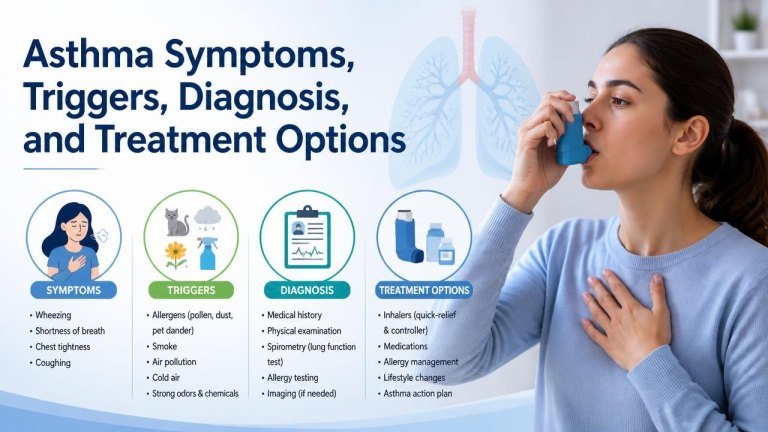
Asthma is a long-term condition that affects the airways, the tubes that carry air into and out of the lungs. When the airways become inflamed, narrowed, or more sensitive, breathing may become difficult. Symptoms can vary from occasional mild problems to frequent episodes that require medical care.
Understanding asthma symptoms, triggers, diagnosis, and treatment options can help you recognize changes early and work with a healthcare professional on an effective management plan.
What Is Asthma?
Asthma causes the airways to react strongly to certain substances or conditions. During a flare-up, the airway lining may swell, surrounding muscles can tighten, and extra mucus may develop. These changes can make it harder for air to move freely.
Asthma is often a long-term condition, but its symptoms may come and go. Some people experience symptoms mainly with exercise or allergies, while others have ongoing breathing difficulties. Good control depends on recognizing patterns, avoiding personal triggers when possible, and following prescribed treatment.
Common Asthma Symptoms
Asthma symptoms differ from person to person and may change over time. Common signs include:
- Wheezing, a whistling sound when breathing
- Shortness of breath or a feeling that you cannot get enough air
- Chest tightness or pressure
- Coughing, particularly at night, early in the morning, or during exercise
Symptoms may be worse during a cold, after exposure to an asthma trigger, or at particular times of year. A cough may sometimes be the main symptom, especially in people with cough-variant asthma.
When Symptoms May Need Urgent Care
Severe breathing problems require prompt attention. Seek emergency help if breathing is rapidly worsening, speaking is difficult, lips or fingertips appear bluish, or prescribed quick-relief medicine is not helping.
Warning signs such as severe breathlessness, difficulty speaking, and little relief from medication should not be ignored. If you are unsure whether symptoms are an emergency, contact local emergency services or a healthcare professional immediately.
Common Asthma Triggers
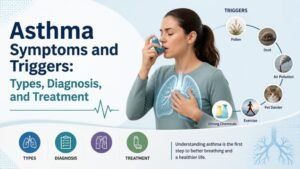
Triggers are substances, activities, or conditions that can start or worsen asthma symptoms. Common triggers include:
- Allergens such as pollen, dust mites, mold, and animal dander
- Smoke from tobacco, fireplaces, or other sources
- Air pollution, strong odors, perfumes, and cleaning products
- Respiratory infections such as colds
- Cold or dry air
- Exercise or intense physical activity
- Stress, strong emotions, or laughing
- Workplace dust, fumes, or chemical exposure
Triggers are personal. Keeping a symptom diary can help reveal connections between symptoms and seasonal exposure, physical activity, or environmental irritants.
How Asthma Is Diagnosed
A healthcare professional usually begins with questions about symptoms, their timing, possible triggers, medical history, family history, and previous allergic conditions. A physical examination may also be performed.
Breathing tests can provide additional information. Spirometry measures how much air you can exhale and how quickly you can do so. A bronchodilator may be used during testing to see whether airflow improves. Depending on the situation, a clinician may recommend peak-flow monitoring, allergy testing, or other evaluations to rule out conditions with similar symptoms.
Diagnosis may require more than one appointment because symptoms can be intermittent. Do not start, stop, or change asthma medicine without discussing it with a qualified healthcare professional.
Asthma Treatment Options
Asthma treatment is tailored to symptom frequency, severity, triggers, age, other health conditions, and response to medication. The goals are to reduce daily symptoms, prevent flare-ups, maintain normal activity, and support healthy lung function.
Quick-Relief Medicines
Quick-relief medicines are used to ease sudden symptoms by relaxing tightened airway muscles. They may be prescribed for occasional symptoms or as part of an asthma action plan.
These medicines can provide rapid symptom relief, but frequent reliance may indicate that asthma is not well controlled. Tell your healthcare professional if you need quick-relief medicine more often than advised or if it is not working as expected.
Long-Term Control Medicines
Long-term medicines help reduce airway inflammation and lower the risk of symptoms and flare-ups. Depending on individual needs, treatment may include inhaled corticosteroids, combination inhalers, leukotriene modifiers, or other prescribed therapies.
Using a controller medicine consistently, with the correct inhaler technique and prescribed schedule, is important. Ask a clinician or pharmacist to review your technique regularly, especially if symptoms continue.
Trigger Management and Asthma Action Plans
Medication works best alongside practical steps. Reduce exposure to known triggers, avoid tobacco smoke, manage allergies when advised, and follow recommendations for exercise and respiratory infections.
An asthma action plan can explain your daily medicines, early warning signs, and steps to take during worsening symptoms. Share the plan with family members, caregivers, school staff, or colleagues when appropriate.
Living Well With Asthma
Many people with asthma remain active and enjoy everyday activities when their condition is monitored and treated appropriately. Attend follow-up appointments, track symptoms, keep medications available as instructed, and ask questions when your treatment is unclear.
Healthy routines may include avoiding smoke, staying physically active within your personal limits, managing stress, and addressing allergies or reflux when they contribute to symptoms. Regular review is especially important after a flare-up, a change in symptoms, or a change in medication.
Frequently Asked Questions
Can asthma symptoms disappear?
Symptoms may be absent for long periods, but asthma can still remain a chronic condition. Continue recommended monitoring and treatment even when you feel well. Never stop a prescribed controller medicine without medical advice.
Symptom-free periods do not always mean asthma has gone away. Ongoing follow-up, awareness of triggers, and an updated action plan remain important.
Can people with asthma exercise?
Yes. Many people with asthma can exercise safely when symptoms are controlled and they follow medical advice. A clinician may recommend a warm-up, trigger-specific strategies, or medicine before activity when appropriate.
Stop exercising and seek guidance if you develop unusual chest tightness, severe breathlessness, or symptoms that do not improve as expected.
When to Speak With a Healthcare Professional
Arrange a medical evaluation for recurring cough, wheezing, shortness of breath, nighttime symptoms, or breathing problems that interfere with work, sleep, or exercise. Early assessment can help identify the cause and improve symptom control.
Asthma care should be individualized. A qualified healthcare professional can confirm the diagnosis, explain treatment choices, check inhaler technique, and help create a plan for prevention, monitoring, and urgent symptom management.