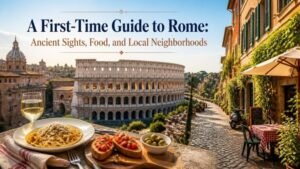
Choosing where to stay in Rome can shape your entire trip. The city’s most famous sights are spread across several historic districts, and each area offers a different atmosphere, from ancient monuments and elegant shopping streets to neighborhood trattorias and late-night bars. A complete first-time Rome guide can help you put the city’s neighborhoods and landmarks into context.
This guide compares the best areas to stay in Rome for different types of travelers, with practical advice on atmosphere, sightseeing, food, transport, and the kind of accommodation you are likely to find.
Quick Guide to the Best Areas in Rome
First-time visitors usually appreciate the historic center, while nightlife lovers often prefer Trastevere or Testaccio. Travelers focused on the Vatican may find Prati and Borgo more convenient, while Monti is an excellent compromise for ancient sights, restaurants, and local atmosphere.
- Best overall for sightseeing: Centro Storico
- Best for ancient Rome: Monti or Celio
- Best for nightlife: Trastevere
- Best for food: Testaccio
- Best for the Vatican: Prati or Borgo
- Best for families: Prati or quieter parts of Centro Storico
- Best for transport convenience: Termini and Castro Pretorio
- Best for a more local atmosphere: Testaccio or San Lorenzo

Centro Storico: Best for First-Time Visitors
Historic landmarks, walkable sightseeing, and classic Roman atmosphere make the Centro Storico the easiest choice for many first-time visitors. Depending on the exact street, you can be close to the Pantheon, Piazza Navona, Trevi Fountain, Campo de’ Fiori, and the elegant streets around the Pantheon and Piazza di Spagna.

The main advantage is convenience. Much of the historic center is best explored on foot, allowing you to move between piazzas, churches, fountains, cafés, and museums without relying on public transport for every visit. It is also a strong choice for travelers with only a short stay, especially if you are following a 24-hour Rome itinerary.
The drawbacks are equally important. Accommodation can be expensive, popular streets may be crowded, and some central lanes remain lively well into the evening. If you prefer quiet nights, look for a hotel on a side street rather than directly beside a major square.
Who should stay in Centro Storico?
First-time visitors, short-break travelers, and walkers who want maximum convenience will usually feel at home here. It is particularly useful if your itinerary combines the Pantheon area, Piazza Navona, Trevi Fountain, the Spanish Steps, and nearby museums.
Monti: Best for Ancient Rome and a Stylish Local Feel
Monti sits close to some of Rome’s most important archaeological areas, including the Colosseum, Imperial Fora, and Trajan’s Markets. At the same time, it has a neighborhood character shaped by independent boutiques, small wine bars, and creative restaurants.
This is one of the best areas for travelers who want to combine major sights with a more relaxed evening scene. You can spend the morning exploring ancient monuments, then return to narrow streets and lively piazzas for an aperitivo or dinner.
Monti is not completely quiet, especially around its popular bars and restaurants. Its streets can also be uneven and hilly in places, so travelers with heavy luggage should check the walking route from their arrival station.
Who should stay in Monti?
History enthusiasts, couples, and independent travelers are especially well suited to Monti. It is also a practical choice for visitors who want relatively easy access to both the Colosseum and the central historic districts.
Trastevere: Best for Nightlife and Atmosphere
Trastevere is known for its atmospheric lanes, traditional restaurants, craft shops, and lively evening scene. The neighborhood’s key attractions include Santa Maria in Trastevere, charming piazzas, and a wide choice of trattorias, bars, and cafés.
Staying here works well if the experience of wandering after dark is as important to you as visiting monuments. The area is particularly photogenic, and its location across the Tiber gives it a distinct identity compared with the districts around the main tourist sites.
Nightlife is also the main compromise. Streets near Piazza Trilussa and Santa Maria in Trastevere can be noisy, especially on busy evenings. For better sleep, choose accommodation on a quieter residential lane toward the outer parts of the neighborhood.
Who should stay in Trastevere?
Nightlife travelers, food-focused visitors, and couples seeking atmosphere will enjoy Trastevere most. It is less ideal for anyone who wants to be directly beside the Colosseum or prefers an especially quiet, orderly neighborhood.

Prati and Borgo: Best for the Vatican
Prati and nearby Borgo are among the most convenient areas for visiting Vatican City, St Peter’s Basilica, Castel Sant’Angelo, and the Vatican Museums. Prati combines elegant residential streets, shopping along Via Cola di Rienzo, and refined restaurants with a calmer atmosphere than many central districts.
The area is a good choice for travelers who appreciate wider streets and a more residential setting. It can also feel comfortable for longer stays, particularly if you want access to supermarkets, cafés, and everyday services rather than only tourist-oriented businesses.
One practical consideration is distance. Although Vatican attractions are nearby, many other major sights lie across the river, so you may use buses, the metro, or taxis more often than you would from the Centro Storico.
Who should stay in Prati or Borgo?
Vatican visitors, families, and travelers seeking a quieter base are strong candidates for this area. It is also suitable for visitors who enjoy shopping and prefer a polished neighborhood atmosphere.
Testaccio: Best for Food and Local Life
Testaccio is one of Rome’s strongest choices for travelers who prioritize eating well. The neighborhood is associated with traditional Roman cuisine, casual trattorias, and a genuine local atmosphere, with food markets and restaurants woven into everyday life.
Beyond dining, Testaccio offers an interesting mix of history and culture. The area is connected with Monte Testaccio, the Pyramid of Cestius, the Non-Catholic Cemetery, and former industrial spaces that now host cultural activities.
Testaccio is farther from the classic central sights than Centro Storico or Monti. That is not a major problem for travelers who enjoy public transport and do not mind planning their days, but it may be less convenient for a very short sightseeing trip.
Who should stay in Testaccio?
Food lovers, repeat visitors to Rome, and travelers who value local character will find Testaccio especially rewarding. It is a good alternative to Trastevere for visitors who want lively evenings without staying in the city’s most tourist-heavy nightlife area.
Colosseum and Celio: Best for Ancient Sights
The area around the Colosseum and Celio places you close to the Colosseum, the Roman Forum, and Palatine Hill. It is an excellent base for travelers whose main goal is to explore ancient Rome early in the day and return to the same area easily.
Morning access can be especially useful because archaeological attractions use timed entry and official reservation systems can change. Always check the current information on the official attraction website before planning your visit.
The atmosphere varies considerably by street. Some locations are busy and highly touristic, while quieter parts of Celio feel more residential. Restaurants and evening options may be less varied than in Monti or Trastevere, so compare the immediate surroundings of each accommodation carefully.
Who should stay near the Colosseum?
Ancient-history enthusiasts, photographers, and early risers will benefit most. Families may also like the location if they want to minimize travel time to Rome’s major archaeological sites.

Termini and Castro Pretorio: Best for Transport Convenience
The area around Roma Termini is practical for travelers arriving by train, using airport connections, or taking day trips outside the city. Nearby Castro Pretorio offers access to metro connections, rail travel, and several major roads, while attractions such as Santa Maria Maggiore and parts of Monti are within reach.
This area includes a wide range of accommodation, from budget hotels to larger properties. It can be one of the more useful choices for travelers who want to keep transport simple or who are arriving late and leaving early.
Termini is a busy transport hub, and its atmosphere changes from one street to another. Research the exact location, read recent accommodation reviews, and consider how comfortable you are walking after dark. The station area is convenient, but it may not provide the most charming Roman experience.
Who should stay near Termini?
Budget travelers, day-trip visitors, and short-stay travelers using the train may find this area particularly useful. It is also practical when your priority is transport rather than neighborhood atmosphere.
San Lorenzo and Pigneto: Best for Students and Alternative Nightlife
San Lorenzo and Pigneto offer a more contemporary side of Rome, with student energy, casual bars, and independent cultural spaces. These neighborhoods are often considered by younger travelers and repeat visitors who want to move beyond the traditional sightseeing circuit.
Both areas can be rewarding for visitors interested in street life, affordable dining, and evening venues with a less formal atmosphere. They are generally better suited to travelers who are comfortable using public transport and exploring beyond the historic center.
Neighborhood character can change noticeably from one block to another. Before booking, check the distance to the nearest metro or tram stop and confirm the late-evening transport options that fit your plans.
Who should stay in San Lorenzo or Pigneto?
Students, young travelers, and repeat visitors seeking alternatives are the best match. These neighborhoods are less suitable if you want to step directly from your hotel into Rome’s most famous monuments.
How to Choose the Right Rome Neighborhood
Start by identifying the experience you want most. If your priority is walking between famous landmarks, choose Centro Storico or Monti. If evenings, restaurants, and atmosphere matter more, compare Trastevere and Testaccio. For a longer journey, a seven-day Italy itinerary can help place Rome within a wider trip.
Next, consider your transport pattern. Travelers arriving by train or planning several rail day trips may value Termini. Visitors focused on the Vatican may save time by staying in Prati or Borgo. Rome’s public transport network includes metro, rail, tram, and bus services, but routes and operating details can change, so check the current official network map before booking a hotel based on a particular connection.
Finally, assess the exact street rather than choosing only by neighborhood name. Look for recent guest reviews, sound insulation, and walking access to transport. In Rome, two accommodations in the same district can offer very different experiences.
Where Should You Stay in Rome?
For most first-time visitors, Centro Storico offers the easiest sightseeing base. Monti is a more stylish and balanced alternative, while Trastevere is ideal for nightlife and atmosphere. Choose Prati or Borgo for the Vatican, Testaccio for food and local character, and Termini for transport convenience.
The best area is ultimately the one that matches your daily rhythm. Rome rewards travelers who leave time to wander, so choose a neighborhood where you will enjoy returning at the end of the day—not only one that looks close to a landmark on a map.