Your car’s suspension does more than make the ride comfortable. It helps keep the tires in contact with the road, supports stable handling and contributes to effective braking. When suspension components wear out, the changes may begin subtly but can eventually affect safety and control.
What the Suspension System Does
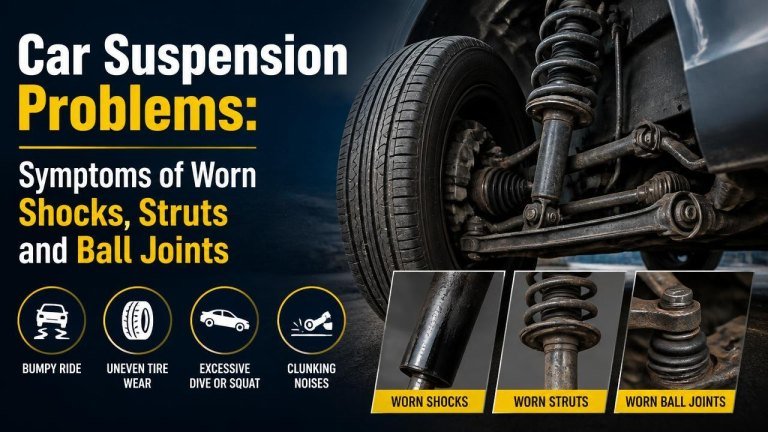
A vehicle’s suspension connects the body to the wheels and manages the forces created by bumps, braking and cornering. Shocks and struts control spring movement, while ball joints allow the steering and suspension to move together. Other parts, including control arms, bushings, springs and tie-rod ends, also influence ride quality and alignment.
Because these components work as a system, one worn part can place extra stress on others. A professional inspection is often the best way to identify the source of a handling or ride complaint.
Common Symptoms of Suspension Problems
Suspension wear can produce several noticeable symptoms. Pay attention to changes in ride comfort, steering response and tire wear, especially when more than one sign appears at the same time.

Excessive Bouncing After a Bump
If the vehicle continues to bounce after crossing a bump, the shock absorbers or struts may no longer be controlling spring movement properly. A healthy suspension should settle relatively quickly rather than oscillating repeatedly.
Repeated bouncing can reduce tire contact with the road, making the car feel less composed on uneven surfaces. It can also increase stopping distances in some driving conditions.
Vehicle Nose-Dives During Braking
A noticeable forward dip when braking may indicate weak damping or worn suspension components. Excessive nose-diving, an unstable front end and a changing brake feel should be checked promptly.
This symptom does not always point to the suspension alone, since brake pad and rotor problems and tire problems can create similar concerns. A complete inspection can separate these issues.
Body Roll or Squatting
If the body leans heavily in corners or drops noticeably at the rear during acceleration, the suspension may not be controlling weight transfer effectively. Heavy body roll, rear-end squatting and vague handling are important warning signs.
These behaviors can make emergency maneuvers more difficult and may indicate worn shocks, struts, springs or related mounting hardware.
Uneven or Cupped Tire Wear
Suspension faults can prevent a tire from maintaining consistent contact with the road. Look for cupped tread, scalloped wear or unusual wear concentrated on one edge of the tire.
Uneven tire wear can also result from incorrect alignment, underinflation or worn steering parts. Replacing tires without correcting the underlying problem may lead to repeated wear.
Clunking, Knocking or Squeaking Noises
Noise over bumps may come from worn ball joints, strut mounts, bushings, sway-bar links or other suspension hardware. Wheel bearing wear can also contribute to unusual noise. A clunk that changes with steering input deserves particular attention.
Do not rely on sound alone to identify the failed component. Loose or damaged parts can look similar from inside the vehicle but require different repairs.

Signs of Worn Shocks and Struts
Shocks and struts are designed to control the movement of the springs and vehicle body. Common indications of wear include poor damping, fluid leakage and reduced stability on uneven roads.
- The vehicle feels floaty or unsettled after bumps.
- The front end dives sharply during braking.
- The car sways more than usual in turns or crosswinds.
- The tire tread shows cupping or irregular contact marks.
- There is visible oil-like fluid on the outside of a shock or strut.
A small amount of surface moisture may not always confirm failure, but obvious leakage, damaged housings or poor handling should be evaluated by a qualified technician.
Symptoms of Worn Ball Joints
Ball joints allow controlled movement between suspension and steering components. When they wear, you may notice loose steering, front-end clunks or a vehicle that does not track smoothly.
- Steering feels vague or wanders on a straight road.
- A knocking sound occurs when driving over bumps.
- The vehicle pulls or behaves unpredictably while turning.
- There is abnormal wear along a front tire’s edge.
- The steering wheel or suspension feels loose during inspection.
Ball-joint failure can be serious because the joint helps locate the wheel. Do not continue driving if there is severe looseness, a sudden change in steering control or evidence that a suspension part is separating.
How to Check for Suspension Trouble
Begin with simple observations, but avoid relying on informal tests as a final diagnosis. Check for uneven ride height, fluid leakage and visible damage around the wheels and suspension.
Notice whether symptoms appear during braking, acceleration, cornering or bumps. Record when the noise occurs and whether it changes with speed or steering direction. This information can help a technician locate the problem more efficiently.
Do not place any part of your body under a vehicle supported only by a jack. Suspension components can be under significant load, so hands-on inspection and repairs should be performed with proper equipment and training.
When to Stop Driving
Some suspension symptoms require prompt attention rather than routine scheduling. Stop driving and arrange an inspection if you notice severe steering looseness, rapid tire wear or a sudden change in vehicle stability.
Also seek immediate help after a collision, after striking a deep pothole or when a wheel appears tilted. A damaged suspension or steering component can affect control without producing much noise.
Repair and Maintenance Considerations
The correct repair depends on the failed component, the vehicle design and the condition of related parts. A technician may recommend replacing shocks or struts, renewing worn ball joints or correcting alignment after the repair.
When suspension work is completed, ask whether the tires, springs, mounts, bushings and steering components were checked. Replacing one part may not solve the problem if another worn component is responsible for the same symptom.
Regular tire-pressure checks, wheel alignment checks when needed and timely inspections can help reduce unnecessary wear. Good maintenance will not prevent every suspension failure, but it can make developing problems easier to spot.
Keep Your Vehicle Stable and Safe
Suspension problems often begin with small changes: an unfamiliar clunk, extra bouncing or a steering wheel that no longer feels precise. Treat handling changes, abnormal tire wear and unusual noises as reasons to arrange an inspection.
Identifying worn shocks, struts or ball joints early can protect the tires, improve road control and prevent a minor fault from becoming a more serious safety concern.