How to Jump-Start a Car Safely: Cable Order, Common Mistakes and What to Do Next
A dead car battery can turn a routine trip into a stressful problem. Knowing how to jump-start a car safely helps you restore power without damaging the vehicles or putting yourself at risk. The key is using the correct equipment, checking for hazards, and connecting the cables in the right order.
Before You Jump-Start the Car
Start by parking the working vehicle close enough for the cables to reach, but do not allow the vehicles to touch. Put both vehicles in Park or neutral, apply the parking brakes, and switch off the ignition and electrical accessories. Keep cigarettes, flames, and other ignition sources away from the batteries.
Do not attempt a jump-start if either battery is visibly cracked, leaking, badly swollen, or frozen. Check the owner’s manuals if available, because some vehicles have designated jump points or specific procedures. Hybrid and electric vehicles may require additional precautions, so follow the manufacturer’s instructions rather than assuming the process is identical to a conventional car.

Identify the Positive and Negative Terminals
The positive terminal is usually marked with a plus sign, a red cover, or the word “positive.” The negative terminal is marked with a minus sign and is commonly connected to the vehicle’s metal body through a ground cable.
Clean, clearly visible terminals make the connection easier, but avoid brushing corrosion into your eyes or onto your skin. If you cannot confidently identify the terminals or jump points, stop and consult the vehicle manual or a qualified roadside professional.
The Correct Jumper Cable Order
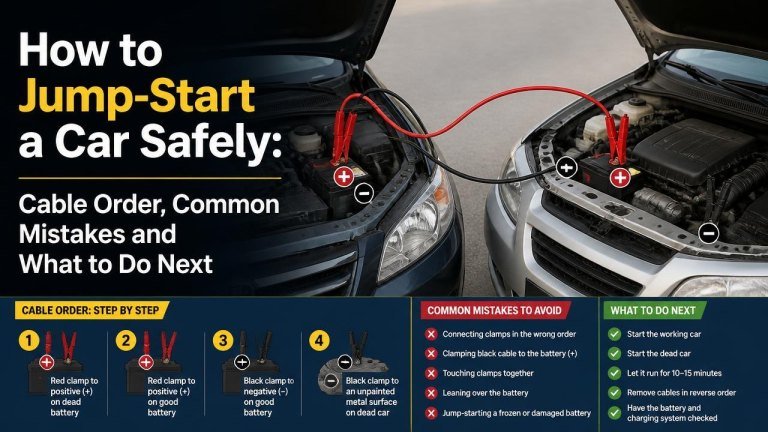
Use this sequence carefully. It keeps the positive connection established before grounding the circuit and reduces the chance of sparks near the battery.
- Connect one red clamp to the positive terminal of the dead battery.
- Connect the other red clamp to the positive terminal of the working battery.
- Connect one black clamp to the negative terminal of the working battery.
- Connect the remaining black clamp to an unpainted, solid metal grounding point on the dead vehicle, away from its battery and moving engine parts.
Keep the clamps from touching each other or any unintended metal surface. The cable-removal order is the reverse: remove the black clamp from the previously dead vehicle, then the black clamp from the working vehicle, followed by the red clamp from the working vehicle and finally the red clamp from the previously dead vehicle.
How to Start the Vehicles
After checking every connection, start the working vehicle and let it run briefly. Then try to start the vehicle with the dead battery. Do not hold the key or start button continuously if the engine does not turn over; wait a short time and check the connections instead.
If the disabled vehicle starts, leave both vehicles stationary and connected for a short period while the battery begins to recover. Turn off unnecessary accessories, such as the radio and climate controls, during this stage. Then remove the cables in the reverse order, taking care not to let the clamps touch one another.
Common Jump-Starting Mistakes
Most common automobile malfunctions during jump-starting come from reversed polarity, poor grounding, or rushed connections. Connecting a black clamp to the wrong terminal or placing a red clamp on a negative connection can create sparks and cause serious electrical damage.
Connecting the Cables in the Wrong Order
Guessing the sequence is risky. Follow the red-to-positive rule first, connect the black clamp on the working vehicle to negative, and use a suitable metal ground point on the disabled vehicle unless the manufacturer specifies another method.
Clamping to Weak or Painted Metal
A clamp attached to painted metal, a thin bracket, or a dirty surface may not provide a reliable connection. Choose a firm, unpainted metal point recommended by the vehicle manual, and keep the clamp away from belts, fans, and other moving components.
Ignoring Warning Signs
Stop immediately if you notice sparks, smoke, a strong sulfur-like smell, leaking fluid, or rapidly heating cables. Switch off the vehicles if it is safe to do so, move away from the batteries, and contact roadside assistance or a qualified technician.
What to Do After the Car Starts
Once the engine is running, avoid switching it off immediately. Drive or allow it to run according to the vehicle manufacturer’s guidance so the alternator can replenish some charge. This does not necessarily repair a weak battery or a faulty charging system.
Arrange a battery and charging-system check if the vehicle needed a jump-start unexpectedly, starts slowly, or loses power again. A repeated dead battery may result from an aging battery, a charging fault, a parasitic electrical drain, or lights and accessories being left on.
When to Call for Professional Help
Call a professional if the battery is damaged, the cables become hot, the engine will not start after a few careful attempts, or you are unsure about the correct jump points. Professional assistance is also the safer choice in heavy traffic, poor weather, limited visibility, or unfamiliar vehicles.
A jump-start can restore enough power to get moving, but it is not a substitute for diagnosing the underlying problem. Treat the successful start as a temporary solution until the battery and electrical system have been checked.
Quick Safety Checklist
Before starting, confirm that the vehicles are not touching, both ignitions are off, the cables are in good condition, and the terminals are correctly identified. During the procedure, prevent the clamps from touching and keep them away from moving engine parts. Afterward, remove the cables in reverse order and have the battery tested if the problem returns.