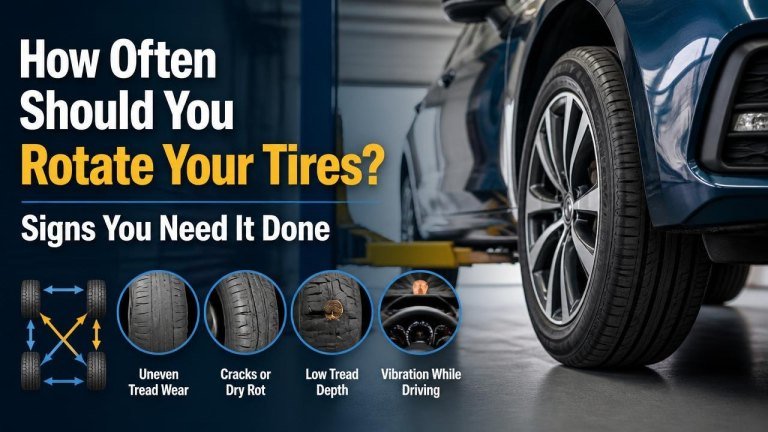
Tire rotation is a simple maintenance task that helps your tires wear more evenly and perform more consistently. Because each wheel position handles different steering, braking, acceleration, and vehicle weight demands, tires do not always wear at the same rate.
For many vehicles, rotating the tires every 5,000 to 8,000 miles is a useful general guideline, but your vehicle manufacturer’s recommendation should come first. Your owner’s manual, tire warranty, and service schedule may specify a different interval.
Why Tire Rotation Matters
Regular rotation can promote even tread wear, help maintain stable handling, and support a smoother, quieter ride. It may also help you get the best possible service life from a matched set of tires.
Front tires often experience additional wear because they handle steering and, in many vehicles, power delivery and braking forces. Rear tires can wear differently depending on the vehicle’s drivetrain, weight distribution, and driving conditions. Moving tires between approved positions helps balance these differences.

How Often Should You Rotate Your Tires?
Most drivers should plan a tire rotation about every 5,000 to 8,000 miles, or as recommended by the vehicle manufacturer. If you frequently drive in heavy traffic, carry substantial loads, tow a trailer, or travel on rough roads, ask a qualified technician whether you need a more frequent schedule.
Rotation is also convenient to combine with other routine services, such as an oil change service or tire inspection. Keep a record of the mileage and service date so you can maintain a consistent schedule.
Follow the Correct Rotation Pattern
The proper pattern depends on your tire and vehicle design. Non-directional tires may be moved from front to rear or crossed to another side, while directional tires must remain on the correct side of the vehicle. Some tires also have different front and rear sizes, which can limit or prevent rotation.
All-wheel-drive vehicles may have additional requirements because differences in tire circumference can affect the drivetrain. A technician should confirm the correct pattern rather than applying a one-size-fits-all approach.
Signs Your Tires Need Rotation
You may need a rotation before your next scheduled service if you notice uneven tread wear, unusual vibration, or a change in ride quality. Regularly examining the tires can help you identify developing problems early.

- More wear on the front tires: The front pair may look noticeably more worn than the rear pair.
- Shoulder wear: The inner or outer edges of the tread may wear faster than the center.
- Vibration: Shaking through the steering wheel or seat can indicate tire imbalance, uneven wear, or another issue.
- Road noise: A humming or rhythmic sound may result from irregular tread wear.
- Vehicle pulling: Pulling can have several causes, including alignment, inflation, braking, or tire-related problems.
Rotation cannot correct every tire problem. If a tire has a bulge, crack, puncture, exposed cords, or severe wear, have it inspected promptly and avoid driving on it until a professional determines that it is safe.
How to Check for Uneven Tire Wear
Park on a level surface, set the parking brake, and inspect each tire in good light. Look for uneven tread depth, feathered tread blocks, cupping, and wear along one shoulder. Compare tires on the same axle as well as the front and rear sets.
Use a tread-depth gauge and pressure gauge if you have one, and check inflation with a reliable pressure gauge. The correct pressure is usually listed on the driver’s door-jamb label or in the owner’s manual, not on the maximum-pressure marking printed on the tire sidewall.
What Else to Check During a Tire Rotation
A rotation is an ideal time to request a broader inspection. Ask the technician to check air pressure, wheel balance, alignment symptoms, tread condition, valve stems, and signs of suspension or steering wear.
Correct tire pressure is especially important. Underinflation can increase heat and shoulder wear, while overinflation can reduce the tire’s contact area and contribute to center wear. Alignment problems may also cause rapid or irregular wear even when rotations are performed on schedule.
When Tire Rotation Is Not Enough
Rotation helps distribute wear, but it cannot restore worn tread or repair structural damage. Replace or professionally evaluate a tire when it has insufficient tread, visible damage, repeated air loss, or wear that makes safe performance uncertain.
Have the vehicle inspected if it continues to pull, shake, or produce unusual noise after rotation. These symptoms may point to an alignment issue, wheel imbalance, bent wheel, worn suspension component, or brake warning light problem.
A Simple Tire Rotation Routine
Build tire care into your regular maintenance habits by following these steps:
- Check the manufacturer’s recommended rotation interval and pattern.
- Inspect tread and sidewalls periodically for damage or unusual wear.
- Check cold tire pressure at least monthly and before long trips.
- Record each rotation, including the mileage and any technician recommendations.
- Schedule an inspection promptly when you notice vibration, pulling, noise, or visible damage.
Consistent service, proper inflation, and quick attention to warning signs can help your tires wear more evenly and keep your vehicle’s handling predictable. When in doubt, rely on the vehicle owner’s manual and advice from a qualified tire professional.