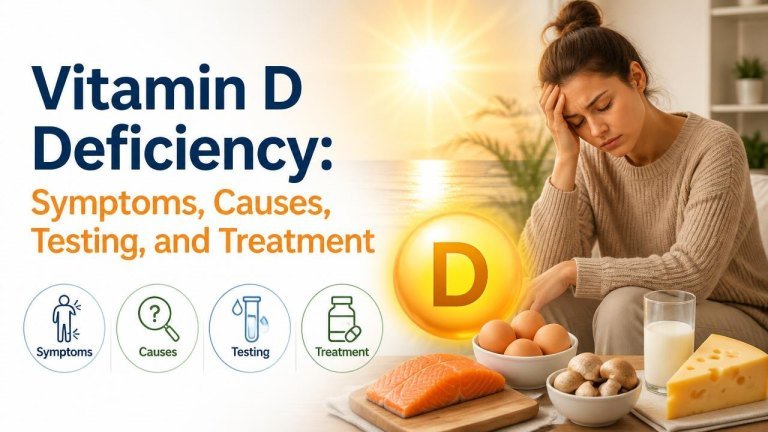
Vitamin D supports healthy bones, muscles, nerves, and immune function. When levels become too low, the effects may be subtle at first, but untreated deficiency can contribute to significant health problems. Understanding the symptoms, causes, testing process, and treatment options can help you take the right next step.
What Is Vitamin D Deficiency?
Vitamin D deficiency occurs when the body does not have enough vitamin D to support normal functions. Vitamin D helps the intestines absorb calcium and phosphorus, minerals that are essential for maintaining strong bones and healthy muscles. The body makes vitamin D after exposure to sunlight, and it can also come from certain foods and supplements.
A deficiency may develop gradually and can occur at any age. Some people have no noticeable symptoms, which is why a healthcare professional may recommend testing when risk factors or related health concerns are present.
Common Symptoms of Vitamin D Deficiency
Symptoms can vary depending on how low vitamin D levels are and how long the deficiency has been present. Possible signs include:
- Bone pain or tenderness, particularly in the back, hips, or legs
- Muscle weakness, cramps, or aches
- Fatigue and low energy
- More frequent falls or difficulty climbing stairs
- Slow wound healing
- Hair loss in some people
- Low mood or changes in emotional well-being
These symptoms are not specific to vitamin D deficiency. Fatigue and muscle discomfort, for example, can have many possible causes. Persistent or worsening symptoms should be evaluated rather than self-diagnosed.
Causes and Risk Factors
Vitamin D deficiency can result from limited production, reduced absorption, increased needs, or inadequate intake. Common risk factors include:
Limited Sun Exposure
Indoor lifestyles, covering most of the skin, living in areas with limited sunlight, and consistently using sun protection can reduce vitamin D production. Sun exposure must always be balanced with skin-cancer prevention, so intentional sun exposure is not a substitute for medical guidance.
Dietary and Absorption Problems
A diet low in vitamin D may contribute to deficiency, especially when it lacks fortified foods, fatty fish, eggs, or other sources. Conditions that affect the intestines, including some digestive disorders, may reduce nutrient absorption. Certain weight-loss surgeries can have a similar effect.
Other Medical Risk Factors
People with darker skin may produce vitamin D more slowly from sunlight. Older adults may also be at higher risk because the skin becomes less efficient at making vitamin D with age. Kidney or liver disease, obesity, and some medicines can affect vitamin D metabolism or availability.

How Vitamin D Deficiency Is Diagnosed
The usual test is a blood test that measures 25-hydroxyvitamin D, also called 25(OH)D. A healthcare professional interprets the result according to the laboratory’s reference range, your symptoms, medical history, and overall risk. Other health evaluations may also involve A1C tests and treatment.
Testing is not always necessary for every person. Your clinician may also evaluate calcium, phosphorus, parathyroid hormone, kidney function, or other markers when symptoms are significant or a bone disorder is suspected. Do not rely on a single result without considering the broader clinical picture.
Treatment for Vitamin D Deficiency
Treatment depends on the severity of the deficiency, its cause, your age, and other health conditions. Options may include:
- Vitamin D supplements in a dose recommended by a healthcare professional
- Foods that provide vitamin D, such as fatty fish, egg yolks, and fortified milk or plant-based beverages
- Addressing medical conditions that interfere with absorption or metabolism
- Repeat testing when advised to confirm that levels have improved
Some people need a short course of a higher dose, while others need a lower maintenance dose. Follow the prescribed instructions carefully. Taking large amounts without medical supervision can cause vitamin D toxicity, leading to high calcium levels, nausea, vomiting, excessive thirst, frequent urination, confusion, or kidney problems.
Can Vitamin D Deficiency Be Prevented?
Prevention usually involves a balanced eating pattern, appropriate supplementation when recommended, and management of conditions that affect absorption. Include vitamin D-rich foods and fortified products as part of a varied diet. A healthcare professional can advise whether a supplement is appropriate, especially during pregnancy, infancy, older age, or when chronic illness is present.
Because excessive supplementation can be harmful, more is not always better. Avoid taking high-dose products routinely unless they have been recommended and monitored by a qualified clinician.
When to Speak With a Healthcare Professional
Arrange an evaluation if you have ongoing bone pain, unexplained muscle weakness, repeated falls, or persistent fatigue. Medical advice is particularly important if you have a digestive, kidney, or liver condition, have had bariatric surgery, take medicines that affect vitamin D, or are considering high-dose supplements. Similar symptoms can also occur with iron deficiency anemia symptoms.
Seek urgent care for severe weakness, confusion, persistent vomiting, or other sudden symptoms. These problems may have causes unrelated to vitamin D and should not be managed with supplements alone.
The Bottom Line
Vitamin D deficiency can be difficult to recognize because symptoms are often mild or absent. Vitamin D deficiency treatment, careful assessment of risk factors, and individualized treatment can help restore healthy levels safely. If you suspect a deficiency, discuss your symptoms and supplement use with a healthcare professional before starting a high-dose regimen.