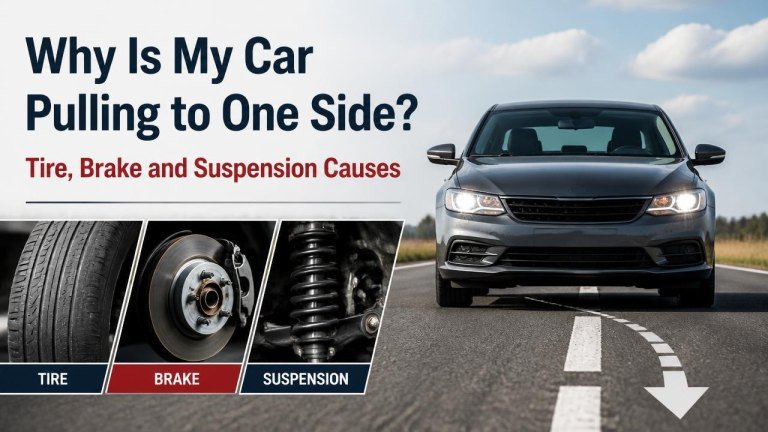
When your car pulls to one side while driving, it is more than an annoyance. The problem can affect steering control, tire wear, and braking stability. Some causes are simple to correct, while others require prompt professional inspection.
What Does It Mean When a Car Pulls to One Side?
A vehicle pulls when it gradually moves left or right even though you are holding the steering wheel straight. A slight drift on a road with a noticeable slope may be normal, but a strong or sudden pull deserves attention. Pay close attention to whether the problem occurs during acceleration, braking, or steady driving, because the timing can help identify the cause.
Common Tire-Related Causes
Tires are often the first place to look. Unequal air pressure, uneven wear, or a damaged tire can change how the vehicle contacts the road and make it drift to one side.
Unequal Tire Pressure
A tire with lower pressure can create extra rolling resistance and cause the vehicle to pull toward that side. Check all four tires when they are cold and compare them with the vehicle manufacturer’s recommended pressures. Do not rely only on visual inspection, since a tire can be significantly underinflated without looking flat. Correct tire pressure, inspect for slow leaks, and check the spare if it is being used.
Uneven or Mismatched Tires
Different tread depths, tire types, or wear patterns can affect handling. A tire with irregular tread wear may indicate an alignment or suspension problem rather than being the original cause. Look for cupping, feathering, bulges, cracks, and objects lodged in the tread. If one tire has been replaced recently, differences in size or construction may also influence the vehicle’s behavior.
Wheel Alignment Problems
Incorrect wheel alignment is one of the most common reasons for a persistent pull. Alignment angles can change after hitting a pothole, striking a curb, or driving over rough surfaces. Symptoms may include an off-center steering wheel, rapid tire wear, or a vehicle that does not track straight on a level road. A proper alignment check measures toe, camber, and caster, rather than simply adjusting the steering wheel position.
Brake Problems That Cause Pulling
If the car pulls mainly when you apply the brakes, the braking system should be inspected promptly. Uneven braking force can make the vehicle move toward the side with the stronger brake.
Sticking Brake Caliper
A sticking caliper or restricted brake hose can keep one brake partially applied. You may notice heat from one wheel, a burning smell, reduced fuel economy, or the car pulling during and shortly after braking. Do not touch a suspected brake component immediately after driving, because it may be dangerously hot. Continued driving can damage the rotor, pads, and wheel bearing, so have the hydraulic system inspected.
Uneven Brake Pad or Rotor Wear
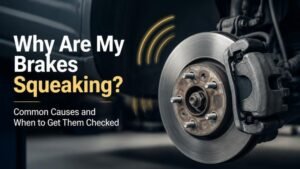
Uneven pad wear, a contaminated friction surface, or a rotor problem can produce inconsistent braking. Steering-wheel vibration is more commonly linked with brake judder, but a pull may occur when braking force is unequal. Have the brake pads and rotors, and hydraulic system checked if the vehicle pulls under braking or the pedal feels unusual.
Suspension and Steering Causes
Suspension and steering components control the wheel’s position and help keep the tires firmly connected to the road. Wear or damage can change alignment while the vehicle is moving.
Worn or Damaged Suspension Parts
Worn control-arm bushings, ball joints, tie rods, or struts can allow unwanted wheel movement. Warning signs may include clunking noises, loose steering, bouncing, uneven tire wear, or a pull that changes over bumps. A damaged component can affect safety, so suspension problems should not be postponed.
Uneven Ride Height
A broken spring, sagging component, or uneven load can alter suspension geometry. Check whether one corner of the vehicle sits lower than the others, but avoid diagnosing the cause by appearance alone. An inspection can determine whether the issue involves the coil spring, shock absorber, or another suspension part.
Other Possible Causes
A pull can also result from road conditions, a heavy or unevenly distributed load, or a recent repair. Strong crosswinds and a crowned road can create a temporary drift, while a steering wheel that remains off-center after service may indicate an unresolved alignment issue. If the vehicle pulls consistently on different roads, the cause is more likely mechanical than environmental.
What to Check First
Use this simple order of checks before arranging repairs:
- Check cold tire pressures and inspect each tire for damage.
- Notice whether the pull happens during braking, acceleration, or normal cruising.
- Look for an off-center steering wheel, uneven tread wear, or a low ride height.
- After a short drive, cautiously note whether one wheel area seems unusually hot without touching brake parts.
- Arrange a professional inspection if the problem remains or any safety warning signs appear.
When Is It Unsafe to Keep Driving?
Stop driving and seek assistance if the pull is sudden or severe, the steering feels loose, a tire is damaged, or the brake pedal feels abnormal. Smoke, a burning odor, grinding noises, or one extremely hot wheel may indicate a serious brake fault. A vehicle that becomes difficult to control should be moved only if it is safe to do so.
How a Professional Diagnoses the Problem
A technician will usually begin with a road test and visual inspection. They may check tire pressures, tread condition, wheel alignment, brake temperatures, steering components, suspension joints, and wheel bearings. Accurate diagnosis matters because replacing tires or aligning the wheels will not solve a sticking caliper or worn suspension component.
Final Takeaway
A car pulling to one side can stem from tire pressure, wheel alignment, brake faults, or suspension wear. Start with basic tire checks, note when the pull occurs, and arrange an inspection if it persists. Prompt attention can improve handling, prevent additional tire damage, and help keep a minor fault from becoming a major safety problem.