Dashboard warning lights can be confusing, especially when two symbols relate to the braking system. The brake warning light and the ABS light do not mean the same thing, although both deserve attention. Understanding the difference can help you respond safely and avoid turning a minor issue into a serious brake problem.
What Does the Brake Warning Light Mean?
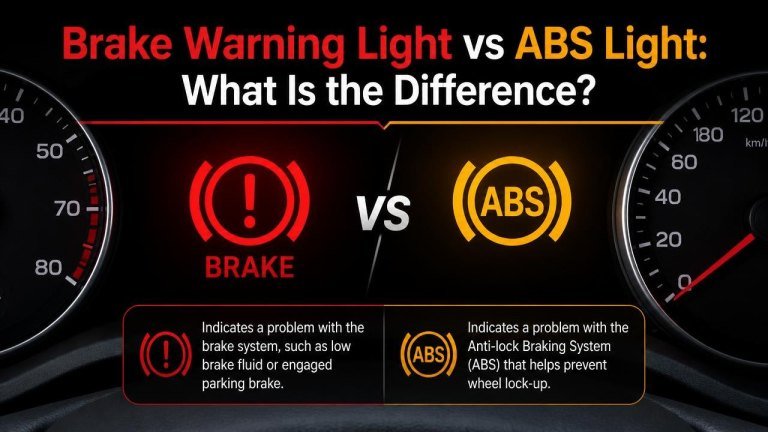
The brake warning light is usually a red symbol showing an exclamation mark inside a circle, the word “BRAKE,” or a similar symbol. Depending on the vehicle, it may indicate a problem with the standard hydraulic braking system or simply remind you that the parking brake is engaged.
Common reasons for the brake warning light to appear include:
- The parking brake is still partially or fully engaged.
- The brake fluid level is too low.
- The brake pads are worn and the fluid level has dropped as a result.
- There is a hydraulic brake system leak or another brake-related fault.
If the light turns off after you fully release the parking brake, the warning may have been caused by the switch or the engaged brake. If it remains on, do not ignore it. A low fluid level or hydraulic fault can reduce braking performance.
What Does the ABS Light Mean?
The ABS light usually displays the letters “ABS” in amber or yellow. It indicates a fault in the anti-lock braking system, which helps prevent the wheels from locking during hard braking.
When the ABS light is on, the conventional brakes may still work normally, but the anti-lock function may be disabled. The vehicle can generally stop, but the wheels may lock more easily during emergency braking or on slippery roads.
Possible causes include:
- A damaged or dirty wheel-speed sensor.
- A wiring or electrical connection problem.
- A fault in the ABS control module or hydraulic unit.
- Low system voltage or a weak battery-related condition.
- A problem with a tone ring, wheel bearing, or another related component.
Brake Warning Light vs ABS Light: The Main Difference
The simplest distinction is that the brake warning light concerns the vehicle’s primary braking system, while the ABS light concerns the anti-lock braking feature.

| Warning light | What it usually indicates | Typical concern |
|---|---|---|
| Red brake warning light | Parking brake, brake fluid, or hydraulic brake system issue | Potential loss of braking performance |
| Amber ABS light | Fault in the anti-lock braking system | ABS may not operate during hard braking |
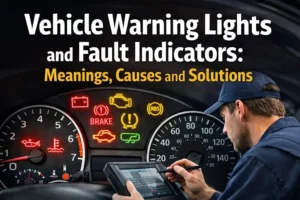
Warning light designs and meanings vary by manufacturer, so always check the owner’s manual for the exact symbol used in your vehicle and review the meaning of vehicle warning lights.
What If Both Lights Come On?
If the red brake warning light and the ABS light appear together, treat the situation as more urgent than an ABS light alone. The combination can indicate a brake fluid problem, a hydraulic fault, or a system issue affecting both standard braking and ABS operation.
Pull over safely and check that the parking brake is fully released. If the lights remain on, the brake pedal feels soft or sinks toward the floor, the vehicle pulls to one side, or stopping feels different, avoid driving it. Arrange professional assistance or have the vehicle towed for inspection.
Can You Drive With the ABS Light On?
Driving a short distance may be possible if the brake pedal feels normal, the red brake warning light is off, and the vehicle stops normally. However, the anti-lock function may not be available, so braking on wet, icy, or loose surfaces requires extra caution.
Have the vehicle diagnosed as soon as possible. An ABS fault can also affect related features such as traction control or electronic stability control, depending on the vehicle’s design.
Can You Drive With the Red Brake Warning Light On?
A red brake warning light should never be dismissed. First, make sure the parking brake is completely released. If the light stays on, stop driving unless a qualified professional confirms that the vehicle is safe.
Do not rely on adding brake fluid without finding out why the level is low. Brake fluid can fall because of worn brake components or a leak, and simply topping it up may hide the underlying problem.
What Should You Do When a Brake Warning Light Appears?
- Notice which warning light is illuminated and whether any other lights are on.
- Confirm that the parking brake is fully released.
- Pay attention to pedal feel, stopping distance, unusual noises, and fluid leaks.
- Check the owner’s manual for the vehicle-specific warning-light instructions.
- Arrange an inspection promptly, especially if the red brake light remains on.
Final Takeaway
The brake warning light and ABS light point to different parts of the braking system. An ABS light usually means the anti-lock function needs diagnosis, while a red brake warning light may signal a problem with the vehicle’s basic braking system. If both appear, or if braking feels abnormal, stop driving and seek professional help. When in doubt, treat any brake warning as a safety issue rather than waiting for the symptoms to worsen or becoming one of the common automobile malfunctions.