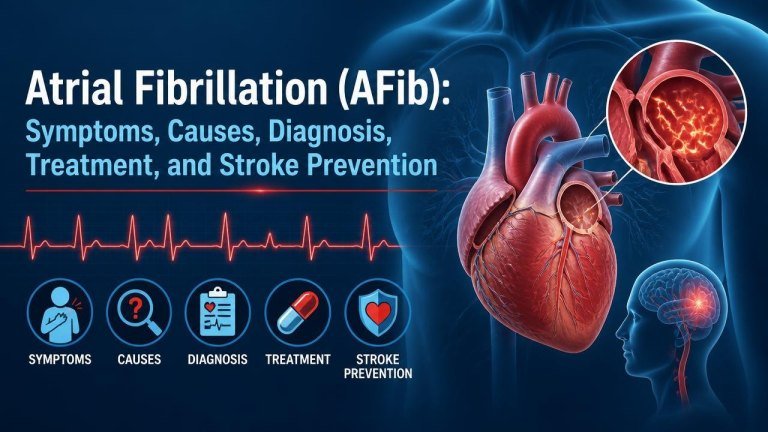
Atrial Fibrillation (AFib): Symptoms, Causes, Diagnosis, Treatment, and Stroke Prevention
Atrial fibrillation, often called AFib, is an irregular heart rhythm that can make the heart beat too quickly, unpredictably, or inefficiently. Some people notice clear symptoms, while others have no warning signs at all. Because AFib can increase the risk of blood clots and stroke, understanding the condition and seeking appropriate medical care are important.
What Is Atrial Fibrillation?
AFib occurs when the heart’s upper chambers, called the atria, beat in a disorganized way instead of following a steady rhythm. This can cause an irregular pulse, reduced blood flow through the heart, and periods of rapid heartbeat. AFib may be occasional, persistent, or continuous, depending on how long the abnormal rhythm lasts and whether it can be restored to a normal rhythm.
The condition is not always dangerous in the moment, but it should not be ignored. Its most important long-term concern is stroke prevention, because blood may pool in the heart and form a clot.
Symptoms of AFib
AFib symptoms can begin suddenly or develop gradually. Some episodes last for minutes, while others continue for hours or longer. Common symptoms include:
- Heart palpitations, fluttering, pounding, or a racing heartbeat
- Shortness of breath, especially during activity
- Fatigue, weakness, or reduced exercise tolerance
- Dizziness, lightheadedness, or feeling faint
- Chest discomfort or pressure
- Difficulty concentrating or feeling unusually anxious
Some people have silent AFib and do not feel any symptoms. An irregular rhythm may be discovered during a routine examination, a home blood pressure check, or testing for another medical concern.
When to Seek Emergency Care
Call emergency services for chest pain, severe breathing difficulty, fainting, or sudden symptoms of a stroke. Stroke warning signs may include face drooping, weakness or numbness on one side, trouble speaking, sudden vision changes, loss of balance, or a severe unexplained headache. Although some headache features may overlap with symptoms associated with migraine, prompt treatment can be critical.
Causes and Risk Factors
AFib develops when electrical signals in the atria become disorganized. Several conditions and habits can increase the likelihood of this happening. Important risk factors include:
- High blood pressure
- Coronary artery disease or a previous heart attack
- Heart valve disease or heart failure
- Overactive thyroid disease
- Diabetes, obesity, or sleep apnea
- Increasing age and a family history of AFib
- Heavy alcohol use, smoking, or stimulant use
- Severe illness, surgery, dehydration, or significant stress on the body
In some cases, no specific cause is found. This is sometimes called lone or idiopathic AFib, although ongoing evaluation may reveal contributing factors later.
How AFib Is Diagnosed
A healthcare professional usually begins with a medical history, symptom review, and physical examination. They may check your pulse and listen to your heart for an irregular rhythm. The central test is an electrocardiogram (ECG), which records the heart’s electrical activity.
Because AFib can come and go, a standard ECG may not capture an episode. Additional tests may include blood tests to identify anemia and other conditions:
- A portable Holter monitor worn for a day or longer
- An event monitor or patch monitor used over an extended period
- An echocardiogram to assess heart structure and function
- Blood tests to check thyroid function, electrolytes, and other possible contributors
- Exercise testing or other heart evaluations when appropriate
Diagnosis also involves assessing stroke risk, bleeding risk, other medical conditions, and whether AFib is intermittent or persistent.

AFib Treatment Options
Treatment is personalized. The goals are to reduce symptoms, control the heart rate or rhythm, treat underlying conditions, and lower the risk of blood clots. Your care plan may involve one or more of the following approaches.
Heart Rate Control
Rate-control medicines help prevent the heart from beating too quickly. Depending on your health and other medications, a clinician may consider drugs such as beta blockers, certain calcium channel blockers, or digoxin. These medicines can improve symptoms without necessarily returning the rhythm to normal.
Heart Rhythm Control
Rhythm-control treatment aims to restore or maintain a normal rhythm. Options may include antiarrhythmic medicines, electrical cardioversion, or a catheter-based procedure. The best approach depends on the duration of AFib, heart health, symptoms, and potential treatment risks.
Catheter Ablation
During catheter ablation, a specialist uses energy to create small areas of scar tissue that block abnormal electrical signals. Ablation may be considered when symptoms persist, medicines are ineffective or poorly tolerated, or a person and clinician decide that a procedure is appropriate.
Stroke Prevention in AFib
AFib can allow blood to pool in the atria, increasing the chance of clot formation. If a clot travels to the brain, it can cause a stroke. Clinicians estimate risk using a validated stroke-risk assessment and consider factors such as age, high blood pressure, diabetes, heart failure, high cholesterol and vascular disease, and previous stroke or transient ischemic attack.
For people who need medication, anticoagulants reduce the blood’s ability to form harmful clots. These medicines may include direct oral anticoagulants or warfarin, depending on the individual situation. Aspirin is not a substitute for anticoagulation when anticoagulation is indicated. Never start, stop, or change a blood thinner without medical guidance.
Some people who cannot take long-term anticoagulants may be evaluated for a left atrial appendage closure procedure. This is a specialized decision that requires discussion with a qualified cardiology team.
Living Well With AFib
Daily habits can support treatment and improve overall heart health. Helpful steps may include:
- Taking prescribed medicines consistently
- Monitoring blood pressure and attending follow-up appointments
- Limiting alcohol and avoiding tobacco or recreational stimulants
- Managing weight, blood sugar, cholesterol, and sleep apnea
- Maintaining regular physical activity as advised by your clinician
- Tracking symptoms, pulse readings, possible triggers, and medication effects
Do not assume every episode is harmless. Contact your healthcare professional about a new, worsening, or persistent irregular heartbeat, especially if it is accompanied by shortness of breath, dizziness, or chest discomfort.
Questions to Ask Your Healthcare Professional
Useful questions may include:
- What type of AFib do I have?
- What is my estimated stroke risk?
- Do I need an anticoagulant, and what warning signs of bleeding should I know?
- Should I focus on heart rate control, rhythm control, or both?
- Could another condition or medicine be contributing to my symptoms?
- Which activities, devices, or home readings should I use to monitor my heart?
Key Takeaway
AFib is a manageable heart rhythm disorder, but it requires an individualized plan. Recognizing symptoms, confirming the diagnosis, treating contributing conditions, and addressing stroke risk are all essential. Work with your healthcare team before making changes to medicines or treatment, and seek emergency help for severe symptoms or possible signs of stroke.
This article is for general educational purposes and does not replace professional medical advice, diagnosis, or treatment.