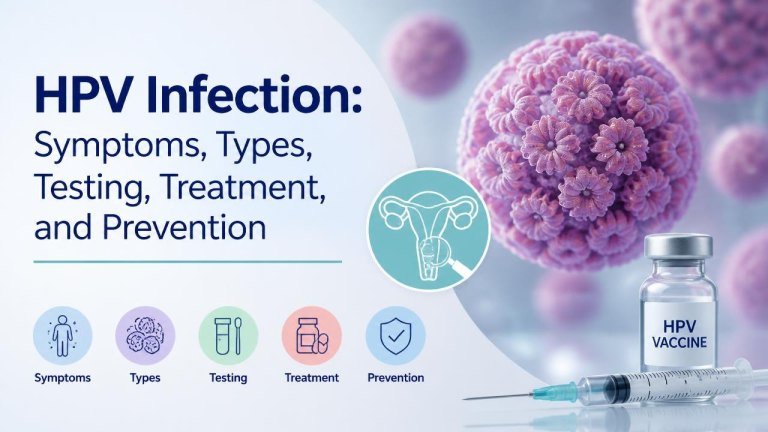
Human papillomavirus (HPV) is a very common infection that can affect the skin and moist linings of the body. Many HPV infections cause no symptoms and clear on their own, but some types can lead to genital warts or cell changes associated with cancer.
Understanding HPV symptoms, testing options, treatment, and prevention can help you make informed decisions about screening, vaccination, and sexual health. If you have a persistent symptom or an abnormal screening result, speak with a qualified healthcare professional.
What Is HPV?
HPV is a group of more than 100 related viruses. It spreads mainly through intimate skin-to-skin contact, including vaginal, anal, or oral sex, and transmission can occur even when an infected person has no visible signs.
Most infections are temporary. The immune system often controls or clears them without treatment. However, an infection that remains for a long time, especially with a high-risk HPV type, may cause changes in cells that require monitoring or treatment.
HPV Types and Health Risks
HPV types are commonly described as low-risk or high-risk according to the health problems they can cause. Low-risk types may produce genital warts but are not usually linked with cancer.
High-risk types can cause abnormal cell changes in the cervix and other areas. Persistent infection with certain high-risk types is associated with cancers of the cervix, anus, penis, vulva, vagina, and throat. Having HPV does not mean that you have cancer, but recommended follow-up is important.
HPV Symptoms
HPV often causes no noticeable symptoms. A person may carry and transmit the virus without knowing it. When symptoms occur, they depend on the HPV type and the area affected.
Genital Warts
Genital warts may appear as small bumps or clusters on the genitals, around the anus, or nearby skin. They can be flat or raised, and some may have a cauliflower-like appearance. Warts may cause itching, irritation, or bleeding, although they are sometimes painless. Learn more about types of warts and treatment.
Similar lesions can have causes other than HPV, so a healthcare professional should assess new, changing, or unusual growths. Do not use ordinary over-the-counter wart treatments on genital skin unless a clinician specifically recommends them.
Symptoms of HPV-Related Cell Changes
Cell changes caused by HPV usually have no early warning signs. Abnormal cervical changes are often found through screening rather than symptoms. More advanced disease may cause unusual bleeding, persistent pelvic pain, pain during sex, or other symptoms depending on the affected body area.
These symptoms can have many causes, but unusual bleeding, persistent pain, a nonhealing sore, or a lump should be evaluated promptly.
How HPV Is Tested
There is no general test that determines a person’s overall HPV status in every part of the body. Testing is mainly used in cervical cancer screening, where a sample of cervical cells may be checked for high-risk HPV, abnormal cells, or both.
Depending on the result, age, health history, and local screening guidance, follow-up may include repeat testing, closer monitoring, or a procedure such as colposcopy to examine the cervix more closely. A healthcare professional can explain what an individual result means.
Visible genital warts are usually diagnosed through a physical examination. Testing is not routinely used to diagnose HPV in men or to screen for HPV in the mouth or throat in people without symptoms. Ask a clinician about the most appropriate evaluation for your situation.
HPV Treatment
There is no medicine that removes HPV from the body immediately. Treatment focuses on the health problem caused by the infection while the immune system works to control the virus. Genital warts may be treated with prescription medicines, freezing, removal, or other office-based procedures.
Abnormal cervical cells may be monitored or removed depending on their severity and the risk of progression. Treatment options can include careful follow-up, excisional procedures, or other approaches recommended by a specialist.
Do not self-treat genital lesions or skip follow-up after an abnormal screening result. Keeping appointments helps clinicians identify changes early and choose the least invasive safe treatment.
HPV Prevention
Several measures can reduce the risk of HPV infection and related disease. The HPV vaccine protects against important HPV types and works best when given before exposure, although recommended vaccination may still benefit some older adolescents and adults.
- Use condoms and dental dams consistently. They can lower transmission risk, although they do not cover every area where HPV may be present.
- Limit exposure to new sexual partners and discuss sexual health openly.
- Complete recommended cervical screening, even if you have received the vaccine.
- Avoid tobacco, which is associated with a higher risk of persistent HPV-related cell changes.
- Do not share personal items that contact affected skin, and avoid sexual contact with a partner who has visible genital warts until medical advice is obtained.
HPV During Pregnancy
HPV usually does not prevent pregnancy. Genital warts may grow or become more irritated during pregnancy because of hormonal changes, but treatment decisions should be made with an obstetric or gynecologic professional.
Tell your healthcare team about a history of abnormal screening or genital warts. Some treatments are avoided during pregnancy, and routine screening may be managed according to the individual’s history and clinical guidance.
When to See a Healthcare Professional
Arrange medical advice for new genital bumps, unusual bleeding, persistent pelvic or throat symptoms, or a sore or lump that does not heal. You should also attend every follow-up appointment after an abnormal HPV or cervical screening result.
Because HPV is often silent, prevention and screening remain important even when you feel well. A clinician can discuss vaccination, testing, and follow-up based on your age, anatomy, medical history, and personal circumstances.
Frequently Asked Questions About HPV
Can HPV go away on its own?
In many people, the immune system controls or clears HPV without specific treatment. Persistent infection requires appropriate monitoring because it can lead to cell changes over time.
Does HPV always cause cancer?
No. Most HPV infections do not cause cancer. Cancer risk is linked mainly to persistent high-risk infection and the development of untreated or inadequately monitored cell changes.
Can you get HPV after vaccination?
The vaccine does not protect against every HPV type, and it does not treat an infection that was already present. Vaccination still provides important protection against the HPV types included in the vaccine, so screening remains necessary when recommended.
The Bottom Line
HPV is common, often silent, and usually controlled by the immune system. The most effective approach combines vaccination, safer-sex practices, recommended screening, and prompt evaluation of symptoms.
An HPV diagnosis is not a judgment about your health or behavior. If you have concerns, seek confidential medical advice and follow through with any recommended testing or treatment.