Japan rewards curiosity, preparation, and a willingness to slow down. A first visit usually works best when it combines Tokyo’s energy, Kyoto’s historic atmosphere, and Osaka’s relaxed food culture rather than trying to see too much in one journey, as shown in a seven-day Japan itinerary.
This guide explains how to plan a smooth route through Japan’s most popular first-time destinations, how many nights to allow, what to book ahead, and how to travel comfortably between cities.
How Many Days Do You Need for Japan?
For a first visit covering Tokyo, Kyoto, and Osaka, aim for at least nine to ten nights. This gives you enough time for three to four nights in Tokyo, three nights in Kyoto, and two to three nights in Osaka, including travel days.
With only one week, you can still visit all three cities, but the pace will be noticeably faster. A longer trip of two weeks allows you to add a day trip, a rural stay, or extra time in Tokyo and Kyoto.
Do not treat the journey between cities as wasted time. Japan’s trains are part of the experience, but stations can be large and transfers may involve considerable walking. Plan a little breathing room around each arrival and departure.
The Best First-Time Route Through Japan
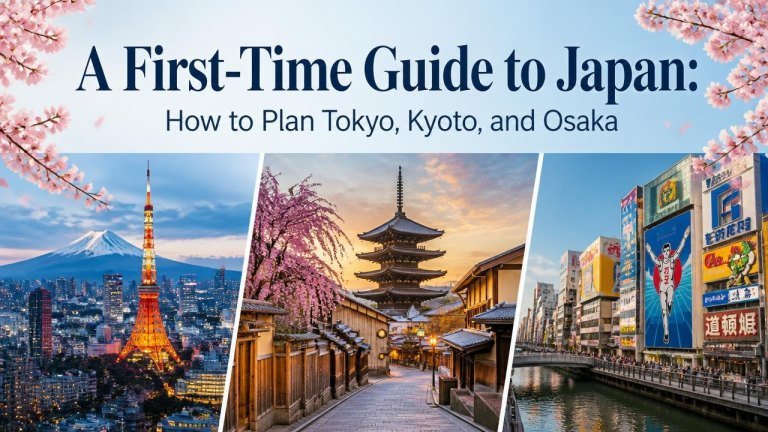
A practical route is Tokyo first, followed by Kyoto in the middle, and Osaka at the end. This order creates a natural east-to-west journey and makes it easy to depart from Kansai International Airport if your flight schedule allows.
Tokyo: Three or Four Nights
Begin in Tokyo while you are still adjusting to Japan’s time zone. The city offers a powerful introduction through modern neighborhoods, historic temples, and excellent public transport.
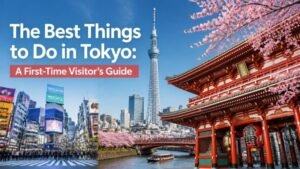
First-time visitors often enjoy combining Shibuya or Shinjuku with Asakusa, Ueno, Ginza, Tokyo Station, or the waterfront. Avoid crossing the entire city several times in one day; choose attractions that are close together and explore each area on foot, following this first-time Tokyo guide.
Kyoto: Three Nights
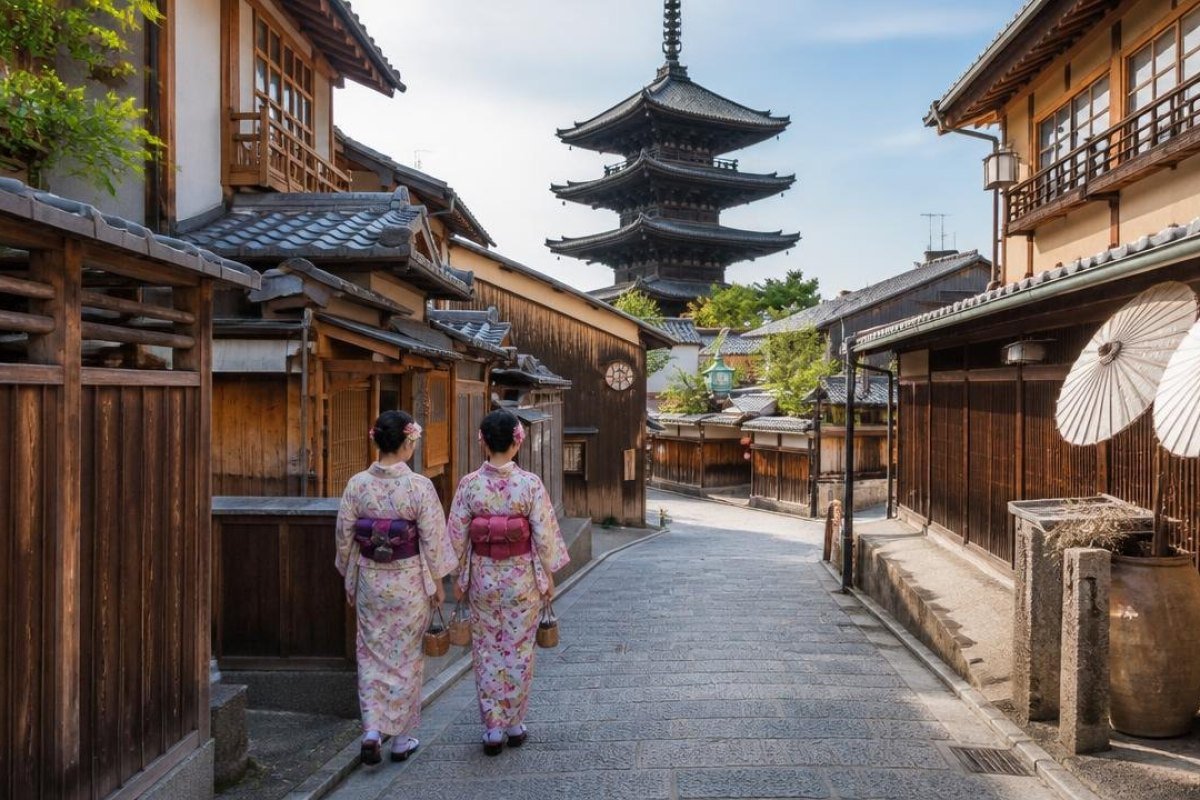
Kyoto is best experienced at a slower pace. Allow time for temples and shrines, traditional streets, and quiet neighborhood walks rather than filling every hour with famous landmarks.
A balanced stay might include eastern Kyoto, the Gion and Higashiyama area, Fushimi Inari, Arashiyama, and one less-visited temple or garden. Early mornings are especially valuable at popular sites, when the atmosphere is calmer and streets are easier to navigate.
Osaka: Two or Three Nights
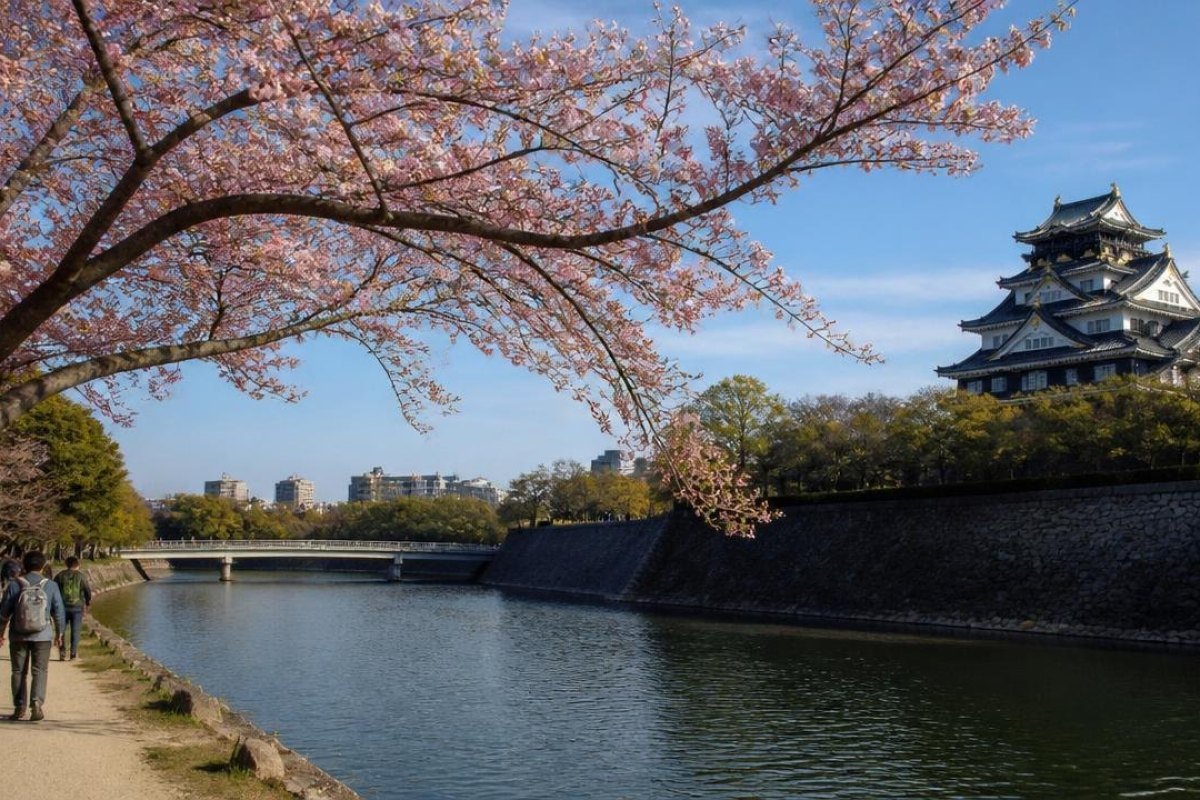
Osaka is an excellent final stop because it combines street food, lively nightlife, and easy access to nearby attractions. Explore Dotonbori and Namba, then consider Umeda, Osaka Castle, or the bay area depending on your interests.
Osaka also works well as a base for selected day trips, but avoid adding too many excursions. The city itself deserves at least one unhurried evening.
Planning Tokyo for Your First Visit
Tokyo is enormous, but its railway and subway systems make the main sightseeing districts accessible. Use an IC transportation card, check routes before leaving your hotel, and allow extra time for large stations such as Shinjuku and Tokyo Station.
Where to Stay in Tokyo
Choose a neighborhood near a convenient station rather than focusing only on a landmark. Shinjuku is useful for transport and nightlife, Shibuya suits travelers who enjoy shopping and contemporary culture, while Asakusa and Ueno offer a more traditional atmosphere and access to museums and historic areas.
Tokyo hotels can be compact, so check room dimensions, luggage storage, and the distance to the station before booking. A location within a short walk of a well-connected station is often more valuable than a slightly cheaper room farther away.
What to Do in Tokyo
Build your days by district. For example, pair Asakusa and Ueno, Shibuya and Harajuku, or Ginza and Tokyo Station. This reduces unnecessary transfers and leaves time for cafés, department stores, small galleries, and unexpected discoveries.
Consider reserving timed-entry attractions, observation decks, popular restaurants, and entertainment experiences in advance. Availability and booking systems vary, so always check the attraction’s official information close to your travel date.
Planning Kyoto for Your First Visit
Kyoto’s major sights are spread across the city, and traffic can make buses slower than expected. Combine trains, subways, and walking whenever possible, and check the best route for each specific destination rather than relying on one transport mode all day.
Large luggage can make Kyoto’s buses and crowded streets uncomfortable. Use hotel luggage storage, station lockers where available, or a luggage delivery service so that sightseeing is easier for you and less disruptive to other passengers.
Kyoto Areas Worth Prioritizing
Higashiyama is ideal for historic lanes, temples, and traditional architecture. Arashiyama is known for its bamboo grove and riverside scenery, while Fushimi is associated with the vivid torii gates of Fushimi Inari.
Gion and nearby districts are living neighborhoods, not open-air theme parks. Stay on public routes, respect barriers and private property, and never block, touch, follow, or photograph geiko or maiko without permission.

Planning Osaka for Your First Visit
Osaka feels more informal and food-focused than Kyoto. Begin with Namba and Dotonbori for illuminated streets and local specialties, then explore Umeda for shopping and city views or Osaka Castle for a major landmark and surrounding parkland.
Osaka’s attractions are distributed across different areas, so group your plans by neighborhood. If you want to visit a major theme park or another ticketed attraction, reserve ahead and check the official calendar, entry rules, and operating details.
What to Eat in Osaka
Try local favorites such as takoyaki, okonomiyaki, kushikatsu, udon, and seasonal seafood. Busy streets are tempting for photographs, but avoid stopping in the middle of pedestrian flows and follow restaurant instructions about queues and ordering.
For a more memorable food experience, include one market visit, one casual neighborhood restaurant, and one reservation-worthy meal rather than eating only at the most famous tourist venues.
How to Travel Between Tokyo, Kyoto, and Osaka
The shinkansen is usually the most convenient choice between the major cities. Reserve seats when your schedule is fixed, especially during busy travel periods, and check current ticketing options before departure.
A nationwide rail pass is not automatically the best value for every itinerary. Compare the cost of individual journeys with available regional or multi-day passes, taking into account your actual route and any airport transfers.
Keep your passport, tickets, and small essentials easy to reach. Large stations can be confusing at first, so arrive early when taking a long-distance train and confirm the platform on station displays.
When to Visit Japan
Spring and autumn are popular for their mild weather, cherry blossoms, and autumn foliage, but popular destinations can be exceptionally busy. Summer brings heat, humidity, and possible weather disruptions, while winter offers cooler conditions and, in some regions, snow.
Choose your season according to your priorities. If you want famous seasonal scenery, book accommodation and transport earlier. If you prefer easier availability and a calmer experience, consider traveling outside the most sought-after weeks with help from Japan’s seasonal travel guide.
Japan Travel Etiquette for First-Time Visitors
Small acts of consideration make travel easier. Speak quietly on trains, queue in an orderly way, avoid eating while walking where local guidance discourages it, and carry rubbish until you find an appropriate bin.
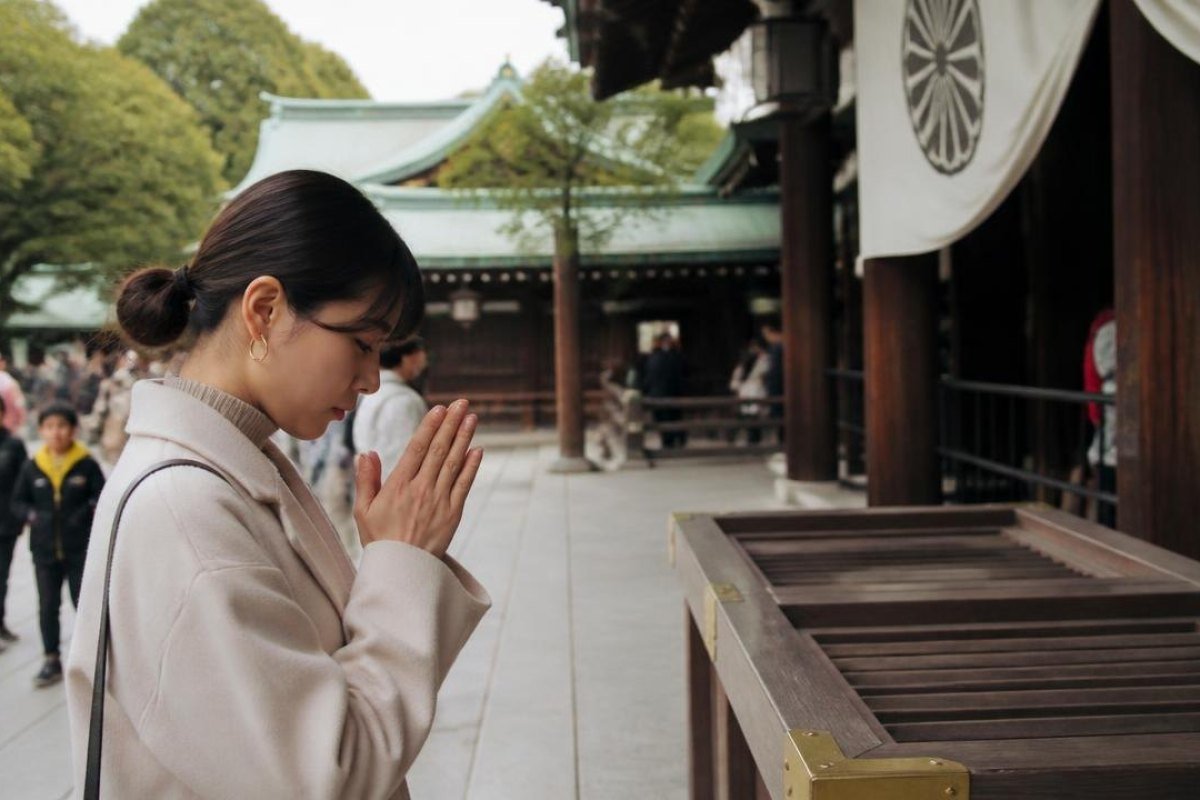
At temples and shrines, follow posted instructions and dress respectfully. Remove shoes where required, do not enter restricted areas, and ask before taking photographs in places where photography may be limited.
In Kyoto especially, remember that popular sightseeing districts are also residential communities. Keep entrances clear, respect privacy, and use authorized taxis or official ride-hailing services when needed.
What to Book Before You Leave
Book your international flights, first-night accommodation, and any high-demand experiences before departure. You may also want to reserve popular restaurants, special exhibitions, theme park entry, and luggage services depending on your itinerary.
Do not overbook every day. Leave room for jet lag, rain, shopping, delayed trains, and the simple pleasure of wandering without a fixed destination.
A Simple Ten-Night Itinerary
Nights 1–4: Tokyo, with one day focused on traditional districts and one day on modern neighborhoods.
Nights 5–7: Kyoto, with an early-morning sightseeing day, a temple-and-garden day, and time for a slower local experience.
Nights 8–10: Osaka, combining Namba, Dotonbori, Umeda, and one carefully chosen additional attraction or day trip.
This itinerary is only a framework. The best first trip to Japan is not the one with the longest checklist; it is the one that balances well-chosen sights, comfortable travel days, and enough time to absorb each place.
Final Tips for a Smooth First Trip
Travel light, wear comfortable shoes, and keep a flexible plan for weather and crowds. Download essential travel apps before leaving, save accommodation details offline, and confirm current transport, attraction, and entry information through official sources shortly before your trip.
Most importantly, do not worry about doing everything perfectly. Japan is remarkably rewarding for first-time travelers who stay organized, remain patient in busy stations, and approach local customs with respect.